 blog
How to Get a Cat to Use a Scratching Post
Last Updated: November 24, 2026
Quick Summary
To get a cat to use a scratching post, choose one that is tall enough for a full stretch and stable when pushed, and place it near the furniture your cat already targets. Rub on a little catnip, play with your cat near the post, and reward every scratch with praise or a small treat. Never punish scratching, since that teaches fear rather than better habits.
- Pick a post tall enough for a full upright stretch, with headroom above your cat's head.
- Choose a wide, weighted base so the post does not wobble when your cat pulls on it.
- Place the post next to the furniture your cat already scratches, not in a spare room.
- Rub dried catnip or silver vine into the post to draw your cat's attention.
- Reward each scratch on the post right away with a small treat or gentle praise.
Table of Contents
- Why Cats Scratch and Why Furniture Gets Targeted
- How Do I Get My Cat to Use a Scratching Post?
- Choose a Post That Matches How Your Cat Scratches
- Place the Scratching Post Where Your Cat Already Scratches
- Use Catnip or a Spray to Attract Your Cat
- Play With Your Cat Near the Post
- Reward Every Scratch on the Post
- Get an Older Cat to Use a Scratching Post
- Frequently Asked Questions
Why Cats Scratch and Why Furniture Gets Targeted
Scratching is a normal, healthy behavior for cats. It keeps their claws trimmed, marks their territory with scent from the paw pads, and gives them a good stretch. The trouble starts when your favorite sofa becomes the cat's favorite scratching spot.
Cats tend to choose surfaces that feel good to dig into. Upholstery, carpet edges, and wood trim all fit that bill. Scratching posts give your cat a better option, so the couch can stay in one piece.
Watch out: never punish your cat for scratching. Scolding or pushing your cat away teaches fear, not better habits. It is far more effective to redirect the behavior to a post you approve of.
How Do I Get My Cat to Use a Scratching Post?
Most cats will use a scratching post when it is sturdy, well placed, and rewarding to use. Start by giving the post the right features, then make it the easiest and most fun choice in the room.
- Choose a post that is tall enough for a full stretch
- Pick a surface your cat likes to dig into
- Put it near spots where your cat already scratches
- Make it smell and feel inviting
- Reward every scratch with praise or a treat
Choose a Post That Matches How Your Cat Scratches
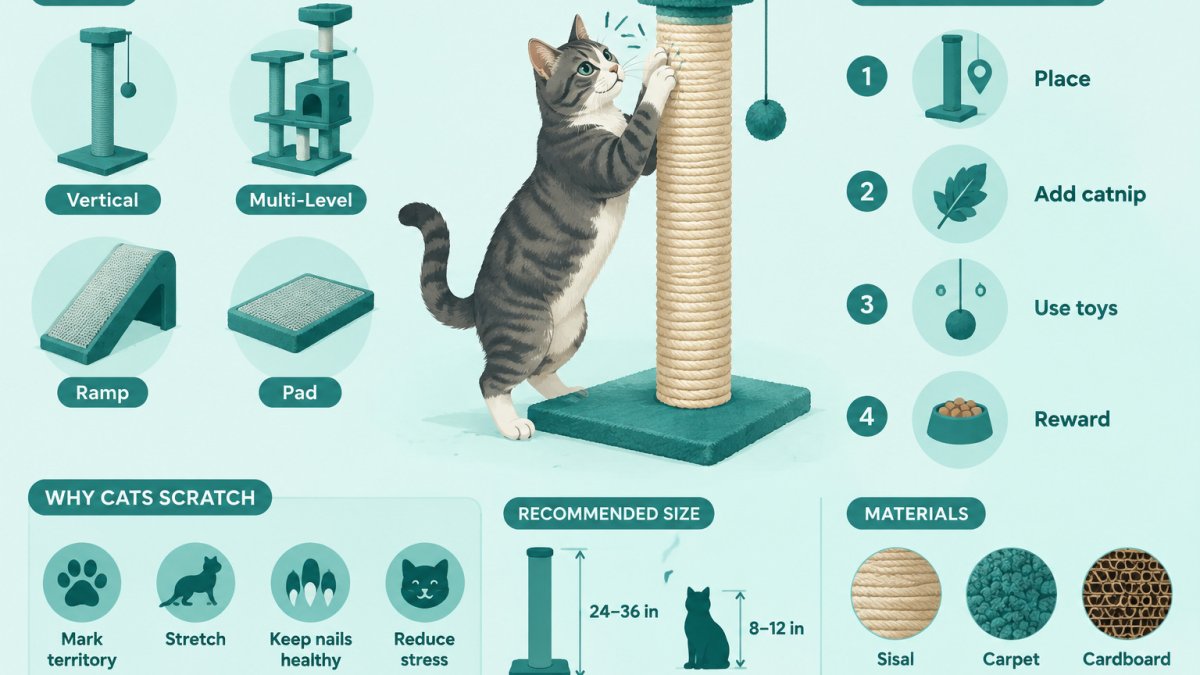
Not all cats scratch the same way, and the post you buy should match the way your cat actually stretches. Durable cat scratchers built for large cats hold up to strong scratching. Spend a few days watching where and how your cat scratches before you shop. You are looking for three things: direction, height, and texture.
Direction. Vertical scratchers stand up, hook their claws in, and pull down through a full body stretch. Horizontal scratchers rake along the floor, often on carpet edges or a doormat. Some cats do both. If your cat reaches up the side of the sofa, shop for a tall column. If your cat digs at the carpet near a doorway, a flat pad or a gentle ramp suits them better.
Height. A vertical post should be tall enough that your cat can stretch fully upright with front paws extended overhead and still have room above. As a rule of thumb, measure your cat from floor to the top of the head while standing, then add several inches of headroom. A post that forces a cat to crouch or stop mid-stretch gets abandoned.
Stability. A wobbly post teaches a cat that scratching there is unsafe. Look for a wide, weighted base and a column that does not sway when you push it. If a post you already own wobbles, tighten the hardware, set it against a wall, or add weight to the base before you give up on it. A stable post is often the single fix that turns an ignored post into a favorite one.
Texture. Sisal rope is the most common vertical surface and suits cats who like a firm, resistant dig. Corrugated cardboard suits cats who prefer a softer, shreddable surface and works well for horizontal pads. Carpet-covered posts appeal to some cats, but a looped carpet can reward claw-snagging, so sisal or cardboard are often preferred.
Orientation combos. If your cat scratches both up and sideways, a combination piece with a sisal column and a cardboard or sisal pad covers both styles in one footprint. That is often more efficient than buying two separate posts for a single cat.
Watch out: a post that is too short, too soft, or too wobbly will be ignored no matter how much catnip you add, so fix the physical setup before you try attractants.
When you order, check that the post ships from within the United States so it arrives quickly.
Place the Scratching Post Where Your Cat Already Scratches
Location matters more than most owners expect. Place the post close to the furniture your cat has been targeting. Cats are far more likely to use a post next to the couch than one tucked away in a spare room.
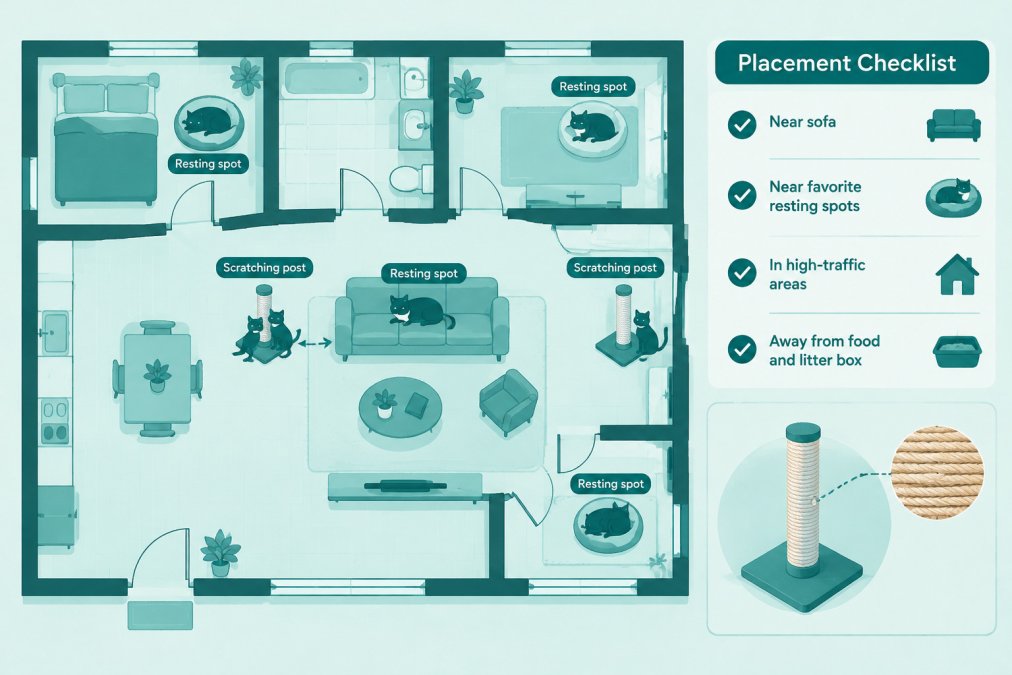
Also keep the post near where your cat sleeps or spends time. A cat who naps by the window may enjoy a post in the same sunny spot. For more on where cats like to rest, see our guide to cat sleeping habits.
Many homes have several cats or several rooms. Try one post per cat, plus one extra, and spread them across the areas your cats use most. Cat furniture that fits small spaces can help when floor room is tight.
Use Catnip or a Spray to Attract Your Cat
Catnip is a simple way to draw attention to a post. Rub a little dried catnip into the post's base or sprinkle it on the surface. Silver vine is another option that many cats find just as appealing.
A spray can also help. Pet-safe attractant sprays are made to encourage cats to investigate a new post. Spray lightly and avoid soaking the material. You can read more about this in our post on attracting cats to new furniture.
Watch out: do not use strong human perfumes or cleaners on the post. Cats may avoid anything that smells unfamiliar or harsh.
Play With Your Cat Near the Post
Play turns a scratching post into a fun place. Use a wand toy or a feather teaser and move it up and down the post. Your cat will stretch and claw as they chase the toy.
Keep play sessions short, about five to ten minutes, and do them once or twice a day. End each session with a treat so your cat connects the post with a good feeling.
Reward Every Scratch on the Post
Positive reinforcement works faster than correction, but it works best when it is structured. Instead of rewarding randomly, run a short, repeatable routine and check your progress against simple milestones.
The daily routine. Pick two or three short windows a day, ideally when your cat is already active and near the post. During each window, spend five to ten minutes playing near the post, then watch for any scratch. The moment claws touch the post, mark it with a calm, happy word and follow within a second or two with a small treat or a gentle pet. Timing matters more than the size of the reward: a treat delivered right after the scratch links the two, while a treat delivered a minute later does not.
Keep rewards small and quick. A pea-sized treat or a brief chin scratch is enough. Large or slow rewards break the flow and can turn scratching into a beg-for-food routine.
Progress checks. Think in terms of a week or two rather than a single session. Early on, reward every scratch you catch. As your cat starts choosing the post on its own, reward most scratches but let some go unrewarded so the habit does not depend entirely on treats. A common pattern is steady improvement over the first week, a plateau in the second, and then more independent scratching in the third.
Troubleshooting by symptom. If your cat ignores the post entirely, revisit stability and placement first. If your cat scratches the post only when you are watching, reward from a distance and gradually step back. If your cat scratches the post and then the sofa right after, the post may be too short or in the wrong spot, so move it closer to the sofa. If your cat seems to avoid the post after a scare or a loud noise, give it a few quiet days and re-introduce it with play rather than forcing contact.
Humane redirection. Never punish scratching, and avoid startling your cat with sprays, loud noises, or physical correction. Punishment teaches fear and can make a cat scratch more, often in hidden spots. Instead, redirect: calmly pick up a wand toy and move the action to the post, then reward the scratch that follows. Cover or block the furniture target temporarily while the new habit forms, and remove the cover once your cat is reliably using the post.
When to check with your vet. Sudden changes in scratching, scratching that seems painful, over-grooming, or scratching directed at the face or ears can point to a skin or medical issue rather than a training problem. If the behavior is new, intense, or paired with other changes, a veterinary visit is the right next step before you adjust the training plan.
Watch out: if you reward inconsistently for a week and then stop entirely, many cats drift back to the sofa, so taper rewards gradually rather than cutting them off at once.
Get an Older Cat to Use a Scratching Post
Older cats can learn new habits, but they may take more patience. Their claws may be less sharp, and they may have settled routines. Start with a post that is soft and easy to dig into, such as a loose sisal or cardboard surface.
Move slowly. Place the post in the spot your older cat already uses, then add attractants and play gradually. Reward every attempt, even small ones. Progress may take several weeks, so stay consistent.
Many owners find that a repeated, calm routine works better than sudden changes. Keep the same play schedule and reward timing each day.
Patience and positive reinforcement are the keys to success. Cats respond best when the scratching post is sturdy, well placed, and rewarding to use. Browse the Knead and Nuzzle collection to find a post that suits your cat's style and your home.
Frequently Asked Questions
What should I do if my cat won't use a scratching post?
First check the post itself: it should be tall enough for a full stretch, stable so it doesn't wobble, and covered in a material your cat likes, such as sisal rope or cardboard. Then move it to a spot where your cat already scratches, like near the sofa or a sleeping area. Encourage use with catnip or a spray attractant, play sessions near the post, and treats or praise right after a scratch. Most cats need several weeks of consistent encouragement before the habit sticks, so patience matters more than any single change.
How can I get an older cat to use a scratching post?
Older cats can learn new habits, but they often have set preferences, so start by observing where and how your cat already scratches. Match the post's height, texture and location to those habits. Keep sessions short, reward every scratch on the post, and use a spray or catnip to draw attention to it. If your older cat has stiff joints or changes in scratching habits, mention them to your veterinarian, since scratching changes can sometimes signal a health issue.
Where should I put my cat's scratching post?
Place the post in the room where your cat spends the most time and near the furniture it currently scratches. Cats often scratch when they wake up or after sleeping, so a spot near a favorite bed or sofa works well. Avoid placing it in a far corner where your cat cannot see it. For homes with several cats, consider more than one post in different rooms so each cat has easy access.
Can catnip help attract a cat to a scratching post?
Yes, catnip is one of the most common ways to draw a cat to a scratching post. Rub a small amount of dried catnip into the post or sprinkle it on the base, then reapply it occasionally so the scent stays appealing. Not every cat responds to catnip, so if yours shows no interest, try a silver vine spray or a sisal post with play sessions instead.