 Ultimate guide
7 Reasons Your Cat Sleeps on Your Bed (and Is It Okay?)
Last Updated: November 4, 2026
Quick Summary
A cat sleeps on bed surfaces mostly because they offer warmth, softness and the familiar scent of their person, which usually signals trust and comfort. For most healthy adults it is fine, but allergies, asthma, a baby in the home or a weakened immune system call for a different arrangement.
- Cats choose beds for warmth, softness and your familiar scent.
- A loaf or curled-ball position often means your cat is settled and comfortable.
- Bed sharing can cause allergy or asthma symptoms, so check with a doctor first.
- Keep infants on their own firm, flat sleep surface, with the cat kept out of the nursery.
- Load a new bed with your worn clothing and reward your cat for using it.
Table of Contents
- Why Your Cat Chooses Your Bed
- What Your Cat's Sleeping Position Might Mean
- The Benefits and Drawbacks of Sharing a Bed With Your Cat
- Cat Hygiene, Parasites, and Bed Sharing
- When Bed Sharing Isn't a Good Fit
- How to Get a Cat to Sleep in Their Own Bed
- Setting Up a Cozy Sleep Spot Your Cat Will Actually Use
- Frequently Asked Questions
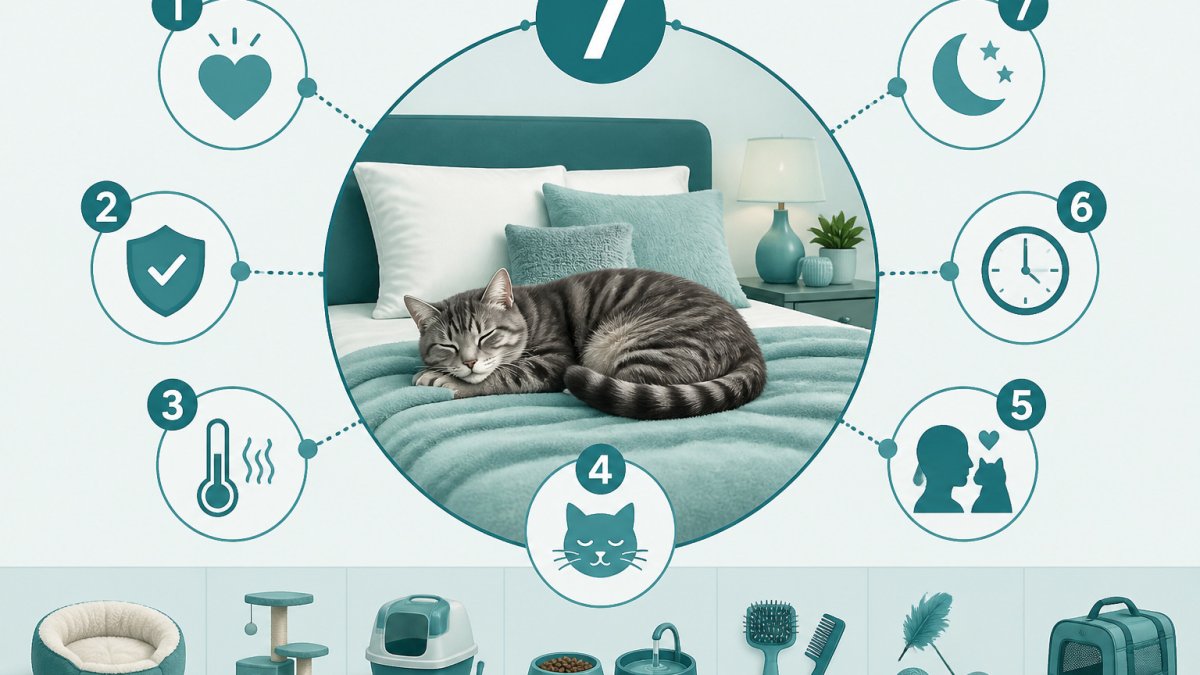
Many cat owners wake up to a warm, purring bundle curled on their pillow and wonder whether a cat sleeps on bed setups like this are a good thing. The short answer is that a cat sleeping on your bed is usually a sign of trust and comfort, and for most healthy adults it is fine.
Why Your Cat Chooses Your Bed
Cats sleep for long stretches each day, and they look for places that feel warm, soft and safe. Your bed often checks all three boxes, which is why it becomes a favorite.
Warmth and comfort
Your bed is warm, soft and usually quiet, and cats are drawn to heat, which is why a cat sleeps on bed surfaces so often on cool nights. Many cats will pick the spot that offers the best mix of softness and warmth, and that is often right next to you.
Affection, trust, and bonding
Sleeping near a person is one way a cat shows comfort with that person. Cats that feel secure with their owners often choose to rest close by. Purring, slow blinks and gentle kneading can all accompany this closeness. Many owners see it as a bonding behavior, and cats sleeping near their people tend to show that they feel safe enough to be vulnerable.
Familiar scent and social scent-marking
Cats rely heavily on smell. Your bed carries your scent, and that familiar smell signals safety and belonging. Cats also mark objects with scent glands on their face and paws, so rubbing against your bedding can be a way of leaving their own familiar scent. This helps explain why a cat may return to the same spot night after night.
What Your Cat's Sleeping Position Might Mean
A cat's posture offers clues about how relaxed it feels. Positions are not a precise diagnosis, but they can give you a general sense of your cat's mood.
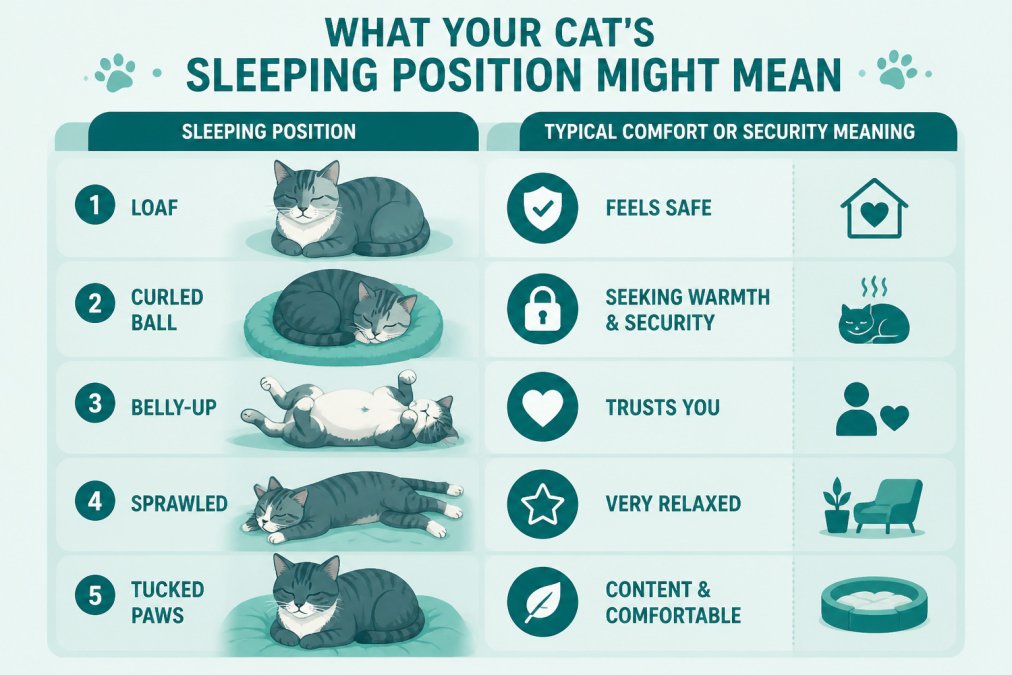
| Position | Common Meaning |
|---|---|
| Loaf (paws tucked under the chest) | Relaxed but alert, ready to get up quickly |
| Curled ball (nose to tail) | Conserving warmth, feeling settled |
| Belly-up, legs splayed | Deep trust and a sense of security |
| Sprawled on its side | Very comfortable and at ease |
| Tucked paws, eyes half closed | Calm, possibly drowsy |
If your cat sleeps in a tight ball, it may simply be cold. If it stretches out fully near you, that usually signals contentment.
The Benefits and Drawbacks of Sharing a Bed With Your Cat
Bed sharing is not right for every household, so it helps to weigh both sides before deciding.
Possible benefits: comfort, stress relief, and sleep quality
Many owners find that a cat's calm presence is soothing. Gentle purring can help some people relax as they fall asleep. For cats, a familiar sleeping partner can reduce stress in a new home.
Possible drawbacks: disrupted sleep and allergies
Cats are most active at dawn and dusk, so a cat that wakes early or hunts a moving foot may disturb your rest. Cat dander and allergens can also trigger sneezing, itchy eyes or asthma symptoms in sensitive people. If anyone in your home has allergies or asthma, talk with a doctor before making your bed a shared space.
Cat Hygiene, Parasites, and Bed Sharing
Keeping your bed and your cat clean is part of sharing a bed safely. Regular grooming, routine vet care and a parasite prevention plan approved by your veterinarian all reduce the chance that fleas, ticks or other parasites end up in your sheets. Wash bedding often, vacuum fur regularly, and keep your cat's routine checkups current. If your cat goes outdoors or interacts with other animals, extra caution is wise.
When Bed Sharing Isn't a Good Fit
Bed sharing is usually fine for a healthy adult with a healthy cat, but a few household situations change the math. The list below explains not just who should reconsider, but why, and what a workable alternative looks like.
Households with allergies or asthma
Cat allergens are carried on dander and saliva, and they can settle into soft surfaces like pillows and duvets. A cat that sleeps on the bed deposits allergen right where you spend seven or eight hours with your face close to the fabric. For someone with mild allergies, frequent washing and a mattress cover may be enough.
Households with a baby or very young child
Infants should sleep on a firm, flat surface in their own space, and that guidance does not change because the cat is gentle (Safe Sleep: 9 Ways to Reduce a Baby's Risk of SIDS & Suffocation). A cat seeking warmth can settle against a sleeping baby, and a baby cannot move away or cry out effectively.
Households with a weakened immune system or pregnancy
People receiving chemotherapy, organ-transplant recipients, people with advanced HIV, and pregnant people are commonly advised to be more careful about close contact with animals and animal waste. The concern is not the cat itself but the small chance of infections that a healthy immune system clears easily. This does not mean giving up the cat.
Cats with health, mobility or behavior concerns
A cat recovering from surgery or a senior cat with mobility limits may not do well on a high bed it cannot safely get on and off. Orthopedic bed options for senior cats can make a low, supportive spot easier to choose. A low, firm bed near the floor is often kinder.
A simple decision checklist
Run through these questions before you decide:
- Does anyone in the home have asthma, severe allergies, a weakened immune system, or is anyone pregnant? If yes, talk with a doctor first.
- Is there an infant or very young child in the home? If yes, keep the crib area cat-free.
- Is the cat senior, recovering from surgery, or showing new mobility limits? If yes, choose a low, easy-to-reach bed.
- Is your sleep consistently disrupted more than once or twice a week? If yes, a separate sleep spot is worth trying.
- Is the cat's parasite prevention and veterinary care current? If not, sort that out before bed sharing.
If any answer points away from bed sharing, a separate sleep spot near you keeps the cat close without putting anyone at risk.
A sudden change in a cat's sleeping habits is worth a call to your veterinarian.
How to Get a Cat to Sleep in Their Own Bed
Cats are creatures of habit, and a bed they have claimed is a habit built on warmth, scent and routine. The goal is not to banish the cat but to make the new spot more appealing than the old one. A gradual, reward-based plan works far better than closing the door and hoping.
Step 1: Pick the right spot and the right bed
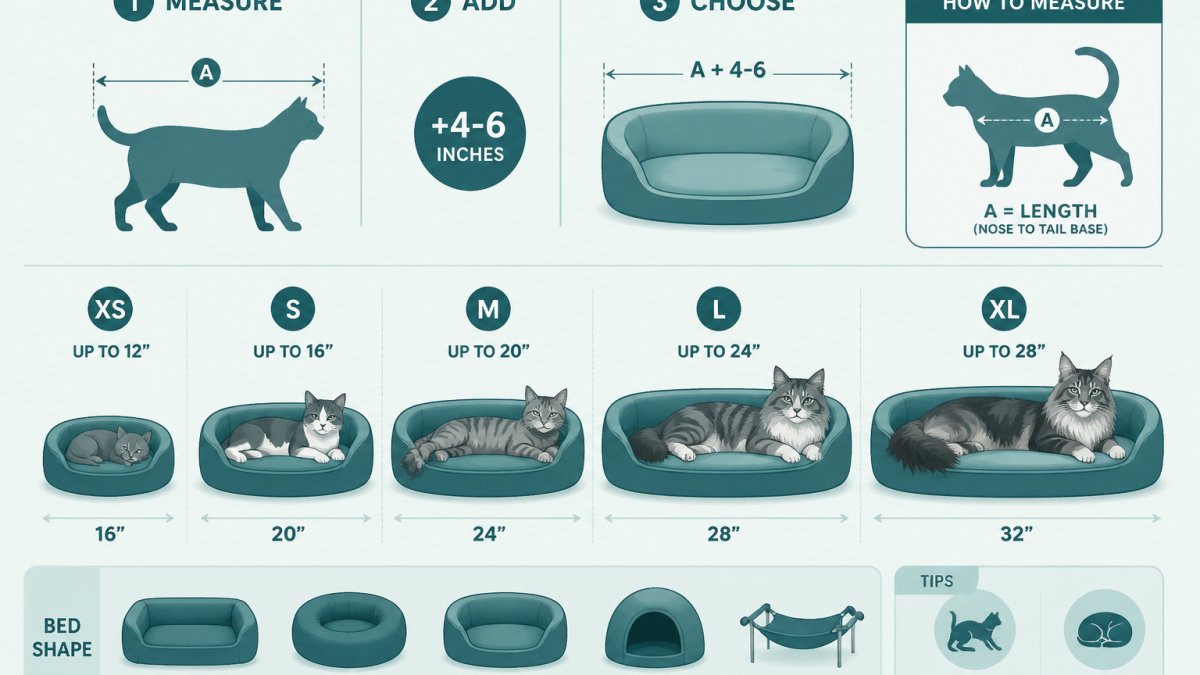
Place the new bed in a room your cat already chooses to rest in, ideally near where you sleep but not on the mattress. To pick the right dimensions, see the cat bed sizing guide. If your cat is nervous, how to choose cat beds for anxious cats walks through which features help a cautious cat feel secure.
Step 2: Load the new bed with familiar scent
Put a worn T-shirt or a blanket you have slept on into the new bed for a few nights before you expect the cat to use it. Scent is one of the main reasons a cat returns to your bed, so borrowing that cue is the single most effective step.
Step 3: Reward use, not absence
When your cat settles in the new bed, offer a treat or calm praise right there, so the bed itself becomes the predictor of good things. Do not reward the cat for leaving your bed; reward it for choosing the new one. Keep sessions short at first, and let the cat leave whenever it wants.
Step 4: Make your bed less appealing at night
This is the step most owners skip. If the bed stays warm and open, the cat has little reason to switch. Try a fitted mattress cover or a throw that is easy to remove, and keep the bedroom door closed at night only after the cat is already comfortable using the new bed during the day. A closed door before the cat has a preferred alternative tends to produce scratching and vocalizing.
Step 5: Move gradually and expect weeks, not days
Start with the new bed right next to your bed, then move it a foot or two every few nights once the cat is using it reliably. Most cats adjust over two to six weeks. If the cat regresses, move the bed back a step rather than pushing forward.
What not to do
Never punish a cat for returning to your bed. A spray bottle, a loud noise or a shove teaches the cat that you are unpredictable, not that the bed is off-limits, and it can damage the bond that made bed sharing appealing in the first place.
If your cat stops eating or shows litter box changes during the transition, pause the plan and check with your veterinarian.
Setting Up a Cozy Sleep Spot Your Cat Will Actually Use
A good cat bed should feel warm, enclosed and easy to reach. For a sturdier option, see durable cat beds for heavy cats. You can browse cat bed sofas designed for sleeping in a range of sizes and styles.
Frequently Asked Questions
Is it bad for a cat to sleep on my bed? For most healthy adults, a cat sleeping on your bed is fine.
Why does my cat sleep right on my face or chest? Cats often seek warmth and closeness with people they trust.
Can sleeping with my cat make me sick? Healthy cats that receive regular veterinary care and parasite prevention pose a low risk to most people.
Frequently Asked Questions
Is it good to let your cat sleep on your bed?
For most healthy adult cats and owners, sharing a bed is generally fine. It can strengthen the bond between you and your cat, and many owners find their cat's presence comforting. The main considerations are personal health, allergies, sleep quality, and hygiene. If anyone in the household has asthma, a serious allergy, or a weakened immune system, talk with a doctor before making the bed a shared space. Keeping the cat's bedding washed and parasites controlled with veterinary guidance helps keep the arrangement comfortable for everyone.
Do cats sleep on their favorite person's bed?
Often, yes. Cats tend to choose the bed of a person they feel safe with, and the bed usually smells familiar and warm. Your cat may also be spreading its scent on your bedding, which is a way of marking a trusted member of the household. A cat that picks one person's bed over others is usually showing a preference for that person's company and routine rather than a sign of dominance or demand.
How can I encourage my cat to sleep in their own bed?
Place a cat bed in a quiet, draft-free spot near where you sleep, so your cat can stay close without being in your bed. Put a worn piece of your clothing or a soft blanket in the bed to add a familiar scent. Reward your cat with a treat or gentle praise when it settles there, and avoid lifting it back into its bed in a way that feels like punishment. Be patient, because most cats adjust over a few weeks.
What are the health risks of sleeping with a cat?
The most common concerns are allergies and asthma triggered by fur and dander, scratches or bites that break the skin, and the possibility of parasites such as fleas. Some owners also notice that a cat's nighttime activity disrupts their sleep. Regular veterinary care, parasite prevention recommended by your vet, routine grooming, and frequent washing of bedding can reduce these risks. People with serious immune problems should speak with a doctor first.