 ultimate-guide
Senior Cat Health Supplies: The Ultimate Guide
Table of Contents
- Why Senior Cats Need Specialized Health Supplies
- Essential Food and Age-Appropriate Nutrition
- Cat Water Fountain for Senior Cats: Hydration Solutions That Work
- Orthopedic Cat Bed for Senior Cats and Joint Support
- Senior Cat Mobility Aids and Accessibility Solutions
- Litter Box Modifications and Easier Access
- Senior Cat Health Checklist: Monitoring and Preventive Care
- Grooming, Hygiene, and Indoor Enrichment for Aging Felines
- Frequently Asked Questions
Last Updated: October 9, 2026
Why Senior Cats Need Specialized Health Supplies
As cats age, their bodies change in ways that demand a different approach to care. A senior cat, typically eight years and older, faces shifts in mobility, hydration, digestion, and comfort.
Joint pain, reduced water intake, litter box difficulty, and decreased appetite aren't inevitable, they're signals that your cat's environment and tools need adjustment.
The supplies you choose now determine whether your senior cat stays active or withdraws.
Essential Food and Age-Appropriate Nutrition
Senior cats need food formulated for their stage of life. Digestive efficiency declines with age, so cats absorb fewer nutrients from standard formulas.
Look for foods labeled for senior, mature, or aging cats. These formulas typically contain:
- Higher protein levels to combat muscle loss
- Omega fatty acids for joint and coat health
- Added fiber for digestive support
Many senior cats also prefer softer textures.
Feed smaller, more frequent meals rather than one large portion.
According to veterinary nutrition guidelines from the American Animal Hospital Association, senior cats benefit from biannual veterinary checkups to assess nutritional needs as their health changes.
Cat Water Fountain for Senior Cats: Hydration Solutions That Work
Dehydration is one of the most overlooked health risks in aging cats. Senior cats often drink less even as their kidneys need more, and a cat water fountain for senior cats closes that gap by making moving, fresh water hard to ignore.
Moving water appeals to a cat's instinct that flowing water is fresh and safe. For a senior cat, more drinking means better kidney function, urinary tract health, and digestion, but the wrong fountain becomes a stagnant bowl with a motor attached.
How to choose a fountain for a senior cat
Work through these criteria in order:
- Entry height and drinking angle. A cat with arthritis struggles to lower its head into a deep basin. Look for a low, wide drinking surface, an inch or two of water depth at the lip, or a shallow dish attachment.
- Pump noise. The quietest pumps sit in the low 20s to low 30s dB range, comparable to a whisper. A humming or rattling pump can deter a nervous senior cat.
- Filter type and replacement interval. Carbon filters typically need replacing every two to four weeks. A fountain whose filters are hard to source becomes one you stop maintaining.
Placement and access
Position the fountain away from the litter box and food bowl, cats prefer to keep water sources separate from both.
For a cat with limited mobility, the fountain must sit on the path the cat already travels; one in a low-traffic corner will be ignored. Secure the cord or route it under a mat so it isn't a trip hazard.
Maintenance routine that actually gets done
- Daily: top off the reservoir with fresh water.
- Every two to three days: disassemble the drinking surface and pump housing, rinse with warm water, and scrub the impeller area where biofilm collects.
- Every two to four weeks: replace the carbon filter per the manufacturer's interval.
A stagnant fountain defeats the purpose. If the maintenance load is more than you'll keep up with, a wide, shallow ceramic bowl refreshed twice daily is a legitimate alternative, the goal is intake, not equipment.
Orthopedic Cat Bed for Senior Cats and Joint Support
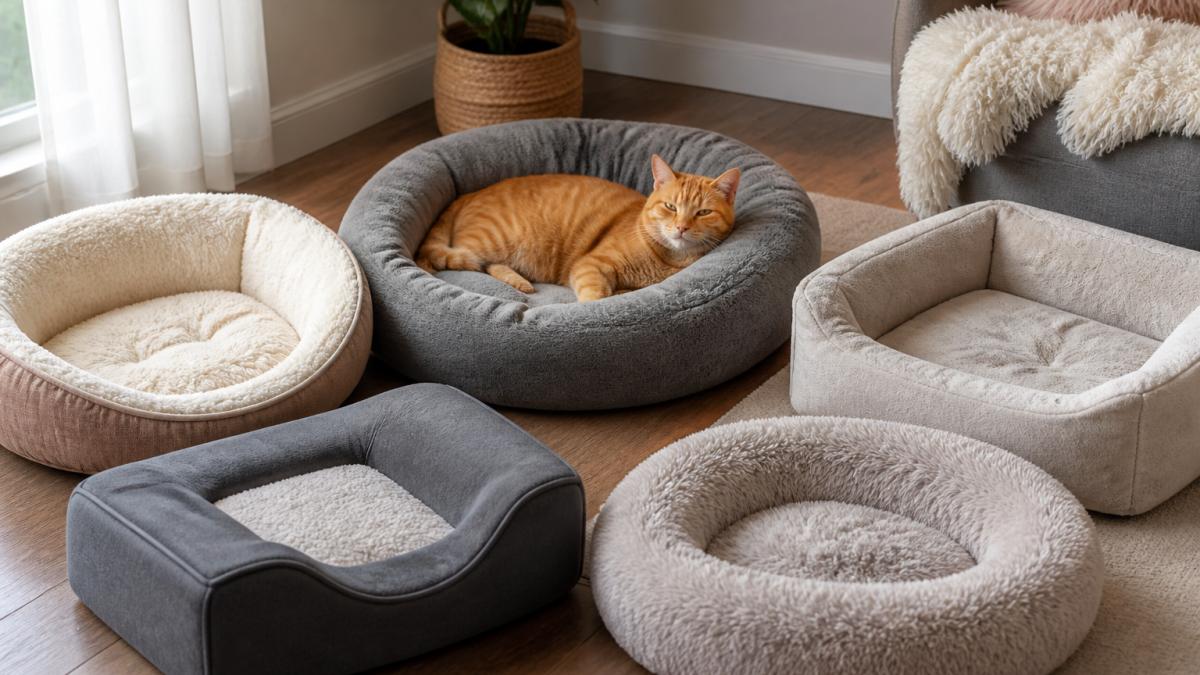
An orthopedic cat bed for senior cats isn't a luxury, it's therapeutic furniture that reduces pain and improves sleep quality.
Arthritis affects most cats over age twelve.
Select beds that offer:
- Elevated sides or bolsters for head support and security
- Washable covers for easy cleaning
- Appropriate size, large enough to stretch, small enough to feel enclosed
Placement is critical. Position the bed in a quiet, warm area away from drafts.
Heated beds work best in cool months, though some senior cats appreciate gentle warmth year-round. Look for adjustable heat settings or automatic shutoff.
Senior Cat Mobility Aids and Accessibility Solutions
Mobility decline is one of the most visible signs of aging. Jumping, climbing stairs, and navigating multi-level furniture become painful or impossible. Strategic mobility aids restore access and independence, but only if sized and placed for the individual cat.
Arthritis is the most common driver of mobility change in senior cats, and it rarely announces itself. A cat that stops using the top of the cat tree, hesitates before jumping onto the bed, or eliminates outside the litter box may be managing pain, not developing a behavior problem.
Sizing a ramp or step for your cat
Two numbers matter more than any product feature:
- Rise: the vertical distance the cat needs to cover. Measure from the floor to the surface the cat is trying to reach.
- Run: the horizontal distance available for the ramp or steps.
A shallower slope is easier on joints. Aim for a ramp that rises no more than about one inch for every four to six inches of run.
For steps, look at step height and step depth. A rise of about 4 to 6 inches and a tread deep enough for the cat to stand fully, roughly 8 to 10 inches, lets a stiff cat place all four paws without reaching.
Surface and stability checks
- Traction: carpeted or textured treads beat smooth plastic. A cat with weak hind legs needs grip going up and braking control coming down.
- Width: a tread at least as wide as the cat is long, so it can turn around if it changes its mind mid-climb.
- Weight and wobble: press down on the top step. If it shifts, the cat won't trust it. Look for rubber feet or a base that sits flat on hard flooring.
Matching aids to the cat's condition
- Arthritis or stiffness: low, broad steps to the bed and couch; a ramp to a favorite window perch; non-slip mats along the main walking route.
- Hind-limb weakness: a ramp rather than steps, since stepping up demands more push-off strength than walking a slope.
- Vision changes: keep furniture fixed, add contrast strips to step edges, and avoid moving the litter box or food station.
Litter, food, and water access
Mobility aids aren't only about climbing. A low-entry litter box with a shallow lip reduces step-over height, and a box on the floor the cat spends most of its time on removes stairs from the equation. Elevated feeders at roughly chest height reduce neck strain for cervical arthritis, while a cat with a swaying gait may do better with a bowl on a non-slip mat at floor level.
Introducing a new aid
Some cats reject ramps and steps on first contact. Place the aid in position and leave it for a few days without forcing use. Lure the cat onto the lowest step with a treat, then reward any voluntary contact. Once the cat uses the first step reliably, move the reward up one level. Patience beats pressure, a cat pushed onto an unstable surface may avoid it permanently.
Litter Box Modifications and Easier Access
Litter box avoidance is often blamed on behavior, but senior cats frequently avoid boxes due to pain or difficulty accessing them.
Senior cats benefit from:
- Extra-large boxes for comfortable positioning
- Low-sided or open-top designs eliminating high walls to climb over
- Multiple boxes placed on each level of your home
Litter type matters too. Softer, less dense litters are easier on sensitive paws. Some senior cats prefer pelleted litter or paper-based options over clay.
Litter mats catch tracked litter and provide non-slip surfaces, preventing slips during entry and exit for cats with mobility issues.
Clean boxes daily.
Senior Cat Health Checklist: Monitoring and Preventive Care
Preventive care is the cornerstone of senior cat health. Regular monitoring catches problems early when treatment is most effective.
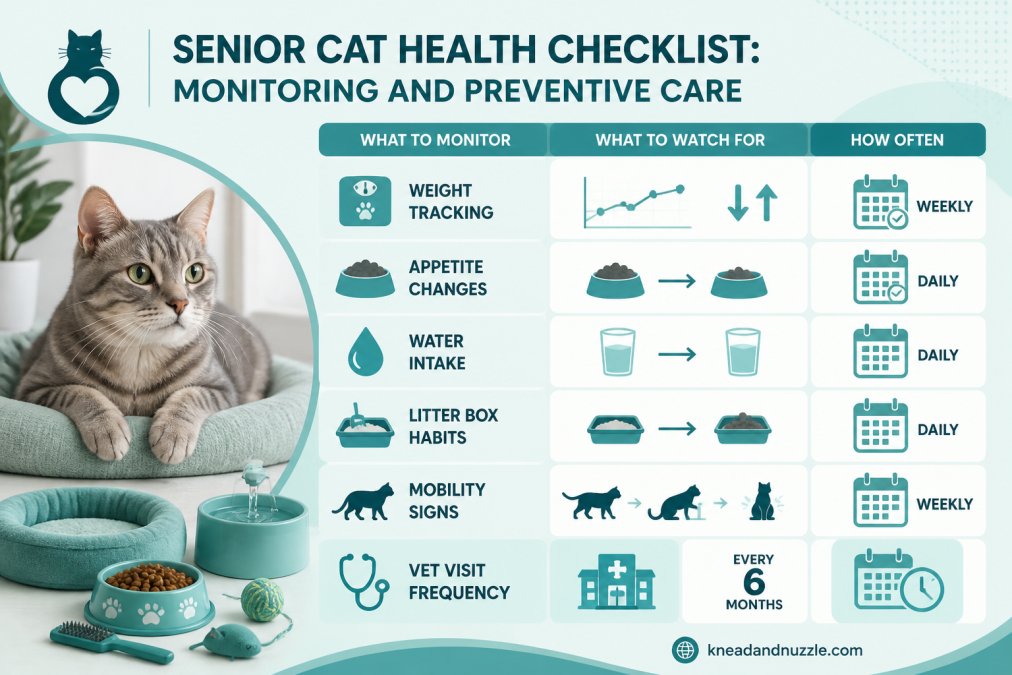
Track these indicators weekly:
- Weight changes: Sudden loss or gain signals metabolic issues
- Appetite shifts: Increased or decreased eating warrants investigation
- Water intake: Note if your cat drinks noticeably more or less
Schedule veterinary checkups biannually for senior cats, not annually. Twice-yearly visits catch age-related conditions like kidney disease, hyperthyroidism, and diabetes before they become severe.
Keep records of your observations and bring notes to vet appointments.
Grooming, Hygiene, and Indoor Enrichment for Aging Felines
Senior cats often struggle with grooming as arthritis and reduced flexibility make self-care difficult.
Gentle grooming tools designed for sensitive skin prevent irritation:
- Soft-bristle brushes for daily maintenance
- Mat splitters for stubborn tangles
- Nail clippers for overgrowth (senior claws are often thick and brittle)
Groom in short sessions, five to ten minutes, rather than extended grooming marathons.
Enrichment prevents cognitive decline and maintains engagement.
Rotate toys and activities to maintain novelty. A toy ignored for weeks becomes fascinating when reintroduced.
At Knead and Nuzzle, we're committed to helping you find everything your aging cat needs.
Frequently Asked Questions
What are the essential supplies I need for a senior cat?
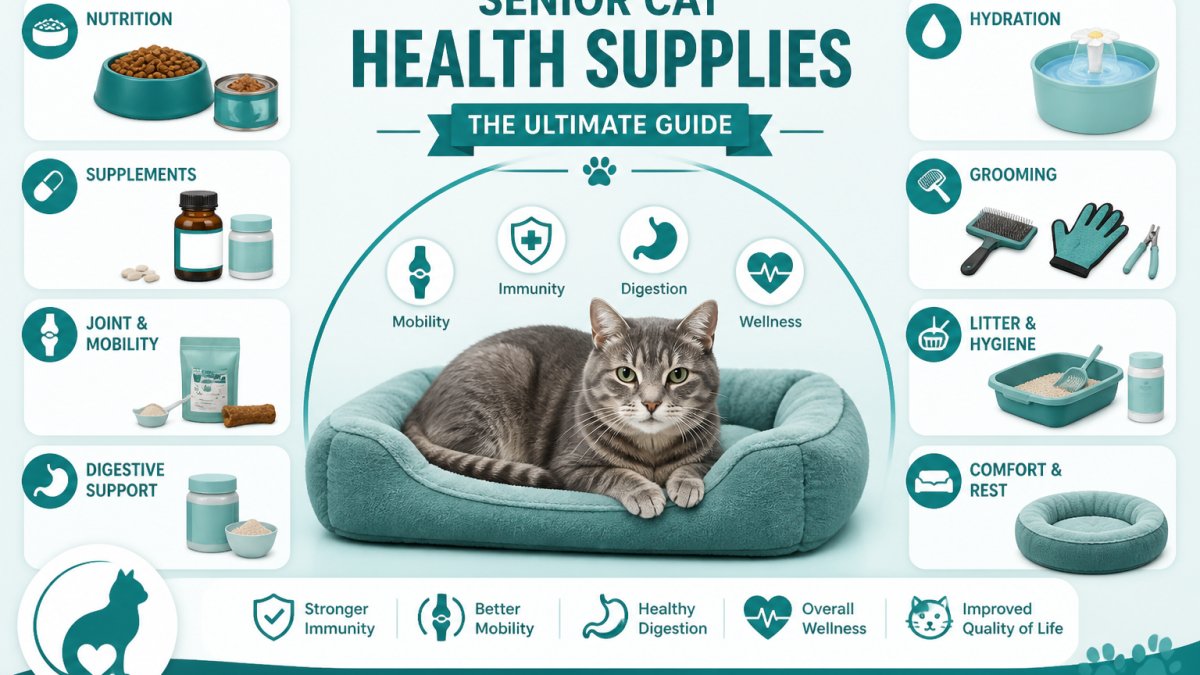
Core essentials include senior-formulated food, a water fountain to encourage hydration, an orthopedic or heated bed for joint comfort, low-entry litter boxes, grooming tools for easier maintenance, and mobility aids like ramps or steps. Additional items depend on your cat's specific health needs and mobility level. Start with these basics and adjust based on your aging feline's behavior and comfort.
How can I encourage my senior cat to drink more water?
A cat water fountain for senior cats works because many older cats prefer running water and find it easier to drink from elevated sources. Place fountains in multiple locations throughout your home, away from food bowls. Some seniors also respond well to wet food, water added to dry kibble, or shallow water dishes in preferred spots. Monitor water intake closely as part of your senior cat health checklist, changes can signal kidney issues or other conditions.
Why is an orthopedic cat bed important for aging cats?
An orthopedic cat bed for senior cats provides memory foam or cushioned support that reduces pressure on aging joints and arthritic areas. Unlike regular beds, orthopedic options maintain their shape and offer consistent comfort, which is especially important for cats with mobility challenges. Heated beds add extra relief for stiff joints. Senior cats spend more time resting, so investing in proper bedding directly improves their quality of life and comfort.
What senior cat mobility aids help with stairs and high furniture?
Senior cat mobility aids include ramps, stairs, and step stools that reduce the jump height to favorite spots like beds or windowsills. Ramps are gentler on joints than vertical jumps, while steps provide intermediate platforms. Place these near furniture your senior cat already uses. Some cats also benefit from ground-level perches and lower litter boxes to minimize climbing. Assess your cat's mobility level and adjust your home layout accordingly to maintain independence and comfort.
How often should a senior cat visit the veterinarian?
Cats aged 11 and older should have biannual vet visits, twice per year instead of the annual checkup for younger cats. These visits allow your vet to catch age-related conditions early, monitor kidney function, check weight and appetite, and adjust nutrition or medications as needed. Between visits, use your senior cat health checklist to track changes in behavior, water intake, litter box habits, and mobility. Report any concerns immediately.
What modifications should I make to litter boxes for senior cats?
Senior cats need litter boxes with lower entry points to reduce strain on arthritic joints. Use boxes with one or two cut-down sides, or provide senior-specific low-entry litter boxes. Place multiple boxes throughout your home, at least one per floor, so your aging cat doesn't have to travel far. Add non-slip litter mats to prevent slipping. Clean boxes daily and use soft, easy-to-walk litter. Easy access prevents accidents and maintains dignity for your senior cat.
What signs of illness should I watch for in an older cat?
Watch for changes in appetite, water intake, weight loss, lethargy, or difficulty using the litter box, all common in senior cats. Monitor mobility issues, excessive grooming or neglected grooming, vomiting, or behavioral changes. Kidney disease and arthritis are frequent in aging felines. Use your senior cat health checklist to track these signs between vet visits. Any significant change warrants a call to your veterinarian. Early detection of age-related conditions improves outcomes and quality of life.
Can I find all senior cat supplies in one place?
Yes. Knead and Nuzzle offers a curated selection of senior cat health supplies including specialized food, water fountains, orthopedic bedding, mobility aids, litter solutions, and grooming products, all designed for aging cats. Shopping in one place saves time and ensures you're choosing products that work together to support your senior cat's comfort and health. We ship from the USA, making it convenient to get everything your older feline needs delivered to your home.