 blog
blog
Safe Cat Toys for Unsupervised Play: A Complete Guide
Table of Contents
- Why Safe Cat Toys for Unsupervised Play Matter
- What Makes a Toy Safe to Leave Out
- Safe Cat Toys to Leave Out for Solo Play
- Cat Puzzle Toys for Boredom and Mental Stimulation
- Electronic Cat Toys for Solo Play: Safety First
- Cat Toy Safety Tips and Inspection Criteria
- Frequently Asked Questions
Last Updated: October 5, 2026
Why Safe Cat Toys for Unsupervised Play Matter
Leaving your cat alone for hours creates a real challenge: they need mental stimulation and physical activity even when you're not watching.
At Knead and Nuzzle, we know cat owners want enrichment without constant worry.
This guide covers what makes a toy safe for solo play, which types work best, and how to set up your home for your absence.
What Makes a Toy Safe to Leave Out
Not every toy is suitable for unsupervised play. A toy that's fine during interactive playtime can become dangerous when your cat plays alone, so understanding what separates safe toys from risky ones is the first step.
The hazard checklist: loose parts, small pieces, and choking risks
Before leaving any toy out, ask: does it have small parts that could detach? Can your cat swallow a piece if it breaks? Are there bells, beads, or plastic components that could come loose?
The biggest hazard is anything small enough to become a choking risk.
Check for:
- Detachable bells or beads
- Easily torn fabric or seams
- Plastic components glued on (not molded)
- String or ribbon that could be swallowed
- Foam that crumbles or sheds
A toy that passes this checklist is far safer to leave out. Inspect toys regularly, even durable toys wear down over time.
Durability and one-piece construction
The most durable toys are built as one solid piece. Molded plastic, rubber, or solid wood resists damage far better than toys assembled from glued components.
One-piece construction means:
- No seams to tear open
- No glued joints to fail
- No small parts to break off and become hazards
- Longer lifespan before replacement is needed
One-piece toys are ideal for unsupervised play because they're nearly impossible to destroy, so your cat can pounce, chew, and bat them around without creating hazards.
When shopping, look at how toys are made.
Age, chewing behavior, and individual cat risk
Not all cats play the same way. A kitten's style differs from an adult's, and an aggressive chewer poses different risks than a gentle player.
Consider your cat's age and behavior:
- Kittens (under 1 year): Tend to be more aggressive and experimental. They're more likely to chew on toys and test materials. Choose extra-durable toys.
- Adult cats (1-7 years): Most cats in this range have established play habits. Choose based on their individual style.
- Senior cats (7+ years): Often prefer gentler play. They're less likely to destroy toys but may have dental issues. Avoid toys that require hard chewing.
Aggressive chewers need toys that won't splinter or break, while gentle players can enjoy more variety. Observe your cat's play style before leaving a toy out; if they shred toys, skip plush and stick to solid, durable options.
Safe Cat Toys to Leave Out for Solo Play
The best safe cat toys for unsupervised play keep your cat mentally and physically active without creating hazards. These categories have proven track records for solo play safety.
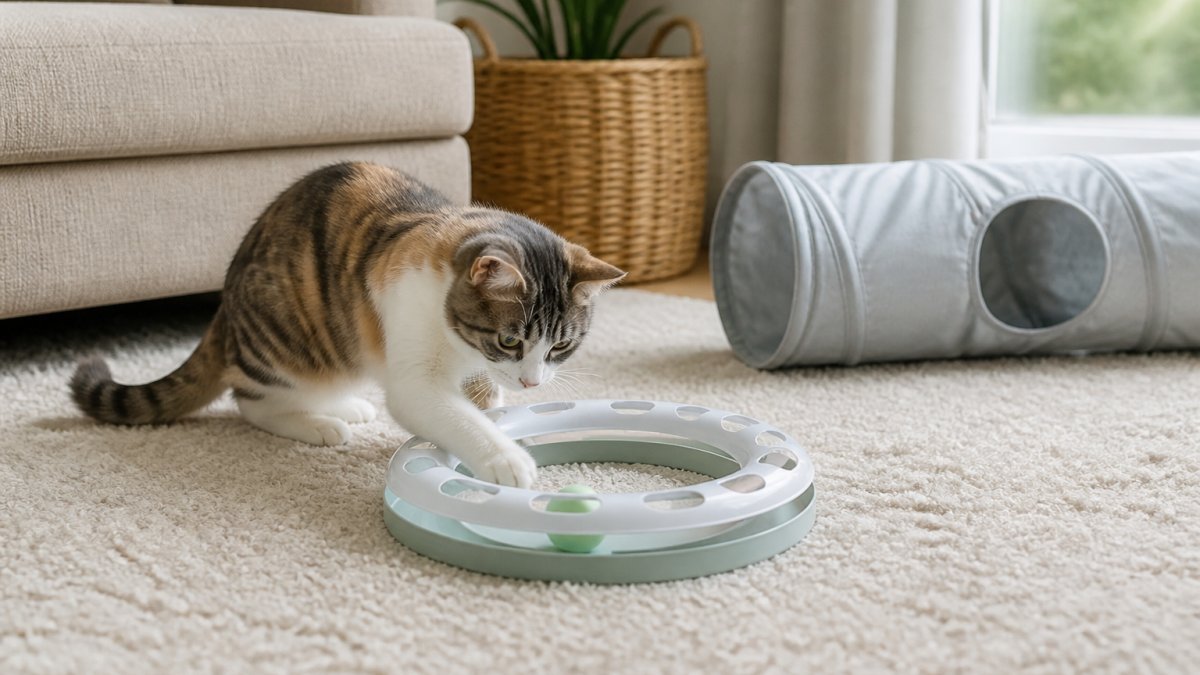
Enclosed ball tracks and rolling toys
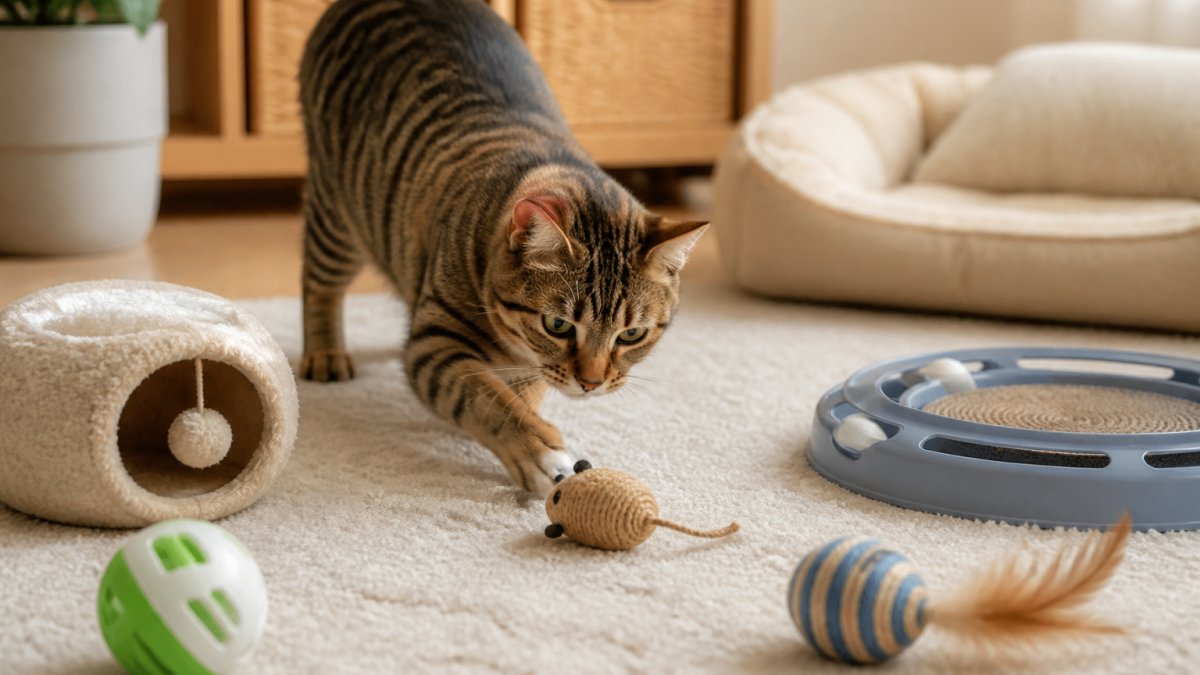
Enclosed ball tracks are among the safest toys for unsupervised play.
Ball tracks offer:
- Physical exercise and mental engagement
- Safe containment of moving parts
- Durable construction that resists damage
- Long-lasting entertainment value
Your cat can play for extended periods without supervision, staying active and focused. Ball tracks come in various designs, from simple circles to multi-level towers, and all are safe for solo play when properly constructed.
Rolling toys like hard plastic or rubber balls larger than your cat's mouth are also safe. Avoid small balls, tennis balls with loose fuzz, or anything your cat could swallow.
Tunnels and hiding or exploration toys
Cats love tunnels, which provide both physical activity and a sense of security. A tunnel encourages running, pouncing, and exploration, all healthy solo play activities.
Good tunnel toys are:
- Made from durable fabric or plastic
- Designed to resist tearing and damage
- Free of loose parts or detachable components
- Large enough that your cat can move freely without getting stuck
Tunnels with crinkle paper or bells add engagement, as long as those components are securely attached and won't come loose during play.
Collapsible tunnels are space-efficient, durable, and safe for unsupervised play, letting your cat hide, dash, and pounce without risk.
Plush toys and kicker toys
Plush toys can be safe for unsupervised play if you choose wisely.
Kicker toys are plush pillows or logs that cats grab with their front paws and kick with their back legs, mimicking natural hunting behavior and providing great exercise.
The safest plush toys are designed specifically for cats and built to withstand aggressive play.
Inspect plush toys regularly. If seams tear or stuffing becomes visible, remove and replace the toy immediately.
Cat Puzzle Toys for Boredom and Mental Stimulation
Mental stimulation matters as much as physical activity. Puzzle toys engage your cat's problem-solving skills and keep boredom at bay during solo play.
Food puzzles and treat-dispensing toys
Food puzzles and treat-dispensing toys combine enrichment with reward: your cat works to extract treats or kibble, staying occupied and mentally engaged.
Good puzzle feeders:
- Have compartments that require effort to open
- Dispense treats or kibble slowly
- Are made from durable, food-safe materials
- Have no small parts that could be swallowed
Puzzle toys work especially well for cats that eat too quickly or get bored easily, transforming mealtime into an activity that can occupy them for 15-30 minutes.
Choose puzzles with one-piece construction or securely attached parts, and avoid multiple glued components or small plastic pieces. Your cat should only be able to extract treats, not toy components.
Interactive and motion-activated toys
Motion-activated toys turn on when your cat approaches or touches them. They move unpredictably, triggering your cat's hunting instincts and keeping them engaged during solo play.
Safe motion-activated toys:
- Have secure battery compartments that can't be opened by paws
- Are made from durable materials that resist damage
- Have no loose parts or detachable components
- Use reliable motion sensors that won't malfunction
The advantage of motion-activated toys is that they provide the excitement of interactive play without requiring your presence. Your cat triggers the action, plays, and the toy stops. This cycle repeats, keeping your cat entertained for extended periods.
Electronic Cat Toys for Solo Play: Safety First
Electronic toys add a dimension of unpredictability that cats find engaging. However, electronic components introduce specific safety considerations for unsupervised play.
Battery, charging, and electronic-toy safety
Before leaving any electronic toy out, check the battery compartment.
Safe electronic toys have:
- Secured battery compartments with screws (not just clips)
- High-quality batteries that won't leak
- Reliable wiring and components
- Automatic shutoff after 15-30 minutes of play
- No exposed wires or electrical components
Battery-powered toys are safer than rechargeable ones for unsupervised play. Rechargeable toys require charging ports, which can become damaged and expose electrical components.
Inspect electronic toys regularly. Check for corrosion, loose wires, or damaged casings. If you notice any damage, remove the toy immediately.
Test motion sensors before leaving the toy out. Make sure the toy activates reliably and shuts off properly.
Cat Toy Safety Tips and Inspection Criteria
Choosing safe toys is just the start. Regular inspection and maintenance keep toys safe throughout their lifespan.
Regular inspection and replacement guidelines
Check your cat's toys weekly. Look for:
- Tears or damage to fabric or seams
- Loose or detaching parts
- Cracks or breaks in plastic or rubber
- Signs of wear that could create hazards
- Discoloration or staining that suggests material breakdown
Replace toys that show any of these signs immediately. A toy that's starting to fall apart poses a real hazard during unsupervised play.
Establish a replacement schedule. Even durable toys wear out eventually. Most toys should be replaced every 3-6 months, depending on how aggressively your cat plays.
Clean toys regularly. Wash fabric toys in warm soapy water and dry completely. Wipe hard toys with a damp cloth. Dirty toys can harbor bacteria and become less appealing to your cat.
| Toy Type | Inspection Frequency | Replacement Timeline | Signs to Replace |
|---|---|---|---|
| Enclosed ball tracks | Every 2 weeks | 12-18 months | Cracks, broken track sections |
| Tunnels | Every 2 weeks | 6-12 months | Tears, loose seams, flattened fabric |
| Plush toys | Every week | 3-6 months | Torn seams, visible stuffing, loose parts |
| Puzzle feeders | Every use | 12-24 months | Cracks, stuck compartments, damage |
| Electronic toys | Every 2 weeks | 12-18 months | Battery corrosion, loose wires, damage |
| Rubber/plastic toys | Every 2 weeks | 12-18 months | Cracks, splinters, discoloration |
Room-by-room setup for extended absences
Setting up your home strategically makes unsupervised play safer and more engaging. Different rooms can serve different purposes.
Main living area:
- Place enclosed ball tracks and tunnels here
- Ensure toys are spread out so your cat can move freely
- Keep the area clear of hazards
Bedroom:
- Include puzzle feeders or treat-dispensing toys
- Add soft tunnels for rest and exploration
- Keep electronics away from the bed
Bathroom:
- Avoid leaving toys here, it's isolated and lacks enrichment
- Use this space only if your cat needs a quiet retreat
Kitchen:
- Place puzzle feeders here if your cat eats in the kitchen
- Avoid leaving small toys that could be knocked under appliances
- Keep the area clean and free of food hazards
Rotate toys between rooms every few days. This keeps your cat's environment fresh and engaging.
Ensure your cat has access to water, a litter box, and a comfortable resting area in the main space where they'll play.
For full workdays, set up multiple enrichment zones.
Keeping your cat safe and entertained during solo play comes down to smart toy selection and regular maintenance.
Frequently Asked Questions
What is the best toy for a cat to play with when they are alone?
The best toys for solo play combine physical engagement with mental enrichment and eliminate choking hazards. Enclosed ball tracks, puzzle feeders, and sturdy tunnels work well because they keep your cat active without loose parts. Choose toys that match your cat's play style, active cats prefer rolling toys and enclosed tracks, while more reserved cats may prefer puzzles and exploration toys. Rotate toys regularly to maintain interest and prevent boredom during solo play sessions.
Which cat toys are safe to leave out while I'm away?
Safe toys to leave out have no detachable pieces, are made from durable, non-toxic materials, and are appropriately sized for your cat. Enclosed ball tracks, hard plastic tunnels, and solid plush toys without small attachments are reliable choices. Avoid toys with bells, feathers, or strings that can come loose. Always inspect toys before leaving them out, and remove any that show signs of wear, damage, or loose parts. Consider your cat's age and chewing habits, kittens and aggressive chewers need extra-sturdy options.
Are electronic cat toys safe for unsupervised play?
Electronic toys can be safe for unsupervised play if they meet specific safety criteria. Choose models with secure battery compartments that require tools to open, no loose electronic parts, and automatic shutoff timers. Avoid toys with exposed wiring, small batteries, or removable components. Always read manufacturer safety guidelines and test the toy for at least one supervised session before leaving it out. Check batteries regularly for corrosion or leaks, and replace the toy if any electronic components become damaged.
How can I tell if a cat toy is durable enough for solo play?
Durable toys have one-piece construction, reinforced seams, and materials that resist shredding and tearing. Check for loose threads, weak stitching, or glued-on parts that could detach. Press and bend the toy to test its strength, quality toys should bounce back without damage. Read reviews from other cat owners about longevity, and inspect the toy weekly during solo play. Replace any toy showing signs of wear, including small tears, loose parts, or material breakdown, before it becomes a hazard.