 blog
blog
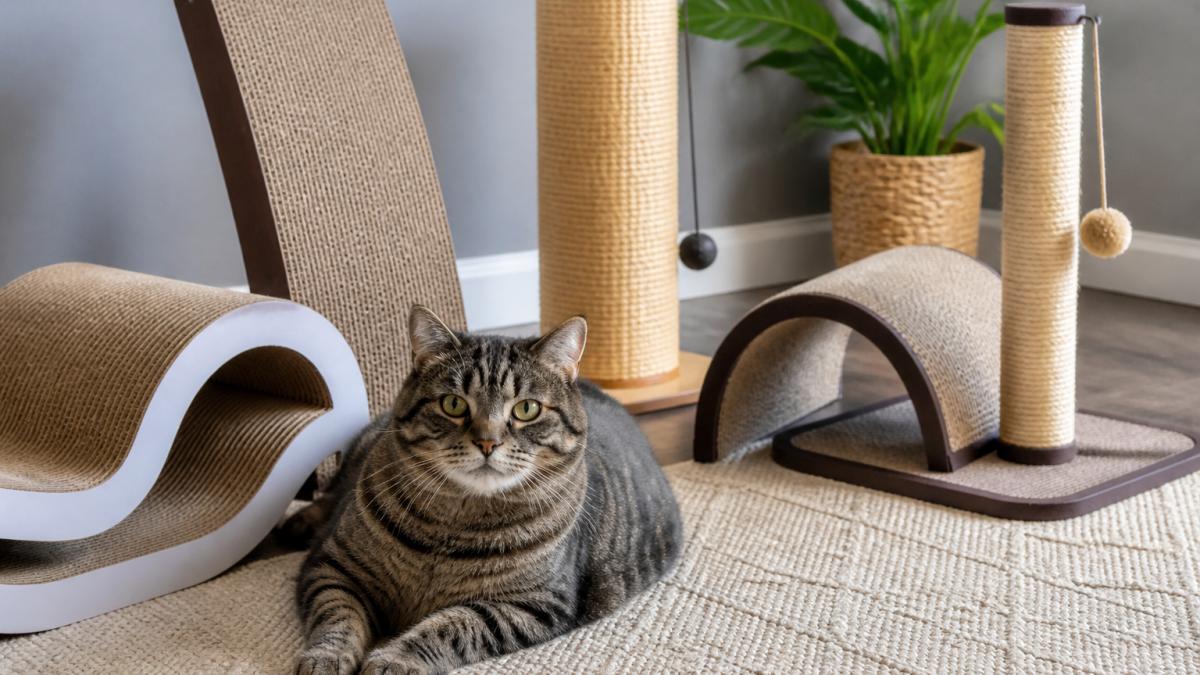
Durable Cat Scratchers for Large Cats
Table of Contents
- Why Large Cats Need Durable Scratchers
- Heavy Duty Cat Scratching Posts: What Sets Them Apart
- Cat Scratching Post Height Requirements for Large Breeds
- How to Stabilize a Cat Scratching Post
- Multi-Functional Scratchers: Combining Play and Rest
- Maintenance and Longevity: Extending Your Scratcher's Life
- Choosing the Right Scratcher for Your Large Cat
- Frequently Asked Questions
Last Updated: October 2, 2026
Why Large Cats Need Durable Scratchers
Large cats require durable cat scratchers engineered for sustained weight and aggressive scratching. A 12-20 pound cat applies forces that standard scratchers cannot handle.
Undersized scratchers wobble, tip, or collapse, causing cats to seek alternative surfaces like your couch. A durable cat scratcher for large cats must have a solid foundation, quality materials, and genuine stability.
Cat owners often buy standard scratchers for large breeds, only to find the post sways and the cat abandons it within days. Investing in a post designed for larger felines prevents behavioral issues, protects your furniture, and supports their natural scratching instinct.
Heavy Duty Cat Scratching Posts: What Sets Them Apart
Heavy duty cat scratching posts prioritize weight capacity, material durability, and base stability as core design features, not afterthoughts.
Quality heavy duty posts use materials that withstand repeated claw contact, have bases weighing 15-25 pounds to prevent tipping, and accommodate the forces a 15-pound cat creates.
Sisal Rope vs. Corrugated Cardboard
Sisal rope is a natural fiber wrapped tightly around wooden posts, creating a textured surface cats find satisfying. It resists fraying and provides the resistance large cats prefer. Quality sisal rope posts last years with regular use.
Corrugated cardboard is softer and appeals to some cats, but deteriorates faster than sisal. For large cats that scratch intensively, cardboard surfaces wear down within months. Cardboard works best as a secondary option alongside a sisal post.
For a durable cat scratcher for large cats, sisal rope is the stronger choice. It tolerates aggressive scratching, resists wear, and maintains its texture throughout its lifespan. Cardboard works as a supplementary surface but shouldn't be the primary scratching option for a heavy cat.
Base Weight and Stability Features
The base is where heavy duty posts prove their value. A light base guarantees failure when a 15-pound cat launches upward with full force.
Professional-grade posts use bases weighing 15-25 pounds or more from dense wood or concrete-filled platforms. The base should be at least as wide as the post is tall to create a low center of gravity.
Double-layered bases prevent wobbling by spreading weight across a wider footprint while connecting directly to the post's support structure.
Look for posts with anti-slip pads on the bottom. These keep the base from sliding across hardwood or tile floors, which is critical for large cats. A post that moves even slightly will be rejected by cats that value stability.
Cat Scratching Post Height Requirements for Large Breeds
Height matters for large cats because they need to stretch fully when scratching. A post that's too short prevents full-body stretch and becomes less satisfying.
For large cats, a scratching post should be 42-48 inches tall, allowing a 15+ pound cat to stand on hind legs and stretch fully, engaging muscles across the back, shoulders, and legs.
Posts shorter than 36 inches force large cats to crouch, causing them to abandon the post for curtains or furniture. A tall post redirects scratching energy away from your belongings.
How to Stabilize a Cat Scratching Post
Stability is the foundation of a functional scratching post for large cats. Even a well-designed post needs proper placement and setup to perform correctly.
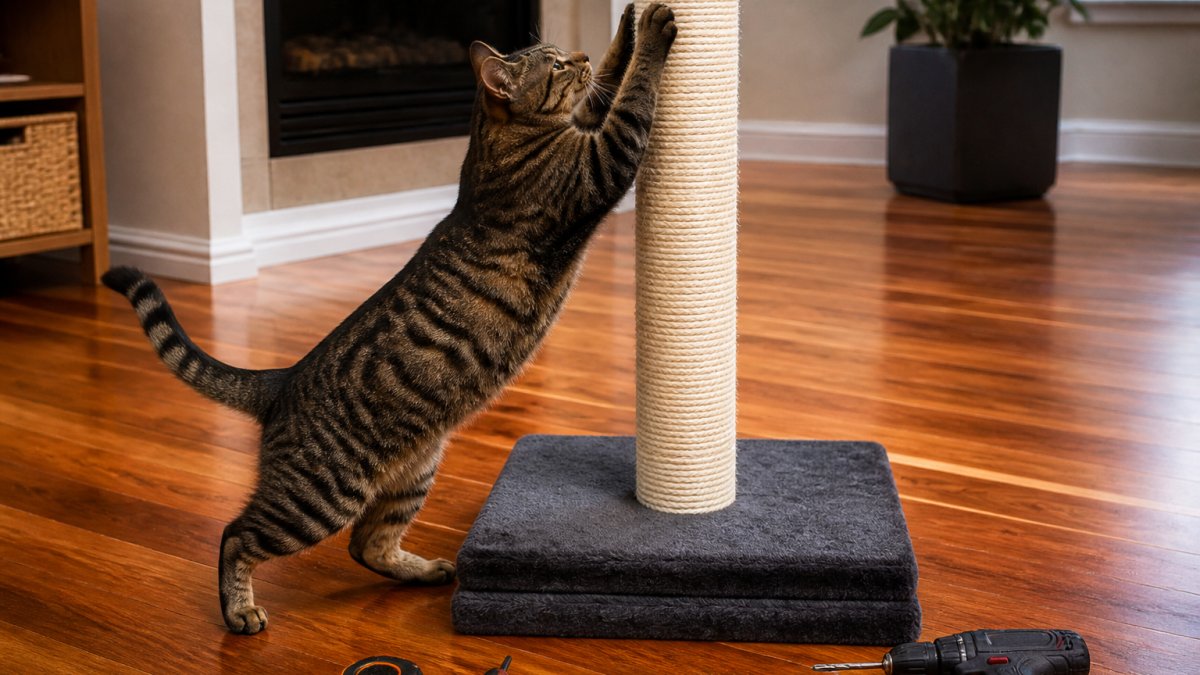
Start by placing the post on a level, hard surface. Carpet or soft flooring can hide uneven spots that cause wobbling. Hardwood, tile, or concrete reveals whether the base sits flat. If the base rocks when you apply light pressure, the floor itself is uneven, adjust the post's position or use shims under the base to level it.
Ensure the post is positioned away from walls and furniture that might catch the cat mid-stretch. A cat needs space to approach the post from multiple angles and extend fully without restriction. Posts pressed against walls limit the cat's movement and reduce usage.
For posts that still show minor movement despite a solid base, wall-mounted stabilizer brackets can help. These attach to the post and anchor it to the wall or baseboard, eliminating sway completely. This is particularly useful in homes with large, very active cats or multiple large cats sharing the same post.
Placement Strategy for Large Cats
Where you place the post determines whether your cat will actually use it. Large cats have preferences about location, and respecting those preferences increases the likelihood of consistent scratching post usage.
Place the post in a high-traffic area of your home, somewhere the cat naturally spends time. Cats are territorial animals that scratch to mark territory. They want their scratching post in areas they frequent, not hidden in a corner. A post in the living room gets more use than one tucked away in a bedroom.
Avoid placing posts directly next to food or water bowls. Cats prefer to keep their territorial marking separate from eating areas. Similarly, don't place posts near litter boxes, cats naturally separate these spaces.
If your large cat has a favorite piece of furniture they've been scratching, place the post nearby. This gives them an alternative surface in the location they've already chosen for scratching behavior. Once they start using the post, you can gradually move it to a more convenient location if needed.
Sunlight matters more than many people realize. Cats love scratching in spots where sunlight streams through windows. A post positioned near a sunny window becomes significantly more appealing than the same post in a dim corner.
Multi-Functional Scratchers: Combining Play and Rest
Large cats benefit from scratchers that do more than provide a scratching surface. Multi-functional furniture combines scratching, lounging, and play in one unit, which maximizes the value of the investment and keeps cats engaged.
A scratcher with an integrated lounging platform gives your cat a place to rest after scratching. Many large cats appreciate having an elevated resting spot combined with their scratching surface. This encourages them to spend more time using the furniture rather than moving between different pieces.
Some multi-functional designs include hanging toys or interactive elements. These appeal to large cats that enjoy batting at objects. The combination of scratching, climbing, and play keeps cats mentally stimulated and physically active.
When selecting a multi-functional scratcher for a large cat, verify that all components are rated for your cat's weight. A lounging platform that can't support a 15-pound cat is useless. Check the manufacturer's specifications and look for posts with reinforced platforms designed specifically for larger felines.
Maintenance and Longevity: Extending Your Scratcher's Life
A durable cat scratcher for large cats is an investment that lasts years, but only with proper maintenance. Regular care extends the lifespan and keeps the post attractive to your cat.
Inspect your durable cat scratchers' surfaces monthly for wear patterns. Sisal rope that's becoming frayed or compressed in spots is starting to deteriorate. Early intervention prevents complete failure.
Replacement Pads and Repair Options
Many quality scratching posts come with replaceable scratching surfaces. This dramatically extends the life of the furniture and saves money compared to buying a new post when the scratching surface wears out.
Choosing the Right Scratcher for Your Large Cat
Selecting a durable cat scratcher for large cats requires evaluating your specific cat's needs and your home's constraints.
| Feature | Why It Matters | What to Look For |
|---|---|---|
| Base weight | Prevents tipping when cats jump | 15+ pounds for large cats |
| Post height | Enables full-body stretch | 42-48 inches minimum |
| Sisal rope | Withstands aggressive scratching | Tightly wrapped, secured ends |
| Stability | Encourages consistent use | Minimal sway under pressure |
| Multi-function design | Maximizes engagement | Lounging platform + scratching |
| Replacement parts | Extends furniture life | Available replacement surfaces |
International Society of Feline Medicine recommendations on environmental enrichment
Frequently Asked Questions
What makes a cat scratcher durable enough for a large cat?
A durable cat scratcher for large cats combines a heavy-duty base, solid wood construction, and high-quality scratching surfaces like natural sisal rope or double-layered corrugated cardboard. The base should weigh enough to prevent tipping when a large cat applies full body weight during stretching. Look for non-toxic materials, reinforced joints, and scratching surfaces designed to resist shredding after repeated claw contact. Weight capacity matters, prioritize scratchers rated for cats over 12 pounds.
How tall should a scratching post be for a large cat?
A scratching post should be at least 32-36 inches tall to allow large cats to achieve a complete full-body stretch. Many large cats benefit from posts reaching 40+ inches, especially if they're tall or athletic breeds. The height enables territorial marking behavior and muscle engagement along the entire spine and front legs. Measure your cat's standing height on hind legs and add 6-8 inches to ensure adequate stretch room without the post feeling cramped.
How do I prevent a large cat from tipping over their scratching post?
Stabilize a cat scratching post by choosing one with a double-layered base at least 18-24 inches wide and weighing 15+ pounds. Position the post away from walls and furniture edges where a cat might use leverage. Ensure the base sits flat on your floor without rocking. Heavy-duty cat scratching posts often include anti-slip pads or weighted bases. Test stability by gently pushing the post, it should not wobble. For extra security, some owners anchor posts to wall studs or use furniture pads to prevent sliding.
What's the difference between sisal and cardboard scratching surfaces?
Sisal rope is more durable and typically lasts longer under heavy use from large cats, offering superior claw maintenance and territorial marking support. Natural sisal fabric resists shredding and maintains texture over months of scratching. Corrugated cardboard scratchers are softer, more affordable, and appeal to cats that prefer horizontal scratching, but they wear faster and require more frequent replacement pads. Many large cat owners prefer sisal for longevity, though some cats respond better to cardboard texture. The best choice depends on your cat's scratching preference and your budget for replacement surfaces.