 blog
Cat Tree for Kittens With Ramps: What to Look For
Last Updated: November 22, 2026
Quick Summary
A good cat tree for kittens with ramps has a gentle incline, a low first platform, and a stable base. Look for a ramp around 1 inch of rise per 4 inches of run, about 8 to 10 inches wide, with grippy carpet or tightly wrapped sisal. Choose a cat tree that a kitten can climb without help.
- Aim for about 1 inch of rise per 4 inches of run, near 14 degrees.
- Avoid ramps near 1 inch of rise per 2 inches of run, which many kittens slip on.
- Choose a ramp about 8 to 10 inches wide with side rails or raised edges.
- Pick carpet, tightly wrapped sisal, or textured rubber for paw traction.
- Confirm the base is wide and weighted so the tree resists tipping.
Table of Contents
- Why Ramps Matter More Than Height for Kittens
- Cat Tree Safety for Kittens: Stability, Edges, and Materials
- Ramp Dimensions and Incline: What a Kitten Can Actually Climb
- Cat Tree With Stairs for Kittens: When Steps Beat a Ramp
- Large Cat Tree for Kittens With Ramps: Will It Fit Their Stage of Life?
- DIY Cat Tree With Ramp: Costs, Tools, and Trade-offs
- Choosing Your Kitten's First Cat Tree at Knead and Nuzzle
- Frequently Asked Questions
Why Ramps Matter More Than Height for Kittens
Ramps matter more than height because a kitten has to reach a platform before it can use it. A tall tower with a steep, slippery climb can keep a young cat from its favorite perch entirely. A good approach is to look first at how a kitten gets up and down, then at how high the platforms sit.
Kittens are still building strength, balance, and confidence. A gentle incline gives them a route they can manage on their own. Without one, they may jump, miss, and learn to avoid the tree altogether.
Here is the short version: look for a clear, low-effort path to the first platform, then check that the upper levels are reachable in stages.
Cat Tree Safety for Kittens: Stability, Edges, and Materials
A kitten's first cat tree should stay put when it climbs, leaps, or swats at a toy. Check the base for a wide footprint and weight in the bottom section. A wobbly base can tip under a playful kitten, and that is the kind of fall owners want to avoid.
Look closely at the edges of each platform. For a full rundown of other gear a new kitten needs alongside a safe tree, see our essential supplies guide. Smooth, rounded corners are kinder to curious paws and heads than sharp wood or exposed metal. Confirm that any posts, rope, or carpet wraps are firmly fixed and show no loose threads a kitten could chew or tangle in.
Material matters too. Sturdy, tightly wrapped sisal or a dense plush covering holds up to scratching and resists fraying. Avoid anything with small loose parts a kitten could pull off and swallow. Assembly should be solid, with every bolt tight after setup and rechecked after the first few weeks of play.
Ramp Dimensions and Incline: What a Kitten Can Actually Climb
The incline is often the detail that decides whether a kitten can use the ramp. Rather than relying on an age label, measure the ramp yourself and judge it against what a young cat can physically manage.
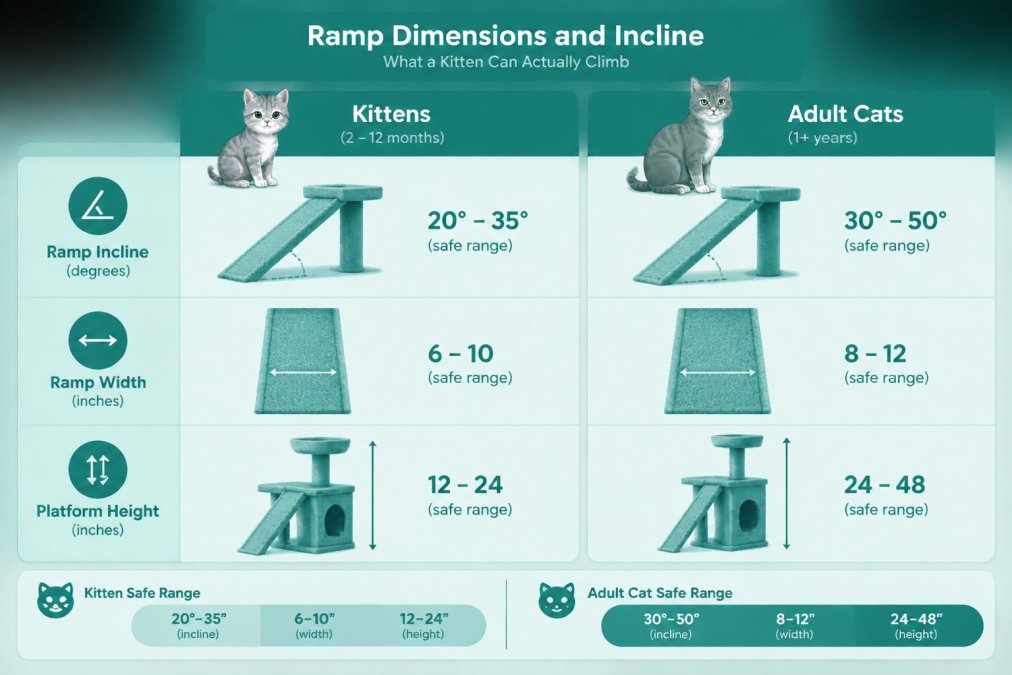
A practical way to check incline without a protractor: place a level or a straight edge along the ramp, then measure the vertical rise over a known horizontal run. A ramp that rises about 1 inch for every 4 inches of run sits near a 14-degree slope, which most kittens can climb without scrambling.
Ramp length and height work together. A ramp that covers only a short rise to a low first platform is the easiest starting point, because the kitten is never far off the floor and can bail out safely.
Traction is the second half of the equation. Carpet, tightly wrapped sisal, or a textured rubberized strip gives paws something to push against. Bare wood, slick laminate, and loosely draped fabric let claws skate. Run your hand up the ramp: if it feels smooth or the covering shifts, a kitten will slide back on the climb.
Ramp Width, Grip, and Lower Platforms
Width affects balance more than most buyers expect. A ramp around 8 to 10 inches wide gives a kitten room to place all four paws and turn around without stepping off the edge. Narrower ramps can work for a confident cat but feel precarious to a young one still learning where its feet go.
Edge protection matters as much as width. A low side rail or a raised lip along each side of the ramp keeps a paw from slipping off mid-climb. Flat, open-sided ramps are fine on the floor but riskier once they are elevated.
Lower platforms are the confidence builders. A first perch set low to the ground, with two or three graduated resting spots above it, lets a kitten climb a little, rest, and climb again. Trees with a single high perch and no intermediate landing get far less use from young cats, because there is no safe place to pause.
Watch out: a ramp that looks gentle in a product photo can be steeper in person once the tree is assembled, so confirm the ramp length and the height of the platform it serves before you order, and recheck the angle after setup.
The table below sums up the incline and ramp figures the article gives for a kitten to climb.
| Ramp feature | Article figure | Note |
|---|---|---|
| Gentle incline | About 1 inch rise per 4 inches run | Near 14 degrees; most kittens manage it |
| Hard incline | About 1 inch rise per 2 inches run | Roughly 27 degrees; many kittens slip |
| Ramp width | About 8 to 10 inches | Room to place all four paws and turn |
| Lowest first platform | Low to the ground | Easy starting point; safe to bail out |
| Ramp covering | Carpet, tightly wrapped sisal, or textured rubber | Gives paws grip; bare wood lets claws skate |
Cat Tree With Stairs for Kittens: When Steps Beat a Ramp
Stairs can work well when a kitten is already comfortable jumping short distances. Each step breaks the climb into small, manageable pieces, which some kittens find more natural than a long slope. Stairs also take up less floor space in some designs.
A ramp usually works better for very young kittens, since it offers a continuous, predictable path. Stairs with wide, sturdy treads and short rises are the better choice if you go this route. Check that each step is firmly attached and does not shift underfoot.
Watch your kitten's behavior. If it hesitates at the bottom step or tries to jump past the stairs, a ramp may suit it better for now. You can always add steps later as its confidence grows.
Large Cat Tree for Kittens With Ramps: Will It Fit Their Stage of Life?
A large tree can be a smart long-term buy, but only if its lower levels work for a kitten today and its upper levels still earn their place once the cat is grown. The question is not how tall the tree is, but whether every stage of the climb is reachable at each stage of the cat's life.
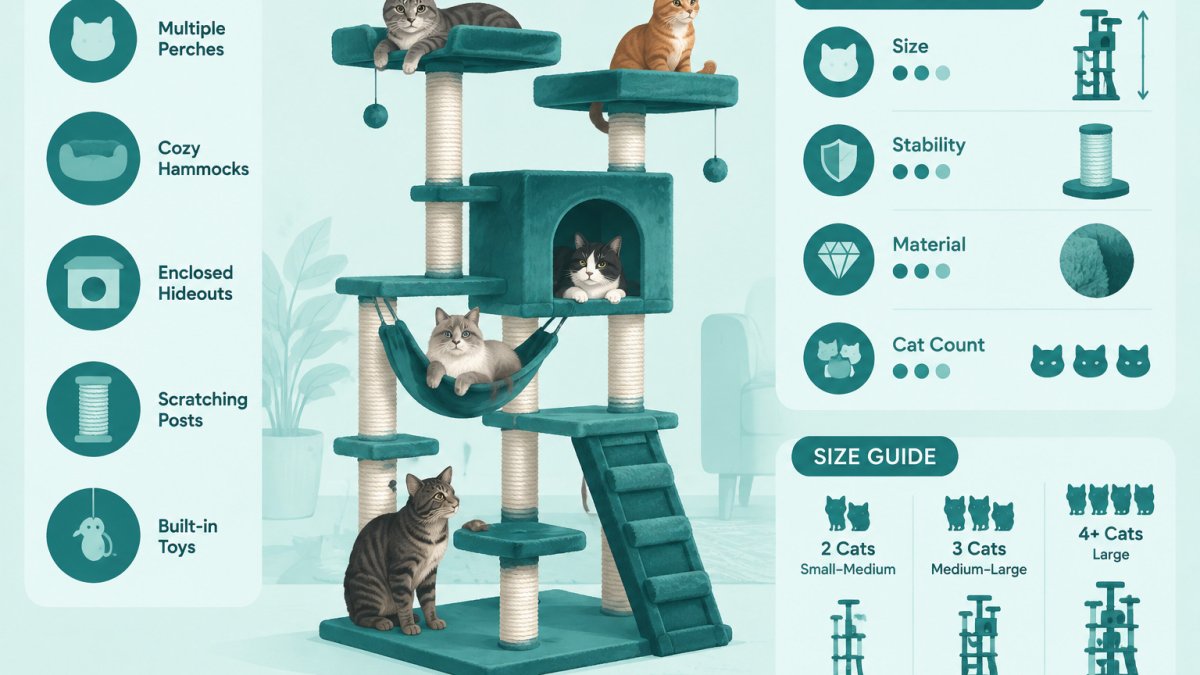
Think in three phases. Very young kittens, roughly under four months, do best with a low first platform, a gentle ramp, and short hops between levels; a tree that tops out around 30 to 40 inches is plenty and keeps falls short. Growing kittens, roughly four to eight months, gain the coordination to use taller trees with two or three ramp-served tiers, and this is when a mid-size tree with a ramp to a second platform starts paying off. Adult cats can use the full height, so a large tree with a ramp to the first platform and graduated perches above it can serve from kittenhood through adulthood, particularly in a multi-cat home.
Footprint is the other half of fit. Measure the base dimensions, not just the height, and add clearance for the ramp's run and for a kitten to land safely at the bottom. A tree with a wide, weighted base needs more floor area but resists tipping far better than a narrow tower. Leave walkways clear and place the tree against a wall or in a corner where a wobble has something to push against.
When comparing large trees, scan these differences rather than the marketing copy:
- Ramp design: continuous ramp to the first platform versus a ramp plus steps; check length, width, and side rails.
- Height and tier count: how many platforms a kitten can reach in stages, and whether the lowest perch is genuinely low.
- Stability: base footprint, weight in the bottom section, and whether wall-anchoring hardware is included.
- Materials: tightly wrapped sisal on posts, dense plush on perches, and firm, replaceable ramp covering.
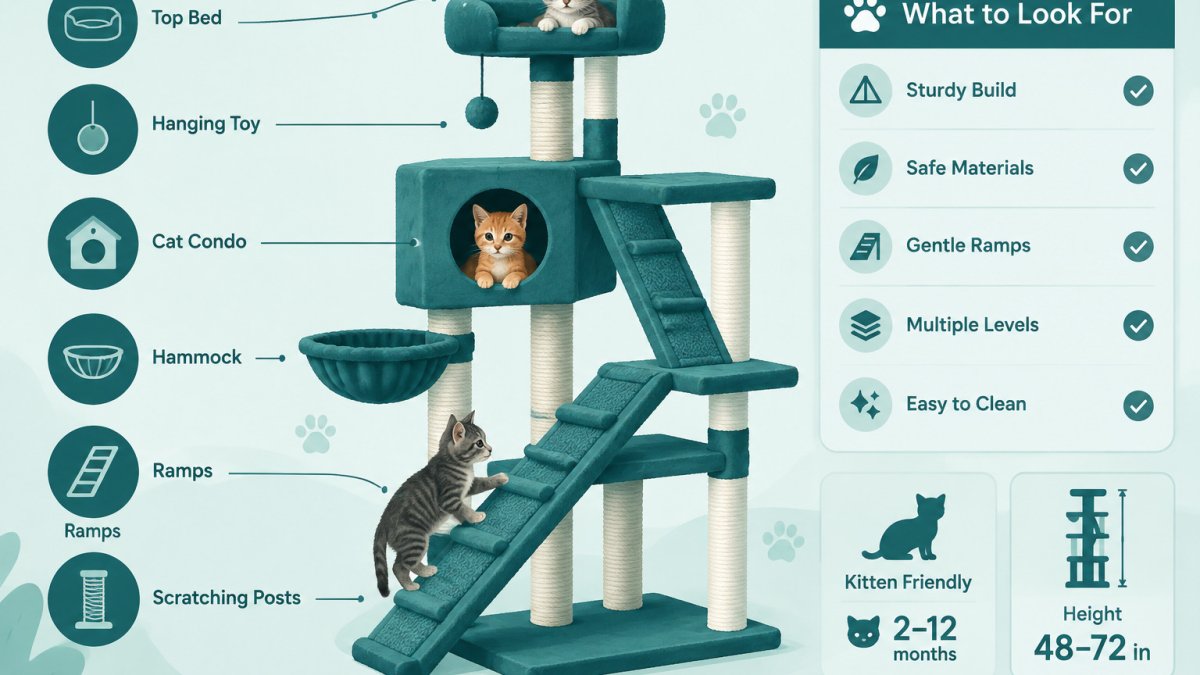
- Included features: condos, hammocks, and beds that give a kitten a reason to stay once it climbs.
A smaller tree with a gentle ramp is the more practical choice when floor space is tight, and it can be upgraded later. A large tree is worth it when the lower tiers are sturdy and comfortable now and the upper tiers add room to grow.
Watch out: a very tall tree with high perches and no intermediate landings can be more than a young kitten can use safely at first, so confirm the lower levels are usable before you commit to the full height.
DIY Cat Tree With Ramp: Costs, Tools, and Trade-offs
Building your own cat tree with a ramp can let you match the design to your room. It also takes time, planning, and some basic carpentry skills. Common tools include a drill, a saw for cutting boards, a staple gun for covering surfaces, and strong screws or brackets for attaching platforms.
The main trade-off is safety. A homemade tree is only as stable as its construction, so a wide base, solid joints, and well-anchored platforms are essential. Use smooth, sanded edges and make sure nothing can wobble or pinch a paw.
Cost depends on the materials you choose and how much you already have on hand. Compare the price of supplies against a finished product before deciding. If you lack the time or tools, a ready-made tree may be the safer and simpler option.
Choosing Your Kitten's First Cat Tree at Knead and Nuzzle
Start with the basics: a gentle ramp, a stable base, smooth edges, and low, reachable platforms. Then match the size to your home and to the stage your kitten is at right now. A tree that grows with your cat is usually the better long-term buy.
We recommend choosing a design your kitten can climb without help, since confidence builds from early wins. Compare the ramp incline, platform heights, and materials across the options, and check the stated dimensions before you order. Shipping is from the USA.
Browse our cat tree collection at Knead and Nuzzle to find a tree that suits your kitten and your space.
Frequently Asked Questions
Are cat trees safe for kittens?
Cat trees can be safe for kittens when they are stable, have secure platforms, and avoid large gaps or tipping risks. Check that the base is wide, the frame does not wobble when you push it, and platforms are firmly anchored. Keep the top platform at a height your kitten can reach comfortably, and supervise the first few climbing sessions. Plush or sisal coverings should be tightly attached so kittens cannot pull loose strands or fabric into their mouths.
At what age can kittens use a cat tree?
Most kittens can begin using a cat tree once they are weaned and moving confidently on the floor, often around 8 to 12 weeks. Start with the lowest platform and a gentle ramp so the first climbs are short and successful. Avoid pushing a young kitten to the top before it has built the strength and coordination to descend safely. Watch how your kitten jumps and lands and add height only as its confidence grows.
Is a ramp or stairs better for kittens?
A ramp works well for kittens who are still learning to jump, because the gentle incline lets them walk up without leaping. Stairs suit kittens who already climb easily and want faster movement between levels. A ramp with grip texture and a moderate slope is usually the better starting point for young kittens. Stairs can be a good addition later once your kitten's jumping and balance are reliable.
Can a large cat tree work for a kitten?
A large cat tree can work for a kitten if the lower platforms and ramp are low enough for small legs to reach comfortably. Look for wide, stable platforms and a ramp that connects to a level the kitten can manage. Large trees also give growing cats room to play and rest as they mature. Confirm the entry levels suit a small cat before buying, since an oversized top platform does not help a kitten who cannot get there yet.