 How-to
Why Cats Reject Water Fountains and How to Fix It
Last Updated: November 12, 2026
Quick Summary
Cats reject water fountains for repeatable reasons: pump noise, plastic taste, poor placement, dirty water, or a threatening flow. Start by running the fountain off as a still bowl, then turn the pump on at the lowest flow while your cat is out of the room. Never push her toward it and keep her old bowl available until she drinks from the fountain on her own.
- A scared cat flattens her ears, crouches, or bolts when the pump kicks on, so give her distance and time.
- Let a new fountain sit as a still water bowl for two to three days before turning the pump on.
- Turn the fountain on before dawn and dusk, when cats drink most, so the sound becomes routine.
- Sudden rejection after months is usually maintenance: check the filter, listen to the pump, and smell the water.
- Clean the pump impeller weekly, since hair wrapped around it is the most common cause of slow or noisy flow.
Table of Contents
- Why Cats Reject Water Fountains: The Main Causes
- When Your Cat Is Scared of the Water Fountain
- How to Get Your Cat to Drink Water from a Fountain
- Why Your Cat Won't Drink from the Water Fountain Anymore
- Cat Water Fountain Cleaning: The Maintenance Checklist
- Troubleshooting by Timeline: When the Rejection Started
- Fountain Dislike or Medical Problem? When to Call the Vet
- Choosing a Fountain Your Cat Will Actually Use at Knead and Nuzzle
- Frequently Asked Questions
Why Cats Reject Water Fountains: The Main Causes
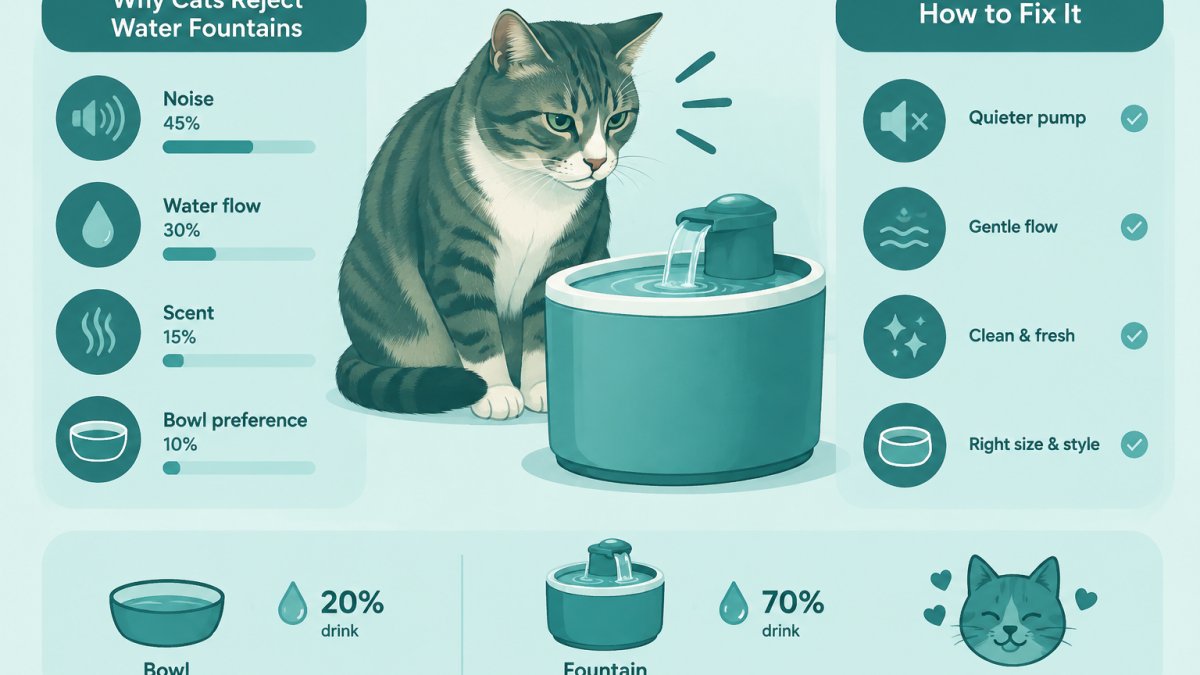
When a cat refuses a water fountain, the cause is usually sensory, not stubbornness. Cats reject water fountains for repeatable reasons: pump noise, plastic taste, poor placement, dirty water, or a threatening flow.
Here are the most common causes:
- Noise and vibration. Pumps hum. Some rattle. A cat's hearing is far more sensitive than ours (Feline Ear Disorders).
- Plastic taste and odor. Many cats notice the smell of plastic long before we do.
- Water depth and flow. A deep basin or a splashy stream can feel risky.
- Placement. A fountain next to a noisy appliance or a busy walkway gets avoided.
- Dirty water or a clogged filter. Stale water tastes wrong, and cats know.
- Fear of the unfamiliar. Anything new needs time, and some cats need more than others.
The Cornell Feline Health Center's guidance on cat behavior notes that cats are highly sensitive to change in their environment. That sensitivity explains a lot of fountain rejection.
When Your Cat Is Scared of the Water Fountain
A cat scared of the water fountain shows it clearly. She may flatten her ears, crouch low, approach and retreat, or bolt when the pump kicks on.
Fear and dislike look similar but need different fixes. A scared cat needs distance and time; a cat that prefers still water needs a different setup.
Watch for these signs:
- Ears back or whiskers pulled tight near the fountain
- Approaching only when the pump is off
- Drinking from the fountain's edge, never the stream
If you see these, don't force it. Move the fountain to a quiet corner and run it only when your cat is relaxed.
How to Get Your Cat to Drink Water from a Fountain
Getting a cat to drink from a fountain is gradual. The goal is to make the fountain feel ordinary before it feels interesting.
Follow these steps:
- Start with the fountain off. Let it sit as a still water bowl for two to three days.
- Place it beside the old bowl. Don't remove the familiar water source yet.
- Turn the pump on at the lowest flow. Do this while your cat is out of the room.
- Reward calm curiosity. A treat or a gentle word when she sniffs the fountain goes a long way.
- Never push her toward it. Let her set the pace.
- Keep both water sources out until she drinks from the fountain on her own.
Timing matters most. Cats drink most at dawn and dusk, so turn the fountain on before those windows so the sound becomes routine, not a surprise.
Why Your Cat Won't Drink from the Water Fountain Anymore
A cat that stops using a fountain she once liked is telling you something changed.
Run through this list first:
- Check the filter. A clogged filter slows flow and traps odor.
- Listen to the pump. A new rattle or grind means it needs cleaning or replacing.
- Smell the water. If it smells off to you, it smells worse to your cat.
Sudden rejection after months is rarely about preference, it's usually maintenance. A fountain that ran clean in week one turns unappealing fast without regular care.
If cleaning and a filter change don't fix it, look at your cat next. A change in drinking habits can signal a health issue, not a fountain problem.
Cat Water Fountain Cleaning: The Maintenance Checklist
Cleaning is one of the biggest factors in whether your cat keeps using a fountain. A clean fountain tastes better and resists biofilm.
Daily (two minutes)
- Top off the reservoir with fresh water rather than waiting for it to run low.
- Skim visible hair and food debris from the basin surface with a fine net or your fingers.
- Wipe the water line on the basin wall, where oils and saliva collect.
Weekly (fifteen to twenty minutes)
- Unplug the pump before touching water or parts.
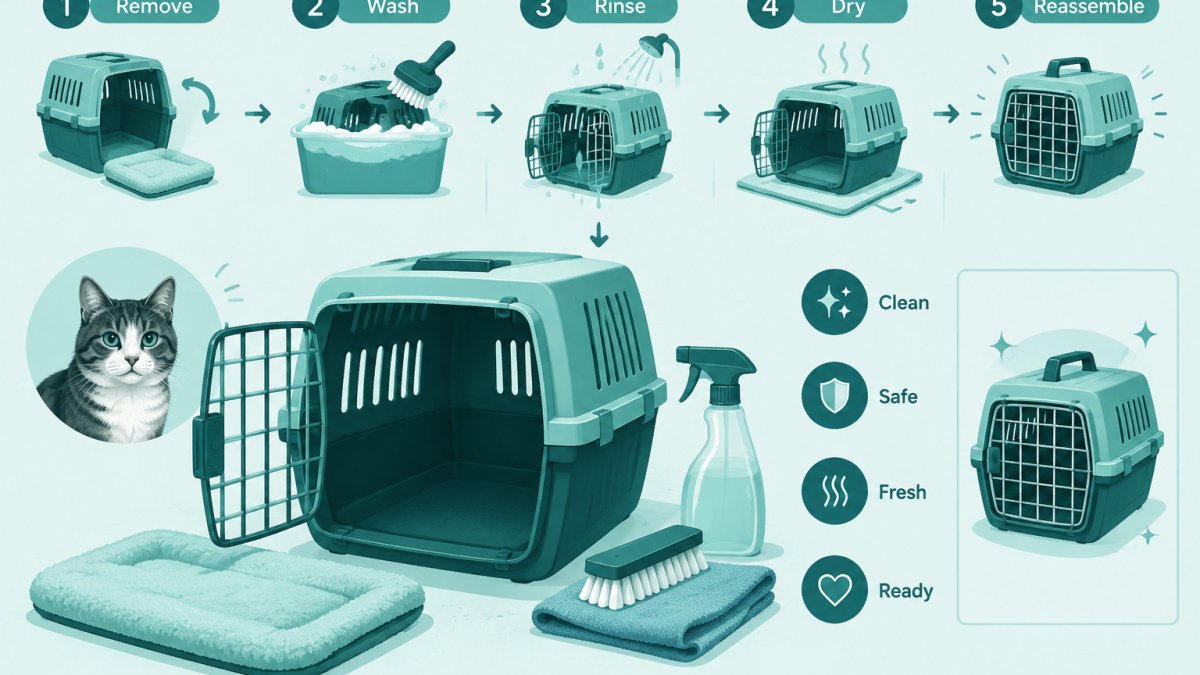
- Disassemble fully. Remove the lid, spout, filter housing, and pump cover, and pull out any foam pre-filter.
- Scrub the basin and lid with a soft brush and pet-safe cleaner or unscented dish soap. Avoid abrasive pads on plastic; scratches give biofilm a place to anchor.
- Clean the pump impeller. Open the housing, lift out the impeller, and wipe it and its cavity with a cotton swab. Hair wrapped around the impeller is the most common cause of a slow or noisy pump.
- Rinse the foam pre-filter under warm water and squeeze it out; replace it if it stays matted or smells sour.
- Check hard-to-reach spots: inside the spout, the basin-to-base seam, the underside of the lid, and the pump intake grate. Run a bottle brush or pipe cleaner through the spout.
- Reassemble and refill with fresh water.
Monthly
- Replace the filter on the maker's schedule. Most carbon or foam filters last roughly two to four weeks of continuous use; change sooner in a multi-cat home or warm weather. A clogged filter slows flow and traps odor, which makes cats lose interest.
- Deep-clean the pump by soaking the impeller and housing in warm water with pet-safe cleaner for ten to fifteen minutes, then scrubbing and rinsing.
- Inspect for mineral scale on the spout and basin. White buildup changes flow and taste; a diluted white-vinegar soak loosens it, followed by a thorough rinse.
Seasonal and as-needed
- Clean more often in summer. Biofilm forms faster in warm weather, and a fountain that looks clean can still carry a film your cat can smell.
- Clean after any illness in the household or if you notice slime, cloudiness, or an off smell.
- Replace worn parts. Cracked plastic, a frayed cord, or a pump that won't hold prime is a replacement signal, not a cleaning problem.
Watch out: skipping the pump impeller cleaning is a common mistake. Hair and mineral buildup slow the flow, and a slow flow is exactly what makes cats lose interest.
If you are stocking up on filters, brushes, and cleaners, our hygiene-focused fountain guide covers which designs stay cleanest.
Troubleshooting by Timeline: When the Rejection Started
The timing of the rejection points to the cause. Separate new-fountain reluctance from a sudden refusal after normal use, then run the tests in order.
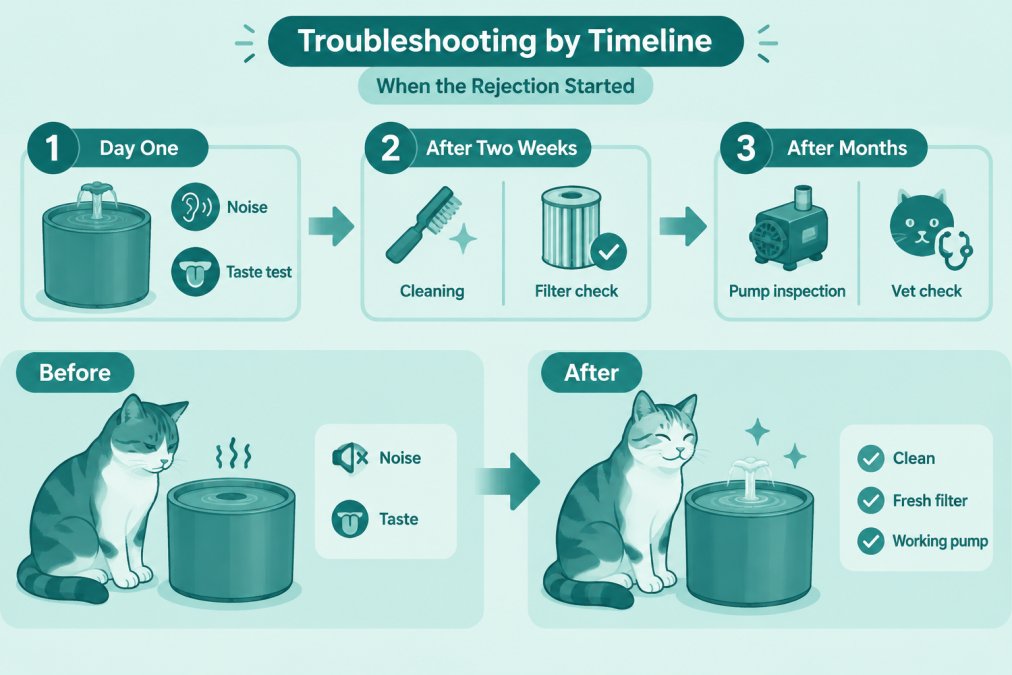
| When it started | Most likely cause | First test to run |
|---|---|---|
| Day one | Noise, taste, or fear | Run the fountain off, then on low |
| First two weeks | Placement or flow | Move it to a quiet spot |
| After a month or more | Dirty filter or pump | Full clean and filter change |
| Sudden, after months | Pump failure or health | Check the pump, then watch drinking |
If rejection began on day one
Start with the noise and vibration test, because sensory overload is the most common first-day cause.
- Isolate the sound. Turn the fountain off and sit quietly near it, then turn it on and listen from your cat's resting spot. If you hear a hum, rattle, or gurgle from there, your cat hears it more sharply.
- Separate hum from rattle. A steady hum is normal; a rattle usually means a loose or hair-wrapped impeller or a pump not seated flat. Reseat the pump and clean the impeller.
- Test floor vibration. Rest your fingertips on the floor beside the fountain while it runs. If you feel a buzz, set it on a rubber mat or folded towel and retest.
- Move it to a quieter location away from appliances, walkways, and litter boxes, and run it on the lowest flow for a few days.
- Rule out taste. Offer the same water in a stainless steel or ceramic bowl beside the fountain. If your cat drinks from the bowl but not the fountain, suspect plastic taste or odor.
If rejection began within the first two weeks
This window usually points to placement or flow. Move the fountain to a quiet corner with a clear escape route, keep the old bowl available, and lower the flow. If your cat approaches only when the pump is off, run it off for a few days as a still bowl, then reintroduce the pump at the lowest setting while she is out of the room.
If rejection began after a month or more of normal use
This is almost always maintenance. Run the full cleaning sequence, disassemble, clean the impeller, rinse the pre-filter, replace the filter, and check the spout and basin seams for residue. Then listen again. A new grind or weak flow after cleaning means the pump needs replacement.
If rejection was sudden after months
Check the pump first, then watch your cat. A failed or slowed pump changes the water's movement and sound overnight. If the pump checks out and your cat still avoids water, monitor drinking, appetite, litter-box habits, and energy for a few days, and contact your vet if anything else changes.
Multi-cat households
Competition is an under-covered cause. If one cat guards the fountain or blocks access, the other may avoid it entirely. Give each cat a separate quiet water option, place fountains in different rooms, and watch whether the avoidance is tied to a specific cat's presence rather than the fountain itself.
Monitor while you troubleshoot
Keep a simple log for one to two weeks: how often your cat drinks, whether she uses the fountain or the backup bowl, and any litter-box changes. A measurable plan with alternative water always available tells you whether a fix worked before you buy another fountain.
If you suspect a health issue rather than a fountain problem, talk to your vet before changing fountains again. Our hygiene-focused fountain guide covers which designs stay cleanest, and every order ships from the USA.
Fountain Dislike or Medical Problem? When to Call the Vet
Sometimes the fountain isn't the issue at all. A cat that stops drinking may have a medical problem, and that needs a vet, not a new bowl.
Call your vet if you notice:
- A drop in drinking alongside a change in appetite
- Drooling, pawing at the mouth, or dropping food
- Changes in litter-box habits
Mouth pain and oral infections can make drinking uncomfortable. Cats with a sore mouth often avoid moving water because it takes more effort.
If you suspect a health issue, talk to your vet before changing fountains again. And if you're stocking up on supplies while you sort it out, our guide to buying cat health supplies online walks through what to look for.
Choosing a Fountain Your Cat Will Actually Use at Knead and Nuzzle
The right fountain removes most of the reasons cats reject one.
Here's what to look for:
- A quiet pump. Low noise matters more than flow power.
- Stainless steel or ceramic. These hold less odor than plastic.
- A shallow, wide basin. Easy to reach, less intimidating.
Our hygiene-focused fountain guide covers which designs stay cleanest. You can also browse our full meal time supplies for fountains, bowls, and feeding stations in one place.
Every order ships from the USA. If you want the details before you buy, our shipping and returns page has you covered.
For the deeper reasons behind a stubborn cat, our companion piece on why cats refuse water fountains goes further.
Getting a cat to trust a fountain takes patience, and the payoff is a cat that drinks more and stays healthier.
Frequently Asked Questions
Why does my cat hate his water fountain?
Most fountain rejection comes down to one of four things: pump noise or vibration, a water taste or odor your cat dislikes, buildup of biofilm or slime in the basin, or a placement that puts the fountain near the litter box or a busy walkway. Cats are sensitive to sound and smell, so a fountain that seems quiet to you may hum at a pitch your cat notices. Test one change at a time, starting with a full cleaning and a move to a quiet corner, before deciding the fountain itself is the problem.
How can I get my cat interested in a water fountain?
Start with the fountain turned off and unplugged so your cat can investigate a still basin without noise or splashing. Place it beside the old water bowl rather than replacing it, and keep both filled for a week or two. Add a few ice cubes or let the tap run briefly nearby to draw curiosity. Once your cat drinks from the still basin, plug the pump in on its lowest flow setting. Positive reinforcement, such as a treat after any sniff or sip, speeds up the transition.
Could the fountain's noise or movement scare my cat?
Yes. Pump vibration travels through the bowl and the floor, and some cats are startled by the splash of a high flow rate. Run a simple test: unplug the pump for a day and watch whether your cat approaches the basin. If she drinks from a still fountain but avoids it when running, noise or movement is the cause. Try a lower flow setting, a silicone mat under the base, and a fountain with a submerged pump to reduce vibration.
How often should I clean a cat water fountain?
Rinse the basin and refill with fresh water daily, and do a full teardown once a week: disassemble the pump, scrub the impeller and housing with a soft brush, wash the bowl and spout, and replace the filter according to the manufacturer's schedule. In multi-cat homes or warm weather, clean twice weekly. Biofilm, the slick film that builds on wet surfaces, harbors bacteria and changes how the water tastes, which is a common reason a cat stops drinking from a fountain she previously used.