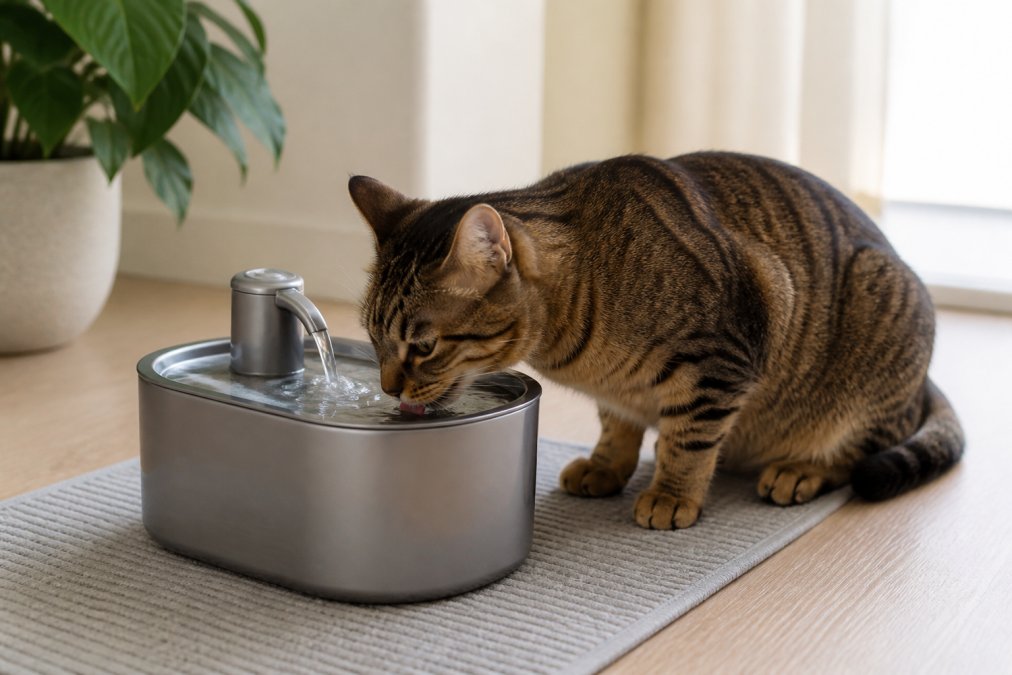
 blog
blog
Best Cat Water Fountains for Hygiene
Table of Contents
- Why Hygiene Matters for Cat Hydration
- Stainless Steel vs. Ceramic Cat Fountains
- How to Clean a Cat Water Fountain
- Why Cats Refuse Water Fountains
- Key Features That Support Feline Health
- Material Comparison: Porosity and Sanitization
- Frequently Asked Questions
Last Updated: September 25, 2026
Why Hygiene Matters for Cat Hydration
Cats are notoriously picky about water. Unlike dogs, they evolved in arid environments where water sources were scarce and often contaminated. This ancestral caution makes them skeptical of standing water, and rightfully so. Stagnant water breeds bacterial growth and biofilm, which can trigger feline health issues ranging from urinary tract infections to kidney disease. The best cat water fountains for hygiene solve this problem by keeping water circulating, filtered, and fresh.
Proper water intake prevents kidney disease, supports urinary tract function, and keeps your cat's organs operating optimally. A cat water fountain isn't just a luxury, it's preventive medicine in motion.
The challenge is that not all fountains are created equal. Some accumulate biofilm in hard-to-reach crevices. Others have pumps that fail or motors that clog with mineral deposits. The best cat water fountains for hygiene combine smart design with materials that resist bacterial colonization and are genuinely easy to clean.
Stainless Steel vs. Ceramic Cat Fountains
When choosing between materials, you're really choosing between durability and porosity. Stainless steel is non-porous, meaning bacteria cannot embed themselves into microscopic cracks. It's also dishwasher safe, which matters when you're cleaning weekly. Ceramic offers aesthetic appeal and heat retention (which some cats prefer), but its porous surface can trap bacteria and biofilm in ways stainless steel cannot.
Stainless steel wins for hygiene-focused owners. The material resists mineral deposits better, doesn't absorb odors, and won't develop permanent staining from hard water. Ceramic requires more careful cleaning and dries slower after washing, creating windows where bacterial growth accelerates.
Plastic fountains are the least hygienic option. Plastic is porous at a microscopic level, scratches easily during cleaning, and can leach chemicals when exposed to hot water. If you're prioritizing your cat's health, avoid plastic entirely.
How to Clean a Cat Water Fountain
Proper cleaning is where most cat owners fail. A fountain that looks clean on the surface may harbor biofilm in the pump housing or beneath the filter. Effective cleaning requires disassembly, targeted attention to bacterial growth zones, and a maintenance schedule you'll actually follow.
Disassembly and Daily Maintenance
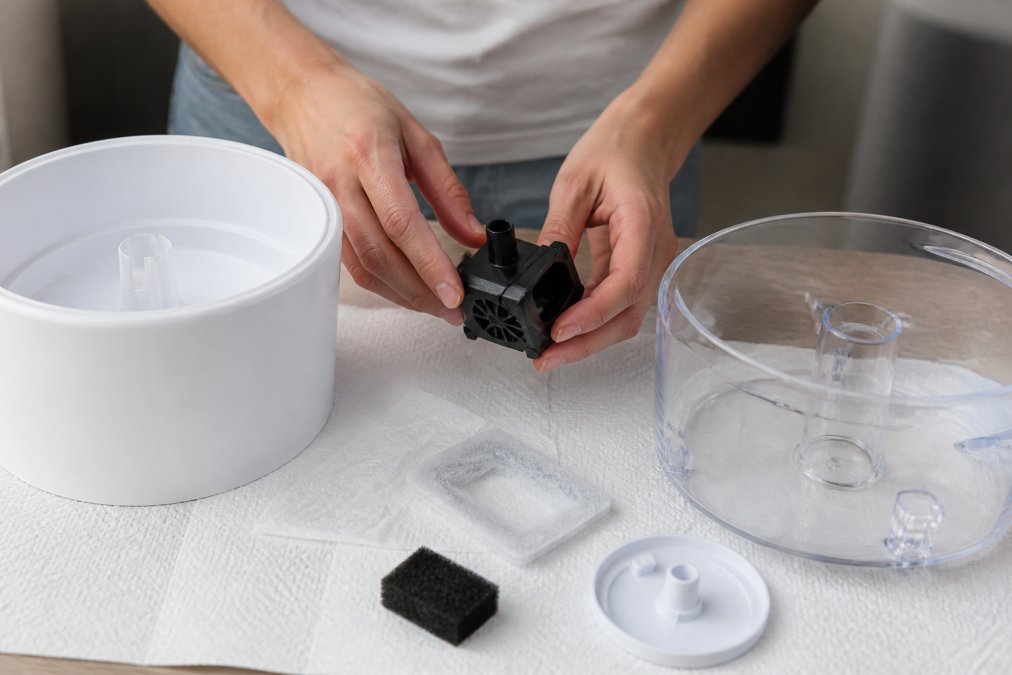
Start by unplugging the fountain completely. Remove the pump and filter assembly, most quality fountains are designed for tool-free disassembly. Rinse each component under running water. Pay special attention to the pump intake, where debris accumulates.
Daily maintenance takes five minutes: empty and refill the reservoir, rinse the bowl, and check the water level indicator. Don't skip this step. Even circulating water becomes stagnant if the pump runs dry.
Weekly, disassemble the entire fountain. Soak the pump and filter in white vinegar for 15 minutes to dissolve mineral deposits. This prevents motor strain and maintains water flow rate. Scrub the reservoir and bowl with a soft brush, avoid abrasive materials that scratch stainless steel or ceramic.
Preventing Biofilm and Bacterial Growth
Biofilm is the real enemy. It's a sticky matrix of bacteria, algae, and organic matter that clings to surfaces and resists simple rinsing. Monthly deep cleaning is non-negotiable if you want to prevent it.
Once monthly, soak all components in a solution of one part white vinegar to three parts water for 30 minutes. This breaks down biofilm at its source. For stubborn buildup, use a soft-bristled toothbrush on crevices around the pump housing and water intake valves. Never use bleach, it can leave residues harmful to cats.
Replace the carbon filter according to the manufacturer's schedule, typically every two to four weeks. A clogged or expired filter stops removing contaminants and becomes a bacterial breeding ground itself. Some owners skip this step to save money, but a compromised filter defeats the entire purpose of owning a fountain.
Why Cats Refuse Water Fountains
Your cat might reject a new fountain for reasons that have nothing to do with hygiene. Understanding these objections helps you choose a fountain your cat will actually use.
Many cats are sensitive to the sound of circulating water. A pump that produces a constant hum or gurgling noise creates stress, not attraction. Whisper-quiet operation isn't a luxury, it's essential for adoption. If the motor is audible from more than a foot away, your cat will avoid it.
Spout design matters enormously. Some cats prefer drinking from the flowing water stream rather than the bowl. Others find splashing uncomfortable and want still water. The best cat water fountains for hygiene offer multiple drinking options: a bowl, a stream, and sometimes a waterfall feature. This gives your cat choice, which dramatically increases usage.
Water temperature also influences acceptance. Cats naturally prefer room-temperature water, not chilled or warm water. A fountain that sits in sunlight all day may become too warm. Conversely, a fountain in a cold corner stays unappealing.
Location is critical. Place the fountain away from the litter box and food bowl. Cats have strong preferences about where they drink relative to where they eliminate. A fountain in the wrong spot will be ignored no matter how hygienic it is.
Key Features That Support Feline Health
Not all fountains are designed with your cat's health as the priority. The best cat water fountains for hygiene combine specific features that work together to maintain water quality and encourage drinking.
Filtration Systems and Water Quality
A quality filtration system removes chlorine, odors, and sediment that make water unappealing to cats. Multi-stage filters work best: a mechanical filter that traps debris, followed by an activated carbon filter that removes chemicals and odors.
Some fountains use ceramic filters, which are durable and long-lasting but require more frequent cleaning. Others use replaceable cartridge filters, which are convenient but create ongoing costs. The trade-off is between convenience and long-term expense.
UV sterilization is an emerging feature that kills bacteria without chemicals. If your fountain includes UV capability, it's an additional layer of protection against biofilm formation. However, UV alone doesn't replace mechanical filtration or regular cleaning.
Pump Maintenance and Motor Longevity
The pump is the heart of the fountain. A weak pump that fails after six months defeats the purpose entirely. Quality motors are brushless (which last longer) and submersible (which means they're protected from water damage).
Mineral deposits from hard water clog pump intake valves and reduce water flow. This is why regular vinegar soaking is essential, it prevents mineral buildup that shortens motor life. A fountain with easy pump access is worth the premium because you can actually maintain it.
Water flow rate matters too. A pump that circulates 50+ ounces per hour ensures continuous water movement and oxygenation. Slower circulation creates dead zones where stagnation occurs.
Noise Levels and Whisper-Quiet Operation
A loud fountain is a rejected fountain. Many cats will avoid drinking from a noisy source, defeating the entire health benefit. Whisper-quiet operation means the motor should produce less than 40 decibels, roughly the sound of a quiet library.
Noise often indicates a failing pump or mineral buildup. If your fountain suddenly becomes louder, it's time for deep cleaning or pump replacement.
Material Comparison: Porosity and Sanitization
The material you choose determines how much effort hygiene requires and how long the fountain will last. Porosity, the presence of microscopic holes or crevices, is the hidden factor that separates easy-to-clean fountains from bacterial incubators. But material choice also affects water chemistry and cleaning convenience in ways most articles overlook.
Frequently Asked Questions
What material is most hygienic for cat water fountains?
Stainless steel is the most hygienic option because it has a non-porous surface that resists biofilm and bacterial growth better than ceramic or plastic. Ceramic ranks second if glazed properly, while plastic harbors bacteria more easily due to microscopic scratches that accumulate over time. Stainless steel also withstands frequent sanitization without degrading, making it ideal for maintaining water quality and supporting feline health.
How often should you clean a cat water fountain to prevent bacteria?
Clean your cat water fountain every 2-3 days at minimum, and daily if possible. Empty the reservoir, wash all components with hot soapy water, and scrub the pump intake area where biofilm accumulates fastest. Replace the carbon filter according to the manufacturer's schedule, typically every 2-4 weeks. Daily water circulation helps reduce stagnant water buildup, but regular disassembly and sanitization are essential to prevent bacterial growth and keep your cat hydrated safely.
Why do cats refuse water fountains?
Cats often reject fountains due to flow rate preferences, spout design discomfort, or noise from the pump motor. Some cats are sensitive to water splashing on their whiskers or prefer still water. Introduction matters too: place the fountain near their existing water bowl, fill it with fresh water daily, and let them explore it without pressure. Whisper-quiet models with adjustable flow rates and wider spout designs increase acceptance. If your cat has refused fountains before, gradual acclimation and a design that mimics natural water sources work better.
How do I prevent biofilm buildup in my cat's water fountain?
Prevent biofilm by maintaining a consistent cleaning schedule, changing water every 2-3 days, and using a quality carbon filter to remove mineral deposits and impurities. Stainless steel and non-porous materials resist biofilm better than plastic. Clean the pump intake and spout thoroughly each time, as these areas collect debris fastest. UV sterilization features in some fountains help kill bacteria, but manual sanitization remains the most reliable method. Store replacement parts properly and ensure the fountain's design allows for complete disassembly so no hidden areas trap stagnant water.