 how-to
Why Cats Refuse Water Fountains: 7 Real Reasons
Table of Contents
- Why Cats Refuse Water Fountains
- Whisker Fatigue and Sensory Stress
- Material Sensitivity: Plastic vs. Stainless Steel and Ceramic
- Pump Noise, Water Temperature, and Motor Vibration
- How to Train a Cat to Use a Water Fountain
- How to Clean Cat Water Fountain and Prevent Biofilm Buildup
- Signs of Dehydration in Cats and When to Seek Help
- Fountain Placement, Water Level, and Depth Perception
- Frequently Asked Questions
Last Updated: September 18, 2026
Why Cats Refuse Water Fountains
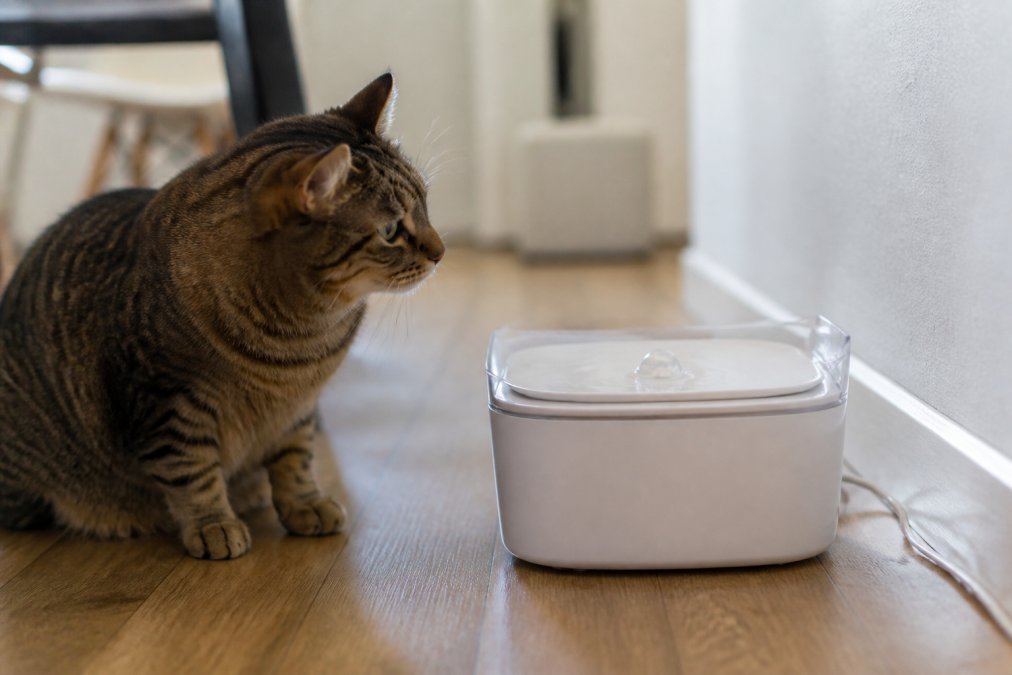
Your cat ignores the fancy water fountain you just bought. You filled it with fresh water, plugged it in, and waited for your feline to embrace modern hydration. Instead, she walks past it and drinks from her bowl, or worse, the toilet.
Understanding why cats refuse water fountains is the first step toward solving the problem. Water fountains encourage hydration, supporting kidney health and urinary tract function, yet many cats ignore them entirely.
Cats have specific sensory needs and instinctual behaviors that most fountain designs ignore. Some trigger sensory stress, others leach chemicals, sit poorly, or make too much noise. A few cats have health issues that make drinking painful.
This guide walks you through the seven most common reasons cats refuse water fountains, and what you can actually do about each one.
Whisker Fatigue and Sensory Stress
Whisker fatigue happens when a cat's whiskers touch the sides of a bowl or fountain too often, causing discomfort and stress.
A cat's whiskers are hypersensitive sensory organs. When they brush against fountain edges repeatedly, the cat experiences sensory overload, constant irritation that builds over time.
Choose a fountain with a wide, open basin, ceramic or stainless steel work best. Switching to a wider model often solves whisker fatigue within days.
Material Sensitivity: Plastic vs. Stainless Steel and Ceramic
Plastic fountains can leach chemicals into water and may also retain odors that repel cats.
Plastic fountains break down over time and release compounds into water. Cats detect these changes immediately and dislike the plastic taste or smell.
Stainless steel and ceramic are inert and won't affect water quality. Ceramic is especially popular because it stays cool and doesn't retain odors.
Knead and Nuzzle carries fountains in all three materials.
Pump Noise, Water Temperature, and Motor Vibration
Many cats avoid fountains because the pump creates noise, vibration, or water temperature that feels unnatural.
Cats evolved drinking from cool, quiet running water. Modern fountain pumps produce noise and vibrations at frequencies that trigger stress in cats, even when inaudible to humans.
Noise and Frequency Sensitivity
Most fountains operate at 40-70 decibels. Cats hear frequencies up to 64,000 Hz and perceive the 50-120 Hz motor hum as more prominent than humans do. Some pumps produce ultrasonic frequencies above 20,000 Hz that cats find distressing.
Listen for a low, steady hum rather than a high-pitched whine. Brushless DC motors produce less vibration and noise than AC designs. If a fountain sounds like a fan in a store, it's too loud for a sensitive cat.
Switching to a "whisper-quiet" or "silent pump" model often works within days. Fountains under 50 dB are safer for noise-sensitive cats.
Motor Vibration and Paw Sensitivity
A cat's paws detect vibrations as subtle as 1-10 Hz. If the vibration frequency doesn't match natural running water, she'll avoid the fountain.
Natural streams produce irregular vibrations; fountain pumps produce steady, repetitive ones. This mechanical predictability can feel wrong to a cat's sensory system.
Place the fountain on a stable, level surface away from other appliances. Use a rubber mat or foam pad under the base to dampen vibrations. If your cat approaches but pulls away quickly, vibration sensitivity is likely the culprit.
Water Temperature Preferences
Cats prefer water at 65-75°F. Warm water (80-85°F) triggers avoidance. Keep fountains away from sunlight, heat sources, and warm rooms.
How to Train a Cat to Use a Water Fountain
Training takes patience and positive reinforcement, typically 1-3 weeks.
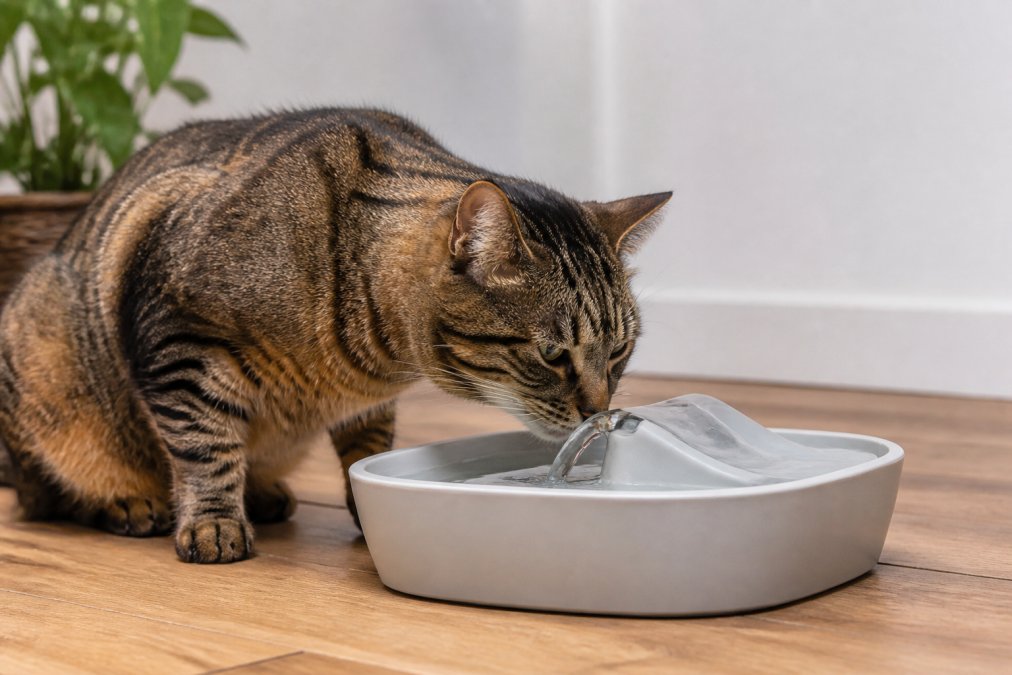
Place the fountain near her existing bowl and let her investigate at her own pace. Many cats need several days to approach without pressure.
Gradually move the fountain to her favorite resting spots. Cats drink more from fountains in areas where they already spend time.
Use positive reinforcement when she shows interest:
- Reward any approach to the fountain with treats or praise
- Never punish avoidance, this creates negative associations
- Place treats near the fountain base to encourage exploration
- Sit nearby and drink water yourself (cats mimic behavior)
If she refuses after 3 weeks, try a different design, material, or location, the fountain itself may trigger sensory stress.
How to Clean Cat Water Fountain and Prevent Biofilm Buildup
Clean your fountain every 3-5 days to prevent biofilm buildup, which makes water unsafe and discourages cats from drinking.
Biofilm is a slimy layer of bacteria and minerals. Cats taste and smell it immediately, refusing the fountain even if they previously drank from it. Biofilm can harbor pathogenic bacteria like Pseudomonas and Acinetobacter, causing digestive upset and urinary tract infections.
Understanding Water Chemistry and Mineral Buildup
Hard water causes mineral buildup that changes water taste and clogs pumps. Cats notice the mineral taste and may refuse fountains with heavy limescale.
Both very hard and very soft water cause problems. The ideal range is 60-120 ppm hardness (Hardness of Water).
Step-by-Step Cleaning Process
Regular cleaning prevents both biofilm and mineral buildup. Here's the process:
- Empty the fountain completely and discard any remaining water
- Rinse all parts with hot water to loosen debris
- Scrub the basin and pump housing with a soft brush (old toothbrushes work well) to remove visible biofilm
- Soak the pump in white vinegar for 15-30 minutes to dissolve mineral deposits (longer soak for hard water areas)
- Use a small brush or pipe cleaner to clear the pump intake and outlet where mineral buildup accumulates
- Rinse all parts thoroughly with fresh water until no vinegar smell remains
- Refill with fresh, filtered water and run the pump for 2 minutes before your cat drinks
Filtration and Water Replacement
Carbon filters reduce mineral buildup and improve taste but need replacement every 2-4 weeks depending on water hardness.
Troubleshooting Persistent Refusal
If your cat refuses after cleaning, try filtered or distilled water, test water hardness, replace the carbon filter, and inspect the pump outlet for mineral deposits restricting flow.
Signs of Dehydration in Cats and When to Seek Help
Dehydration in cats can cause urinary tract infections, kidney disease, and other serious health problems. Watch for these warning signs.
Signs your cat may be dehydrated include:
- Dry mouth and gums (check by gently pulling the lip back)
- Lethargy or reduced activity
- Loss of appetite
- Constipation or hard stools
- Reduced urination or dark urine
- Skin that doesn't bounce back when gently pinched
Fountain Placement, Water Level, and Depth Perception
Cats evaluate water sources based on location, visibility, and how deep the water appears. Poor placement is often why cats refuse water fountains.
Frequently Asked Questions
Why does my cat refuse to drink from the water fountain?
Cats refuse water fountains for several reasons: whisker fatigue (the bowl's edges touching sensitive whiskers), pump noise creating sensory stress, plastic materials that taste or smell off, water temperature preferences, or the fountain's placement away from their preferred drinking spots. Some cats also struggle with depth perception or fear the moving water. Identifying which factor bothers your cat helps you choose a fountain design that works better for their instinctual preference for running water.
How can I encourage my cat to drink from the water fountain?
Start by placing the fountain near your cat's favorite resting area, away from the litter box. Use positive reinforcement: reward your cat with treats when they approach or drink from it. Choose a fountain with a wide, shallow basin to reduce whisker fatigue, and consider ceramic or stainless steel over plastic. Ensure the water stays fresh by cleaning the filtration system regularly and replacing the carbon filter as directed. Some cats need a gradual transition period, keep their regular water bowl nearby while they adjust.
What are signs of dehydration in cats I should watch for?
Signs of dehydration in cats include reduced skin elasticity (skin that doesn't bounce back when gently pulled), dry gums, lethargy, sunken eyes, and decreased urination. Cats with dental pain or urinary tract health issues may drink less water, increasing dehydration risk. If your cat shows these symptoms or refuses water for more than a day, contact your veterinarian. Adequate water intake is critical for kidney health and preventing urinary tract problems, so encouraging feline hydration through a fountain that your cat actually uses matters significantly.
How often should I clean my cat's water fountain?
Clean your cat's water fountain at least twice weekly to prevent biofilm buildup and stagnant water issues. Change the water daily, rinse the basin and pump, and clean the carbon filter according to the manufacturer's instructions (typically every 2-4 weeks). Hard water deposits and mineral buildup can affect water quality and make the fountain less appealing. A properly maintained fountain with fresh, clean water encourages better water intake and supports your cat's overall feline health.
Cats refuse water fountains for specific, solvable reasons. Whether it's whisker fatigue, material sensitivity, noise, or placement, identifying the real problem lets you fix it. At Knead and Nuzzle, we stock fountains in ceramic, stainless steel, and quiet-pump designs that address these common issues. Shop our selection of cat water fountains and find the one that matches your cat's preferences and your home's needs.