 blog
Premium Cat Furniture for Seniors: A 2026 Guide
Table of Contents
- What Premium Cat Furniture for Seniors Actually Means
- Best Cat Trees for Older Cats: Accessibility and Stability First
- Low Cat Trees for Older Cats: Design That Works
- Orthopedic Cat Beds for Older Cats: Joint Support and Comfort
- Cat Stairs for Senior Cats: Gradual Access Solutions
- How to Evaluate Premium Quality: What Sets Durable Furniture Apart
- Placement and Setup: Making Furniture Work in Your Home
- Frequently Asked Questions
Last Updated: October 20, 2026
What Premium Cat Furniture for Seniors Actually Means
Premium cat furniture for seniors isn't about fancy aesthetics or expensive materials alone. It's about thoughtful design that acknowledges how aging cats move, rest, and interact with their environment. At Knead and Nuzzle, we focus on furniture that prioritizes accessibility, joint support, and stability, the features that matter most when your cat's mobility and comfort are on the line.
Senior cats face real physical challenges. Arthritis, reduced muscle tone, and lower energy levels change how they navigate vertical spaces. The best premium furniture meets them where they are, not where they used to be. This means lower entry points, wider platforms, cushioning that supports joints, and construction sturdy enough to handle repeated use without wobbling or shifting.
What separates premium from standard is durability and thoughtfulness. A cheap cat tree might collapse after a year or two. Premium furniture is built to last through years of daily use, with materials that resist wear and are genuinely easy to clean. That reliability matters, you're investing in something your senior cat will depend on every single day.
Best Cat Trees for Older Cats: Accessibility and Stability First
The best cat trees for older cats prioritize entry points and structural integrity over height. A towering five-level tree might impress visually, but if your senior cat can't comfortably reach the first platform, it's useless furniture taking up space.
Look for cat trees with low entry platforms, ideally between 8 and 12 inches from the ground. This height range allows most senior cats to step up without straining their hips or knees. Wide platforms (at least 12 inches across) give older cats room to settle comfortably without feeling unstable.
Stability is non-negotiable. The base should be heavy and wide enough that the tree doesn't wobble when your cat jumps or shifts weight. A wobbly tree makes senior cats nervous and increases injury risk.
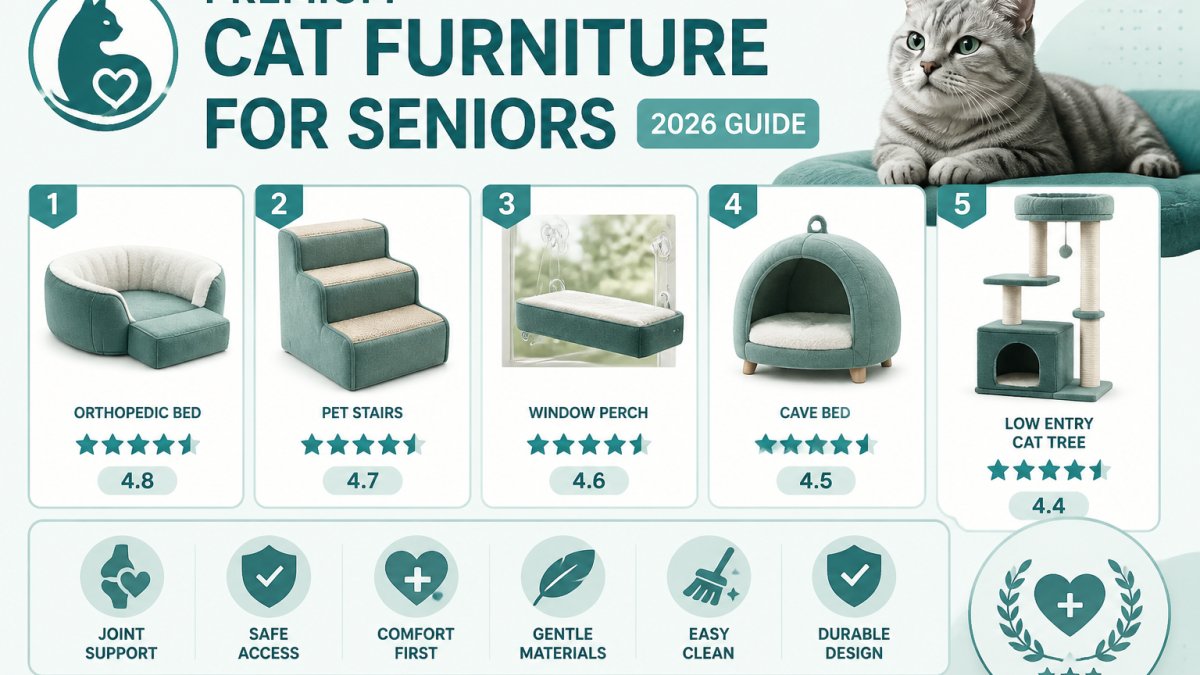
Enclosed spaces matter more for older cats than younger ones. A cave-like bed or enclosed perch gives senior cats a sense of security while they rest. This design also helps regulate body temperature, senior cats often appreciate the warmth of an enclosed space.
Test stability by pushing on the tree yourself before bringing it home. A quality tree shouldn't sway noticeably. If it moves easily with hand pressure, it will move under your cat's weight, creating an unsafe situation.
Low Cat Trees for Older Cats: Design That Works
Why Height Matters Less Than Entry Points
Many people assume senior cats need shorter trees overall. The real issue isn't the maximum height, it's how accessible the entry points are. A tree that reaches five feet but has all platforms at senior-friendly heights works better than a shorter tree with awkward entry angles.
The key is graduated height. The first platform should be genuinely low. The second platform can be slightly higher (18-24 inches). If there's a third level, keep it around 30-36 inches. This progression allows senior cats to climb gradually without big jumps between levels.
Ramps and stairs between levels make a huge difference. Instead of jumping, your cat can walk up a gentle slope or use shallow steps. This reduces stress on joints and gives older cats more control over their movement. A ramp angled at 30-45 degrees is easier on senior joints than steeper stairs.
Platform Width and Stability Standards
Platform width directly affects how secure your senior cat feels. Narrow platforms (under 10 inches) force cats to balance carefully, uncomfortable for cats with arthritis or balance issues. Wide platforms (14-18 inches) let senior cats sprawl out and shift position without worry.
The best platforms have slightly raised edges or a lip. This prevents accidental falls and gives cats something to lean against. A lip doesn't need to be high, even 2-3 inches makes a difference for cats with reduced coordination.
Material matters for grip and comfort. Soft, textured surfaces (like carpet or faux fur) are easier on aging paw pads than smooth plastic or bare wood. Older cats also appreciate cushioning, a thin memory foam layer or plush covering reduces pressure on joints during rest.
Orthopedic Cat Beds for Older Cats: Joint Support and Comfort
Orthopedic cat beds for older cats address the specific challenge of arthritis and joint pain. A basic bed might look comfortable, but orthopedic designs actively support aging joints during rest and recovery.
The foundation is what matters most. Quality orthopedic beds use memory foam or high-density foam that conforms to your cat's body shape. This distributes weight evenly and reduces pressure points, critical for cats with sore joints. Cheaper foam compresses too quickly and offers no real support.
Look for beds with raised edges or bolsters. These give senior cats something to lean against while resting, reducing the effort needed to get up. A cat with arthritis appreciates support that makes standing less jarring on joints.
Size should accommodate stretching. Senior cats often have less flexibility, so they need room to extend fully without contorting. A bed that's at least 18 inches long and 14 inches wide gives most cats adequate space.
Memory Foam vs. Other Cushioning Materials
Memory foam is the standard for orthopedic cat beds because it responds to body heat and weight, molding to your cat's shape. This reduces pressure on joints and provides consistent support. Quality memory foam doesn't flatten quickly, it maintains its shape through years of use.
Gel-infused memory foam offers a cooling effect, which some senior cats appreciate. If your cat tends to overheat or lives in a warm climate, gel foam is worth considering.
High-density polyurethane foam is a budget-friendly alternative that still provides good support. It's firmer than memory foam and doesn't conform as precisely, but it resists compression better than low-density options.
Avoid thin, cheap foam that compresses within weeks. A bed that flattens loses its orthopedic benefits and becomes just another cushion.
Cat Stairs for Senior Cats: Gradual Access Solutions
Cat stairs for senior cats solve the problem of access without requiring jumping. They're particularly valuable if your senior cat likes to sleep on furniture or reach window perches but struggles with the height.
The ideal stair design has shallow steps, no more than 6-8 inches high. Each step should be at least 10 inches deep so your cat has a stable place to put their paws. Steep stairs force awkward body angles and put strain on aging joints.
Non-slip surfaces are essential. Smooth plastic or wood stairs are slippery and dangerous for cats with reduced coordination. Carpet, rubber, or textured surfaces give senior cats confidence and grip.
The best stairs are lightweight enough to move but sturdy enough not to shift when your cat uses them. A wobbly staircase creates uncertainty and increases fall risk.
Some senior cats prefer ramps over stairs. A gentle ramp (25-35 degree angle) requires less effort than climbing steps and is easier on joints. The choice depends on your cat's preference and your space constraints.
How to Evaluate Premium Quality: What Sets Durable Furniture Apart
Construction Standards and Long-Term Durability
Premium cat furniture lasts years, not months. The difference comes down to construction methods and material quality. Furniture that's stapled together will show wear quickly. Furniture that's glued and screwed together holds up through years of daily use.
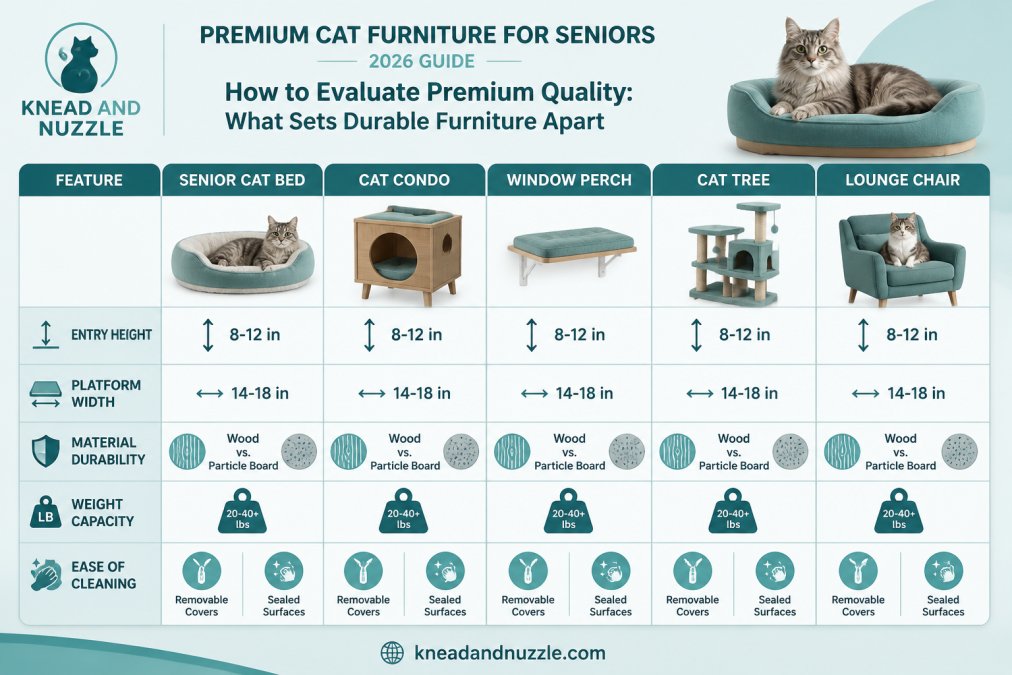
Check how platforms are attached. Bolted connections are stronger than stapled ones. Look at the base, is it a thin plywood sheet or solid wood? Solid construction supports weight better and resists warping.
Material quality matters for longevity. Real wood (not particle board) resists dents and damage. Carpet that's glued on (not stapled) won't peel up after months of use. Sisal rope that's wrapped tightly won't unravel when your cat scratches.
Seams and joints should be reinforced. Premium furniture has double stitching on fabric and sealed edges that won't fray. These details prevent the slow deterioration that makes cheap furniture look shabby within a year.
Cleaning and Maintenance Considerations
Premium cat furniture should be genuinely easy to clean. This matters more for senior cats, who sometimes have accidents or health issues that create messes.
Removable, washable covers are ideal. If your cat has an accident, you can take off the cover and wash it without dismantling the entire piece. Look for covers that are machine-washable or at least wipeable.
Non-fabric options (like plastic or sealed wood) are easier to clean but less comfortable for cats. The best premium furniture balances comfort with practicality, soft enough for joint support but durable enough to handle occasional spills.
Avoid furniture with intricate crevices or hidden spaces where urine can soak in. Simple, accessible designs are easier to keep clean and hygienic. If your senior cat has any health concerns that affect cleanliness, choose furniture with smooth surfaces and minimal fabric.
Placement and Setup: Making Furniture Work in Your Home
Where you place cat furniture affects how much your senior cat uses it. The best furniture in the wrong location becomes a decorative piece your cat ignores.
Place furniture near windows if your cat enjoys watching outside. Natural light and visual stimulation matter to senior cats.
Avoid high-traffic areas. Senior cats need quiet spaces to rest undisturbed. A bedroom corner or low-traffic living room spot is better than a hallway where people constantly pass by.
Consider your cat's routine. If your senior cat spends mornings in the kitchen, put a bed or resting spot there.
Multiple resting spots throughout your home work better than one large piece.
Temperature matters for older cats. They often prefer warmer spots, so furniture in sunny areas or away from drafts gets more use.
Stability during setup is crucial. Make sure furniture sits on level ground and won't shift if your cat jumps or moves around.
Finding the right premium cat furniture for seniors means prioritizing your cat's comfort and safety over trends.
Frequently Asked Questions
What features should I look for in premium cat furniture for seniors?
Senior cats need low entry points (under 12 inches ideally), wide stable platforms, memory foam or orthopedic cushioning, and sturdy construction that won't wobble. Look for enclosed spaces that provide security, non-slip surfaces, and materials that are easy to clean. Avoid steep angles, narrow platforms, and lightweight designs that shift when your cat jumps. Premium furniture combines accessibility with durability so it lasts years and adapts to your cat's changing mobility.
Are low cat trees safer for senior cats?
Yes. Low cat trees reduce the impact on aging joints and eliminate the risk of falls from heights. They allow senior cats to reach comfortable resting spots without straining their bodies. However, 'low' doesn't mean the furniture should feel unstable. Premium low cat trees have weighted bases, wide platforms, and secure construction that prevents tipping even when a senior cat lands awkwardly. The combination of low height and rock-solid stability is what makes furniture truly safe for older cats.
Is an orthopedic cat bed worth the investment for an older cat with stiff joints?
Orthopedic beds designed for older cats significantly reduce pressure on joints and provide better support than standard cushions. Memory foam conforms to your cat's body, distributing weight evenly and reducing strain on arthritic areas. Senior cats spend 12-16 hours daily resting, so a quality orthopedic bed directly impacts their comfort and mobility. The investment pays dividends in reduced pain behavior and improved quality of life. Look for beds with washable covers for long-term durability and hygiene.
How can I make a cat tree easier for an older cat to use?
Add cat stairs or ramps between levels to eliminate the need for jumping. Place the furniture near existing furniture (a sofa, chair, or windowsill) so your cat can step up gradually. Use non-slip mats on platforms to prevent sliding. Position enclosed spaces at mid-level so your cat doesn't have to climb to find security. Ensure platforms are wide enough for your cat to turn around comfortably. Older cats appreciate gradual transitions and multiple entry points rather than single-jump designs.