 blog
blog
Durable Cat Tunnels for Indoor Play: A 2026 Guide
Table of Contents
- Why Durable Cat Tunnels Matter for Indoor Enrichment
- Best Cat Tunnels for Indoor Cats: What Sets Them Apart
- Cat Tunnel Materials: Choosing Construction That Lasts
- Cat Tunnel Safety: What Every Indoor Owner Should Know
- Sizing Your Cat Tunnel: Matching Dimensions to Your Cat
- How to Clean a Cat Tunnel and Maintain Its Condition
- Long-Term Durability: What to Expect Over Time
- Frequently Asked Questions
Last Updated: October 11, 2026
Why Durable Cat Tunnels Matter for Indoor Enrichment
Indoor cats need spaces where they can run, hide, and play without restriction. A durable cat tunnel creates exactly that, a safe zone where your cat burns energy, exercises naturally, and satisfies the instinct to chase and explore.
The difference between a cheap tunnel that shreds after two months and one that lasts years comes down to materials, frame construction, and design. At Knead and Nuzzle, we offer a curated selection of durable cat tunnels that are designed to hold up to daily use.
Most cat owners underestimate how rough cats can be on their toys. Your cat isn't being destructive, they're playing the way cats play: pouncing, scratching, and diving. The right durable cat tunnel is built to handle exactly that kind of activity.
Best Cat Tunnels for Indoor Cats: What Sets Them Apart
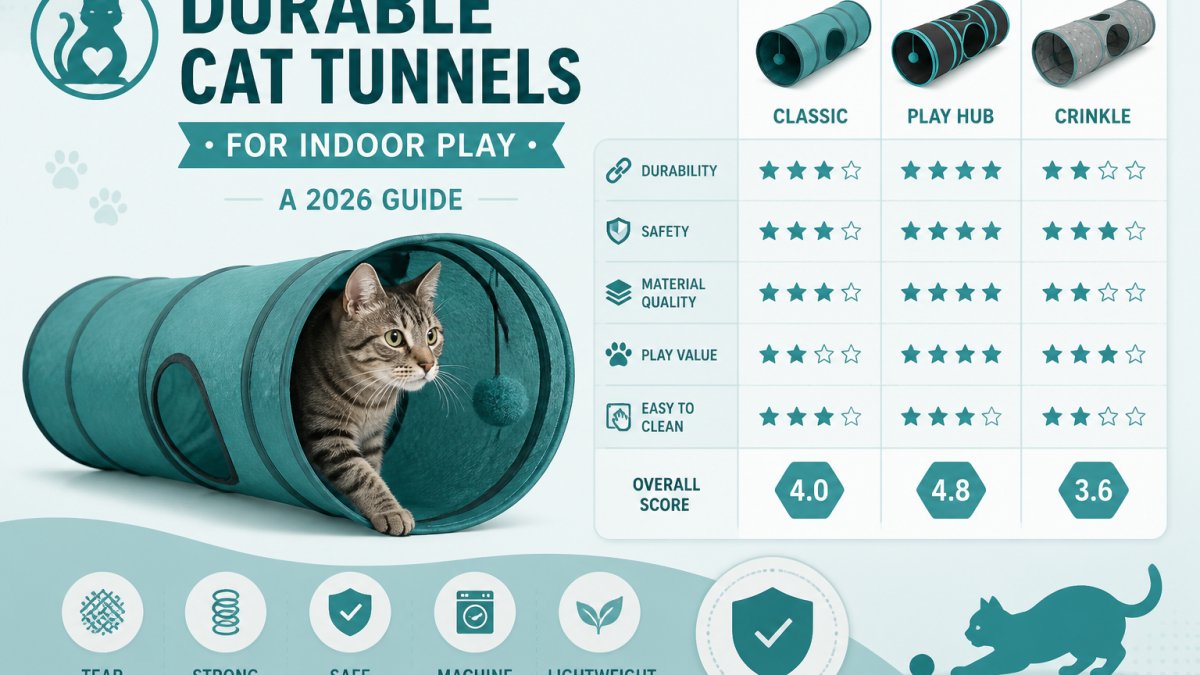
The best cat tunnels for indoor cats share three core qualities: they survive regular use, they engage your cat's natural hunting behavior, and they fit your space without taking over your home. Not all tunnels are created equal.
Some tunnels collapse after a few weeks. Others are so flimsy your cat won't even enter them. The ones that work have reinforced frames, quality fabric, and thoughtful design that makes cats want to use them repeatedly.
Single-Tube vs. Multiway Designs
A single-tube tunnel is straightforward: one long passage your cat can run through and hide in. This design works well for cats that like linear play and straightforward chasing games. The simplicity also means fewer seams to fail and less overall complexity.
A multiway tunnel or three-way tunnel connects multiple tubes, creating a more complex play environment. Your cat can enter from one opening, exit from another, and navigate turns and intersections. They take up more floor space, but they provide richer enrichment.
For multi-cat households, a multiway tunnel often works better because multiple cats can use it simultaneously without feeling trapped. Single tubes can become bottlenecks when you have several cats competing for the same path.
Collapsible and Portable Options
Collapsible tunnels fold down for storage, which matters if you're short on space or want to rotate toys. The trade-off is that foldable designs often have more joints and connection points where wear happens faster. The spring frames or support mechanisms that allow collapsing can also become weak points over time.
Portable tunnels let you move play zones around your home. Some cats respond better to novelty, changing where the tunnel sits keeps them engaged longer. If you rent or rearrange frequently, portability becomes a real advantage.
Cat Tunnel Materials: Choosing Construction That Lasts
The fabric and frame determine how long your durable cat tunnel actually stays durable. This is where most cheap tunnels fail. Understanding material specifications and how they perform under stress helps you avoid premature wear.
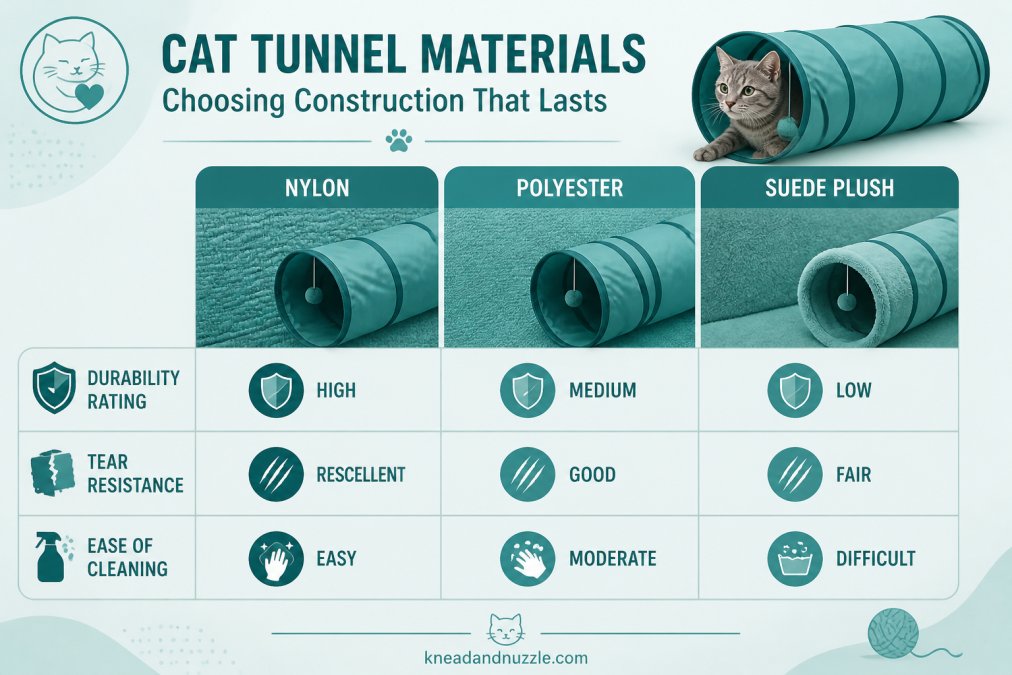
Fabric Durability and Tear Resistance
Nylon is the gold standard for cat tunnels. It resists tearing, cleans easily, and holds up to repeated scratching. Polyester is cheaper but tears more readily.
Fabric weight, measured in denier, directly correlates to durability. A 600-denier nylon will outlast a 300-denier version by a significant margin, the higher the denier count, the thicker and more puncture-resistant the material.
Seams are where fabric fails first. Double-stitched seams last longer than single-stitched ones. Some tunnels use reinforced seams at stress points, the openings and joints where cats push hardest.
Fabric pilling (the fuzzy balls that form on the surface) occurs naturally over time, especially with polyester.
Frame Strength and Support Systems
Steel frames outlast plastic or wire frames. They don't bend out of shape, and they provide consistent structure throughout the tunnel's life.
Spring-based frames (used in collapsible tunnels) are convenient for storage but create pressure points that wear faster than rigid structures. If you choose a spring-frame tunnel, inspect the connection points regularly, that's where failure starts.
Some tunnels use fiberglass rods or composite frames as a middle ground between weight and durability. These work reasonably well for light to moderate play but don't match steel's longevity. Fiberglass can crack if bent sharply or if a large cat lands on the tunnel repeatedly.
When comparing tunnels, ask or look for frame specifications: Is it steel, plastic, wire, or composite?
Non-Toxic Materials and Off-Gassing
Some cheaper tunnels use dyes or finishes that aren't pet-safe. Check product descriptions for non-toxic certifications or materials labeled as free from phthalates, BPA, and heavy metals. When you receive your tunnel, air it out in a well-ventilated space for 24-48 hours before introducing your cat to it. Some materials off-gas initially, and allowing this to happen before use reduces the risk of respiratory irritation.
Cat Tunnel Safety: What Every Indoor Owner Should Know
Safety matters more than features. A tunnel that injures your cat defeats the purpose entirely.
Check that the tunnel has no sharp edges, protruding wires, or rough seams inside. Run your hand through the interior before your cat uses it.
Ventilation is essential. A tunnel should have openings that allow airflow so your cat doesn't overheat during intense play.
Make sure the tunnel is stable and won't collapse unexpectedly. A wobbly tunnel frightens cats and discourages use.
Watch for toxic materials. Some cheaper tunnels use dyes or finishes that aren't pet-safe. Check product descriptions for non-toxic certifications.
Supervision matters, especially with young kittens. They're more likely to chew on fabric or get stuck in unexpected places.
Sizing Your Cat Tunnel: Matching Dimensions to Your Cat
A tunnel that's too small frustrates your cat. One that's too large might not feel like a safe hiding space. The right size depends on your cat's length, height, and personality.
Small Cats and Kittens
Small cats and kittens need tunnels with interior diameters of at least 7-8 inches. They should be able to move through comfortably without their sides touching the walls. A tunnel that's too snug discourages use.
Kittens grow quickly. If you're buying for a kitten, choose a size that works for an adult cat. Kittens will grow into it, and you'll avoid buying multiple tunnels as they develop.
Large and Multi-Cat Households
Larger cats need interior diameters of 9-10 inches or more. Some premium tunnels reach 12 inches, which accommodates even chunky cats comfortably. Length also matters, longer tunnels (8-10 feet when extended) give cats more room to run.
For multi-cat households, longer and wider tunnels prevent conflicts. Cats can use different sections simultaneously without feeling crowded. Some multiway designs with multiple exits reduce territorial tension.
How to Clean a Cat Tunnel and Maintain Its Condition
Regular cleaning extends your tunnel's life and keeps it hygienic. Most tunnels accumulate dust, fur, and the occasional accident. The cleaning method depends on your tunnel's construction and fabric type.
Weekly and Monthly Maintenance
Vacuuming the interior weekly removes loose fur and dust. A handheld vacuum or upholstery attachment works well for this. For stubborn debris, a soft brush can loosen particles before vacuuming. Pay special attention to seams and joints where fur collects and can trap moisture.
Inspect the frame and seams monthly. Tighten any loose connections and look for fraying or separation. Early maintenance prevents small problems from becoming catastrophic failures. If you notice a seam starting to separate, reinforce it immediately with a fabric needle and thread or fabric glue rated for pet use, waiting allows the tear to spread.
Cleaning by Tunnel Type
Removable fabric covers: If your tunnel has a removable fabric section, follow the manufacturer's instructions for washing. Many removable covers are machine-washable on gentle cycles with cold water.
Non-removable fabric: Spot-clean stains with mild soap and water on a soft cloth. Most quality fabrics handle gentle cleaning without damage. For urine accidents, use an enzymatic pet cleaner to break down odor-causing compounds rather than masking them with perfume.
Collapsible tunnels: Clean before storing. Moisture trapped inside a folded tunnel can cause mold within weeks, especially in humid climates. Wipe down the interior with a dry cloth, vacuum thoroughly, and let the tunnel air out for several hours before collapsing it for storage.
Odor Control and Hygiene
If your tunnel develops a persistent odor despite cleaning, sprinkle baking soda inside and let it sit for 2-4 hours, then vacuum thoroughly. Baking soda absorbs odors without chemical residue. For stubborn smells, place the tunnel in direct sunlight for a few hours, UV light naturally kills odor-causing bacteria.
If your cat has had an accident and the odor persists after enzymatic cleaning, the urine may have soaked into the frame or padding. In this case, replacement is often more practical than repeated cleaning, as lingering odor can discourage your cat from using the tunnel.
When to Retire a Tunnel
Even with good maintenance, tunnels eventually wear out. Retire a tunnel if:
- Seams are separating and cannot be easily reinforced
- Fabric has holes or tears larger than a quarter-inch
- The frame is bent, cracked, or unstable
- Springs no longer hold the tunnel open (for collapsible models)
- Odor persists despite thorough cleaning
- Sharp edges or protruding wires develop
A worn tunnel can injure your cat's paws or catch claws. Continuing to use a damaged tunnel defeats the purpose of enrichment and creates a safety hazard.
Shipping and Storage
When your tunnel arrives, inspect it immediately for damage. Check seams, frame integrity, and fabric for tears or stains. If damage occurred during shipping from the warehouse, contact the seller for a replacement. Store your tunnel in a cool, dry place when not in use. Avoid direct sunlight for extended periods, as UV exposure can fade and weaken fabric over time.
Long-Term Durability: What to Expect Over Time
A quality durable cat tunnel should last 2-3 years with regular use, sometimes longer depending on how aggressively your cat plays.
The first failure point is usually seams. Reinforced stitching delays this, but even good seams eventually weaken.
Fabric pilling occurs naturally over time. This doesn't affect function but changes appearance. Brushing the fabric regularly minimizes pilling.
Spring frames in collapsible tunnels lose tension gradually. When springs no longer hold the tunnel open properly, the tunnel becomes less useful.
Choosing a durable cat tunnel means investing in better materials upfront rather than replacing cheap tunnels repeatedly.
Creating a stimulating environment for indoor cats doesn't have to mean constant toy rotation and frustration.
Frequently Asked Questions
What makes a cat tunnel durable?
Durability depends on three factors: fabric quality (tear-resistant nylon or polyester hold up better than thin materials), frame strength (steel or sturdy spring frames prevent collapse), and construction seams (double-stitched seams resist splitting). Tunnels designed with reinforced stress points at joints and entry holes last significantly longer under active use. Check for multi-layer fabric construction and quality fasteners when evaluating durable cat tunnels.
How do I choose the right size cat tunnel for my cat?
Measure your cat from nose to tail base while relaxed, then choose a tunnel with at least 2-3 inches of extra length so your cat can turn around comfortably. For diameter, your cat should fit through without squeezing; most cats need 9-11 inches of interior width. Kittens and small breeds work well with 8-9 inch tunnels, while large or multi-cat households benefit from 11-12 inch models. Consider your cat's play style, active chasers may prefer longer multiway designs, while shy cats appreciate shorter hideaway tunnels.
How do I clean a cat tunnel and keep it hygienic?
Spot-clean weekly with a lint roller or vacuum to remove fur and debris from the interior. For deeper cleaning, hand-wash removable fabric sections in cool water with mild detergent, then air-dry completely before reassembly. For non-removable tunnels, use a damp cloth with diluted vinegar solution to wipe the interior, then air-dry in sunlight when possible. Avoid machine washing unless the manufacturer explicitly allows it, as agitation can damage seams and weaken the frame. Regular maintenance prevents odors and extends the tunnel's lifespan.
Are collapsible cat tunnels safe for indoor play?
Yes, collapsible tunnels are safe when designed with sturdy frames that resist accidental collapse during play. Look for models with reinforced spring frames or flexible rods that maintain shape under your cat's weight and movement. Ensure entry holes are smooth without sharp edges or protruding fasteners. Check that the tunnel stays stable on your floor without sliding, use non-slip mats underneath if needed. Collapsible designs offer the added benefit of easy storage and portability while maintaining the safety and durability your cat needs for active indoor play.