 How-to
How to Find Cheap Cat Furniture That Lasts
Last Updated: November 2, 2026
Quick Summary
Cheap cat furniture can last if you check the build rather than the price. Look for solid wood or sealed particleboard, tightly wrapped sisal, and a wide base that stays upright under a leaping cat. A listed weight capacity and screwed or bolted joints are good signs of a sturdy budget piece.
- Choose solid wood, sealed particleboard, or tightly woven sisal rope over thin fabric on a loose frame.
- Compare the base footprint to your cat's size, since narrow bases tip when a cat jumps from the top.
- Check that the product lists a weight capacity, which suggests the maker tested its stability.
- Look for screws or bolts at each joint rather than a friction fit, and solid platforms that don't bend under light pressure.
- Price scratching surfaces over a year, because cheap replacement pads and refills add up.
Table of Contents
- What Makes Cat Furniture Cheap Without Being Flimsy
- Cheap Cat Trees: What to Check Before You Buy
- Cheap Cat Scratchers That Hold Up to Daily Use
- Durable Cat Trees Worth Paying a Little More For
- Cat Furniture for Small Spaces and Renters
- Building a Budget: DIY, Secondhand and New Options
- Choosing Your Next Cat Furniture Purchase at Knead and Nuzzle
- Frequently Asked Questions
What Makes Cat Furniture Cheap Without Being Flimsy
Cheap cat furniture doesn't have to fall apart in a month. Shoppers often assume a low price means a weak product, and sometimes they're right.
Start with the materials. Solid wood, dense particleboard with a sealed edge, and thick, tightly woven sisal rope are all signs of a product built to last. Thin fabric over a loose frame usually isn't.
A low price on a simple design is often fine. A low price on a complicated design with tall posts, many platforms, and hanging toys is a warning sign.
Cheap Cat Trees: What to Check Before You Buy
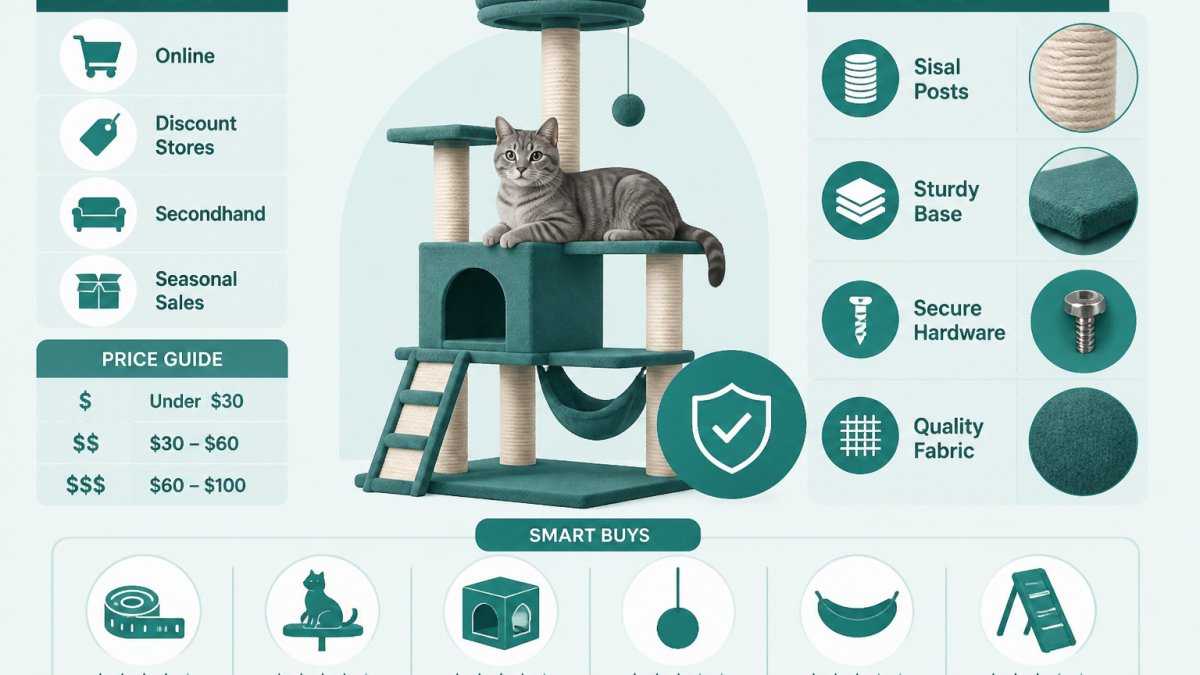
Before you add a cat tree to your cart, check two things: how wide the base is, and how the posts and platforms are built. These details decide whether a budget tree stays upright when your cat jumps on it.
Base Width and Stability
A cat tree with a narrow base tips easily, especially when a larger cat leaps from the top platform. Compare the base footprint to your cat's size. For an adult cat that climbs actively, a wider base is safer even when it costs a little more.
Check the product listing for the dimensions and the weight capacity. A tree that lists a weight capacity suggests the maker tested its stability. If no weight capacity is listed, treat that as a reason to ask questions before you buy.
Post Wrapping and Platform Strength
Scratching posts take the most abuse. Look for tightly wrapped sisal, and avoid posts where the rope is loose or thin. Check that the rope is attached at the base as well as the top.
Platforms should feel solid when you press down on them. Thin, flexible board that bends under light pressure will likely crack under a cat's weight over time.
The article's checks for a budget cat tree come down to base width and how the posts and platforms are built.
| Check | What to look for | Why it matters |
|---|---|---|
| Base width | Wide footprint for an active adult cat | Narrow bases tip when a cat leaps from the top |
| Weight capacity | Listed in the product details | Suggests the maker tested stability |
| Post wrapping | Tight sisal, attached at the base and top | Scratching posts take the most abuse |
| Platforms | Solid when pressed; screws or bolts at joints | Thin board cracks; friction fits loosen |
Cheap Cat Scratchers That Hold Up to Daily Use
A scratcher is the easiest place to save money, and the easiest place to waste it. Cardboard scratchers are inexpensive, but they wear out quickly if your cat uses them every day.
Many cats prefer horizontal scratching. A flat scratch pad or a ramp-style scratcher can work well for them, and these designs are usually affordable.
If you're comparing options, look at the frame. A scratcher with a sturdy base stays put when your cat digs in. A lightweight one slides across the floor, which discourages use.
Durable Cat Trees Worth Paying a Little More For
Some cats wear through cheap furniture quickly, especially large cats, very active cats, and multi-cat homes. In those cases, paying more for a durable tree usually costs less over time than replacing a cheap one every year.
Look for thicker posts, heavier bases, and platforms supported from underneath. Replaceable scratching sections are another useful feature. They extend the life of the tree without the cost of a full replacement.
Cat Furniture for Small Spaces and Renters
Apartment living changes what you need. A tall, wide tree may not fit, and renters often want furniture that doesn't damage walls or floors. The goal is to give your cat vertical space without a large footprint, and without losing a security deposit.
Measure before you buy
Measure the floor space you can spare and the height under any shelf or window. A compact tree with a small base still needs clearance to tip-proof it, so leave a few inches on each side. For a tight room, a narrow tower against a wall uses less floor than a wide, low tree with the same number of levels.
Renter-friendly mounting options
Wall-mounted shelves and window perches save floor space, but they are the options most likely to damage a rental. Before you install anything:
- Check your lease for rules on wall anchors and holes. Many leases allow small nail holes but not large anchors.
- Use tension-mounted or clamp-on options where the design allows, and check the weight rating against your cat's weight plus the furniture itself.
- Anchor to studs, not drywall alone, for any shelf that holds a cat. A stud finder is cheap and prevents the most common failure.
- Use removable adhesive strips only for lightweight items, never for a shelf or perch that carries a cat's weight.
Clamp-on window perches should be checked for weight rating and secure fit before your cat uses them. Test the clamp with your hand first, then watch your cat's first few jumps.
Compact furniture that still gives vertical space
- Window perches add a level without using floor space, and most are removable.
- Wall-mounted shelves create a climbing route, but require anchors and lease approval.
- Narrow towers with a small base fit into corners and against walls.
- Freestanding scratchers and beds should be shoe-box sized or smaller if floor space is tight.
Choose products with a small footprint and a flat, stable base. A lightweight unit that slides on hard floors is a hazard in a small room, so look for rubber feet or a non-slip base.
We ship from the USA.
Building a Budget: DIY, Secondhand and New Options
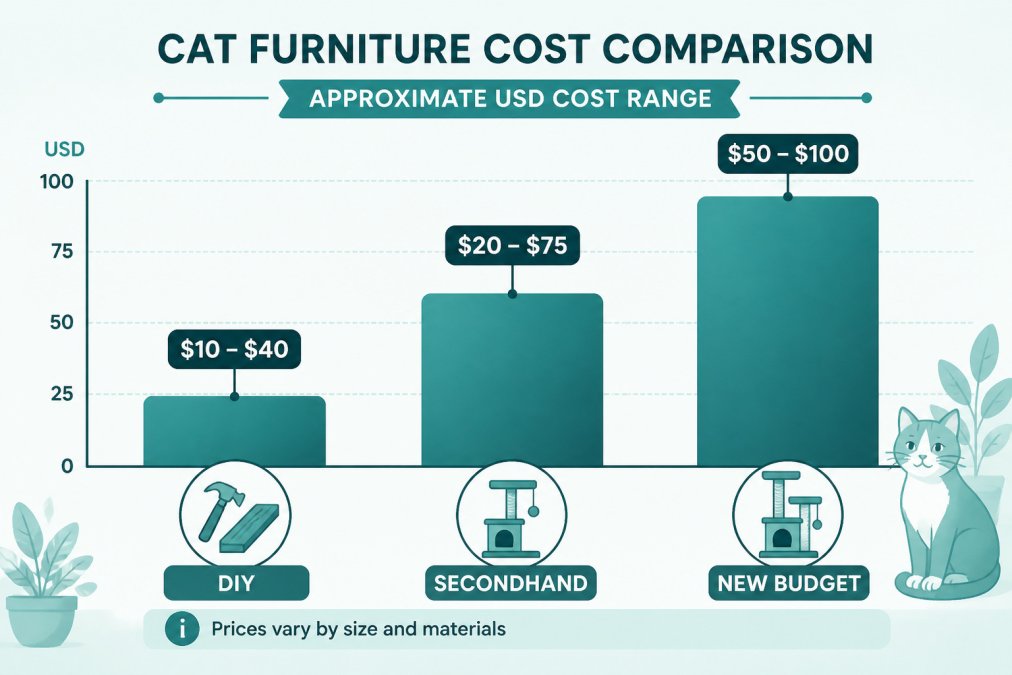
You have three main routes: build your own, buy secondhand, or buy new. Each has trade-offs in cost, safety, and time. The useful move is to set a spending limit first, then price out the full cost of each route, not just the sticker price.
Set a spending limit before you shop
A realistic budget has three parts: the furniture itself, the consumables it will need, and the tools or hardware you don't already own. Most shoppers only budget the first part and get surprised by the second and third.
- Furniture: the tree, scratcher, bed, or house itself.
- Consumables: replacement sisal rope, corrugated cardboard refills, fabric covers, and any mounting hardware. Scratching surfaces are wear items, so plan to replace them.
- Tools and hardware: a drill, screws, brackets, wall anchors, and a stud finder if you don't already own them.
A common pattern is that a cheap scratcher costs less up front but needs its scratching surface replaced more often, while a sturdier one costs more once and lasts longer. Price both over a year, not just at checkout.
DIY: lowest material cost, highest time cost
DIY is cheapest when you already own the tools and can repurpose materials, a sturdy wooden crate, leftover sisal rope, a scrap of plywood. The cost depends heavily on what you have on hand. Factor in screws, rope, fabric, and any tools you need to buy.
Safety matters more with DIY than with new furniture. A homemade tree has no weight rating, so you have to supply your own: use fasteners rated for the load, anchor tall units to a wall stud, and test the platform with your own weight before your cat uses it.
Secondhand: good value, inspection required
Secondhand furniture can be the best value per dollar, but inspect it closely before you pay. Check for loose joints, worn or frayed rope, cracked platforms, and any signs of damage. Wipe down hard surfaces and wash removable fabric before your cat uses it. Skip anything with a strong odor or visible mold, and skip anything that wobbles on a flat floor, a wobbly base is a tipping risk.
New budget furniture: most predictable quality
New budget furniture offers the most predictable quality and the clearest safety information. Pricing depends on size and materials, so compare the total cost of each option, including replacement parts. Check the Knead and Nuzzle website for current prices. Look for listings that state a weight capacity and name the materials, those details are the best signal that the maker tested the product.
A simple decision framework
- Tight budget, tools on hand, time to spare: DIY with repurposed materials, anchored to a wall.
- Tight budget, no tools, want it now: secondhand after a careful inspection, or a simple new scratcher or bed rather than a complicated tree.
- Multi-cat or large-cat home: new budget furniture with a stated weight capacity and replaceable scratching sections, it usually costs less over time than replacing a cheap unit every year.
Choosing Your Next Cat Furniture Purchase at Knead and Nuzzle
Start with your cat's size, age, and habits. A large or heavy cat needs a wider base and sturdier posts. An older cat with mobility limits may need lower platforms and easier access.
Then check the materials, the weight rating, and the product dimensions. These details matter more than a low price tag.
Knead and Nuzzle carries cat furniture, beds, scratchers, and other supplies for every stage of your cat's life. Our team is happy to help you choose the right fit for your space and budget.
Frequently Asked Questions
What is the cheapest type of cat furniture?
Simple sisal-wrapped scratching posts and single-level perches are usually the lowest-cost options, because they use fewer materials and less hardware than multi-tier trees. Price alone does not tell you much, though. Check the base width, the wrap material and how the posts are joined before you buy. A low-cost piece that tips over or loosens after a few weeks costs more in the long run than a slightly pricier one that holds up. Knead and Nuzzle pricing depends on the item, quantity and delivery, so check the website for current prices and shipping from USA.
How can I find affordable cat furniture that is durable?
Look for solid construction details rather than a low sticker price alone. Sturdy bases, thick wrapped posts, tight stitching on sisal or carpet, and screws rather than only snap-fit joints all signal durability. Compare the weight capacity and footprint against your cat's size and activity level. Watch for cheap particleboard platforms that sag under a large cat. Shopping during sales or buying a well-built secondhand piece can also keep costs down without sacrificing strength.
Do cats need a cat tree or scratching post?
Cats need somewhere to scratch and somewhere to climb, but a single cat tree is not the only way to meet those needs. A tall, stable scratching post covers scratching. A window perch or low platform covers resting and watching. Many multi-cat households use a mix of pieces so that more than one cat can use a resting spot at a time. Start with the scratching surface your cat already prefers, then add height or hideaways as needed.
How do I choose cat furniture for a small space?
Measure the floor footprint and the vertical space you can spare before you shop. Wall-mounted shelves, window perches and narrow vertical towers take up less floor area than wide multi-level trees. Check that the base still feels stable when your cat jumps onto it, because a compact piece can be more prone to tipping. Renters can often choose pressure-mounted or freestanding options that do not require drilling into walls.