 blog
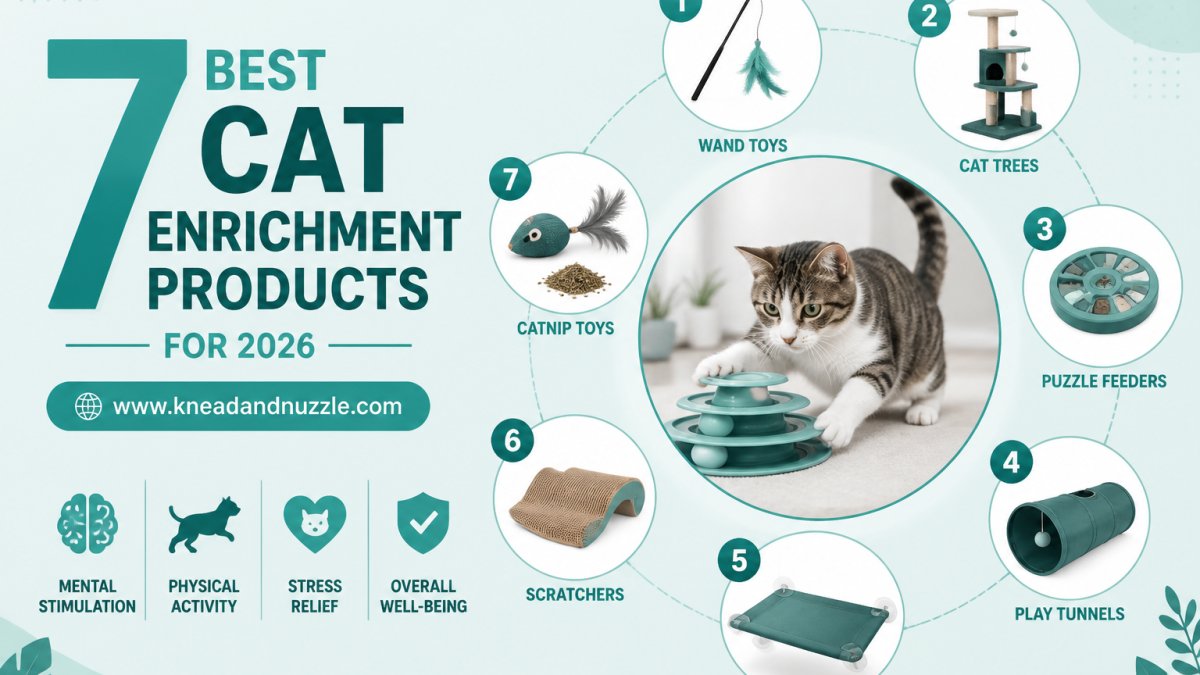
7 Best Cat Enrichment Products for 2026
Last Updated: October 25, 2026
Quick Summary
The best cat enrichment products combine interactive toys like wand toys, independent play options such as automated balls, puzzle feeders, and environmental enrichment like cat trees and window perches, all rotated strategically to maintain novelty and engagement.
- Rotate enrichment products weekly across three bins to prevent habituation and keep cats engaged long-term.
- Match enrichment to your cat's age and play style: kittens need fast-moving toys, adults benefit from mixed interactive and independent play, and seniors prefer low-impact options.
- Wand toys should only be used under supervision, while independent toys must be inspected weekly for wear and loose parts that pose choking hazards.
- Food-dispensing toys and puzzle feeders slow eating, aid digestion, and provide cognitive challenge, especially for cats that eat too quickly.
- Knead and Nuzzle ships from the USA and stocks replacement attachments and puzzle feeders so you can refresh your rotation without rebuying entire sets.
Table of Contents
- Why Cat Enrichment Products Matter for Indoor Cats
- Interactive Toys and Wand Toys for Active Play
- Independent Play Cat Toys That Keep Cats Entertained Alone
- Cat Puzzle Feeders and Food-Dispensing Enrichment
- Indoor Cat Enrichment Ideas Beyond Toys
- Cat Toy Rotation Strategies for Long-Term Engagement
- Choosing the Right Enrichment for Your Cat's Age and Play Style
- Start Your Cat's Enrichment Plan Today
- Frequently Asked Questions
Why Cat Enrichment Products Matter for Indoor Cats
Indoor cats need mental and physical stimulation to stay healthy. Without it, they become bored, anxious, and prone to behavioral problems.
The right cat enrichment products prevent destructive behaviors like scratching furniture and excessive meowing, reduce stress, and help maintain a healthy weight.
Enrichment works best when you rotate products, match them to your cat's age and temperament, and combine types.
Interactive Toys and Wand Toys for Active Play
Interactive toys bring out your cat's hunting instinct. Wand toys with feathers, strings, or small prey-like attachments encourage active play sessions where your cat can chase, pounce, and practice their natural predatory skills.
Wand toys mimic the unpredictable movement of real prey, and you control the pace and direction. Sessions typically last 10-15 minutes, and most cats benefit from two or three daily.
Look for wand toys with durable attachments that won't detach easily during play. The 11-Pack Retractable Cat Wand Toys offer variety with multiple attachment styles so your cat doesn't get bored with the same toy every day.
Interactive play also strengthens your bond with your cat, since you're actively engaged rather than just observing.
Independent Play Cat Toys That Keep Cats Entertained Alone
Not every play session requires your participation. Independent play toys let your cat entertain themselves, which is essential when you're busy or away from home.
Automatic toys with rolling motion, light, or sound capture a cat's attention and encourage self-directed hunting. The YEVYO Interactive Cat Ball Toy with LED Lights & Bird Chirping Sound combines movement, light, and audio, three triggers that naturally engage cats.
Balls, small mice toys, and crinkle toys also support independent play. Rotate these regularly so your cat finds them "new" again.
Match the toy to your cat's play style. Some cats prefer toys they can carry; others like unpredictable movement across the floor.
Cat Puzzle Feeders and Food-Dispensing Enrichment
Puzzle feeders combine feeding time with mental stimulation. Instead of eating from a bowl, your cat works to access their food, which slows eating, aids digestion, and provides cognitive challenge.
Food-dispensing toys range from simple designs where your cat nudges or paws to reveal kibble, to complex multi-step puzzles. The Tree of Life eMat - Enrichment Lick Mat offers a different approach: you spread wet food, treats, or yogurt on the mat, and your cat licks to extract the food.
Puzzle feeders work best with measured portions of regular food or low-calorie treats, and are especially useful for cats that eat too quickly or need weight management.
Rotate puzzle feeders to maintain novelty.
Indoor Cat Enrichment Ideas Beyond Toys
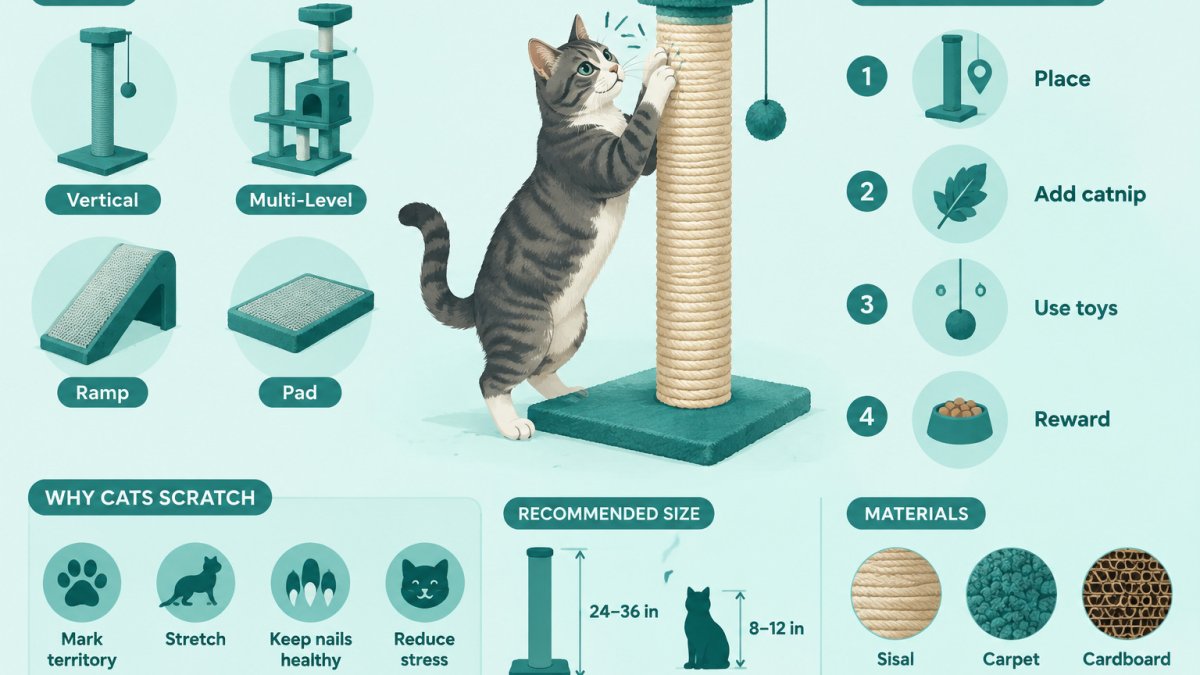
Enrichment extends beyond toys. Climbing structures, perches, hiding spots, and windows create a stimulating living space.
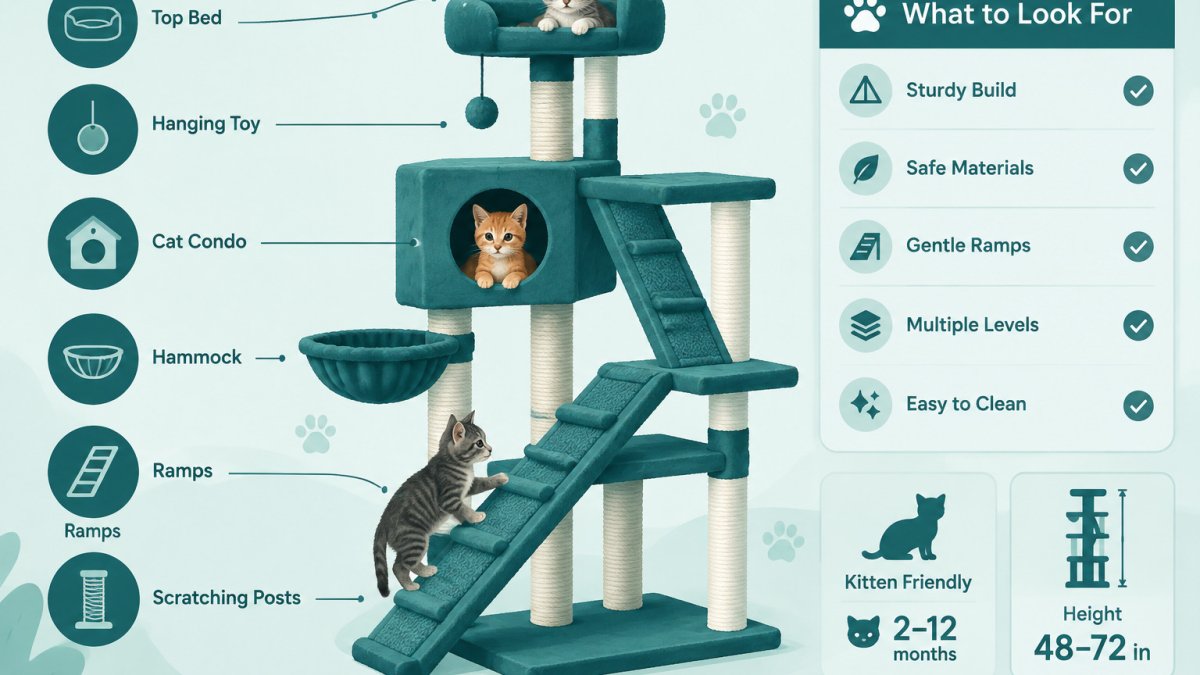
Cat trees and towers provide vertical space, which cats naturally seek for safety and observation. The 48.8" Modern Cat Tower combines aesthetics with function, offering multiple levels for climbing, jumping, and resting.
Window perches let your cat watch outdoor activity, birds, squirrels, and passing people. This "cat TV" provides hours of passive enrichment.
Rotate environmental elements seasonally: move the cat tree to a new window, introduce new boxes or hideaways, refresh scratching posts with catnip. These small changes keep your cat's environment fresh.
Cat Toy Rotation Strategies for Long-Term Engagement
Rotation prevents habituation, when a cat ignores a toy they once loved. Strategic rotation keeps enrichment products novel and extends each product's useful life by reducing wear.
A simple rotation system
- Sort into three bins. Bin A: interactive toys (wand toys, feather attachments). Bin B: independent toys (balls, mice, crinkle toys, automated toys). Bin C: food puzzles and lick mats.
- Keep one bin out at a time. Store the other two out of sight. Cats lose interest in what they can see every day.
- Rotate weekly. Swap bins every 7 days. Most practitioners find a weekly cadence is enough to restore novelty without overwhelming the cat.
- Refresh scent-based toys monthly. Catnip and silver vine lose potency over weeks. Replace or refresh these separately from the bin rotation.
- Retire worn items immediately. A frayed wand attachment or cracked puzzle feeder goes in the trash, not back in the bin.
Track what actually works
Keep a simple log for two to three weeks, noting which products your cat engages with, ignores, or returns to after a break. Patterns emerge quickly:
- Some cats love wand toys but ignore puzzle feeders.
- Others are food-motivated but uninterested in interactive play.
- A toy ignored in week one may become a favorite in week four after a rest.
Use the log to decide which categories to invest in and which to stop buying, the single biggest lever on long-term value.
Long-term value and product lifecycle
Purchase price is a poor measure of value. Compare products on cost per use and replacement needs:
- Replacement parts: Wand toys with replaceable attachments outlast one-piece designs because you replace the feather, not the wand.
- Battery needs: Automated toys vary widely in battery type and life. Rechargeable units avoid ongoing battery costs; disposable-battery units need a steady supply.
- Cleaning effort: Lick mats and hard plastic puzzle feeders are easy to wash. Fabric and plush toys trap hair and odor and need more frequent replacement.
- Durability: Cat trees with replaceable sisal posts and washable covers last longer than fully upholstered units.
A toy that costs more upfront but survives a year of weekly rotation with only a replacement attachment is usually the better buy than a cheaper toy replaced every two months.
Seasonal and routine-based rotation
Seasonal changes signal novelty. Introduce lightweight chase toys in warmer months and plush or warming items in cooler months. Pair rotation with a predictable routine: a wand session before meals, a puzzle feeder at midday, and a calm lick mat in the evening.
Label your bins by week (Week 1, Week 2, Week 3) so rotation becomes automatic. A written schedule beats good intentions.
Knead and Nuzzle ships from the USA and stocks replacement attachments, puzzle feeders, and lick mats so you can refresh a rotation without rebuying whole sets.
Choosing the Right Enrichment for Your Cat's Age and Play Style
Not all cat enrichment products suit every cat. Age, mobility, temperament, and play style determine which deliver the most value, and the wrong match can frustrate the cat or be unsafe. Use the framework below before you buy.
Match the product to the cat, not the other way around
- Kittens (under 1 year): High energy, fast reflexes, and a strong urge to mouth and shred. Favor fast-moving wand toys with replaceable attachments, lightweight chase balls, and low climbing structures. Avoid long strings, small detachable bells, and foam pieces a kitten can chew loose.
- Adults (1-7 years): A mix of interactive and independent play works best. Rotate wand toys, puzzle feeders, and a cat tree with multiple perches. Adults often do best with two short interactive sessions plus one food puzzle per day.
- Seniors (8+ years): Lower-impact enrichment: shallow puzzle feeders, gentle wand toys dragged slowly along the floor, food lick mats, and perches at hip height rather than tall towers. Warm, quiet hiding spots matter as much as toys.
- High-energy cats: Complex puzzle feeders, automated rolling toys, and long wand sessions with unpredictable movement. These cats often need more sessions, not more toys.
Safety, durability, and supervision
Most toy-related injuries come from ingestion of strings, feathers, foam, or small parts, and from batteries or cords in automated toys. Before any product enters rotation:
- Inspect seams, attachment points, and battery compartments. A wand attachment that pops off easily is a choking hazard.
- Prefer toys with no loose bells, glued-on eyes, or exposed foam.
- Use wand toys and string-based toys only under supervision; put them away after sessions.
- Check automated toys for screw-secured battery doors and avoid cords near chewing cats.
- Wash lick mats and puzzle feeders after each use; hard plastic puzzles can go in the dishwasher if the manufacturer says so.
Supervised-only items: wand toys, string toys, feather attachments, and any toy with a cord or loose small parts. Independent-play toys should be sturdy enough to leave out, but check them weekly for wear.
Accessibility and adaptations for senior or disabled cats
General indoor-cat roundups often overlook cats with limited mobility or vision. Low-impact options include:
- Lick mats and shallow puzzle feeders that don't require jumping or balancing.
- Wand toys dragged along the floor rather than lifted, so a cat can stalk and pounce without leaping.
- Ramps or steps to perches, and perches placed at hip height.
- Scent-based enrichment (catnip, silver vine, food hiding) for cats with reduced vision.
- Non-slip mats under food puzzles so the puzzle doesn't slide away.
A quick decision matrix
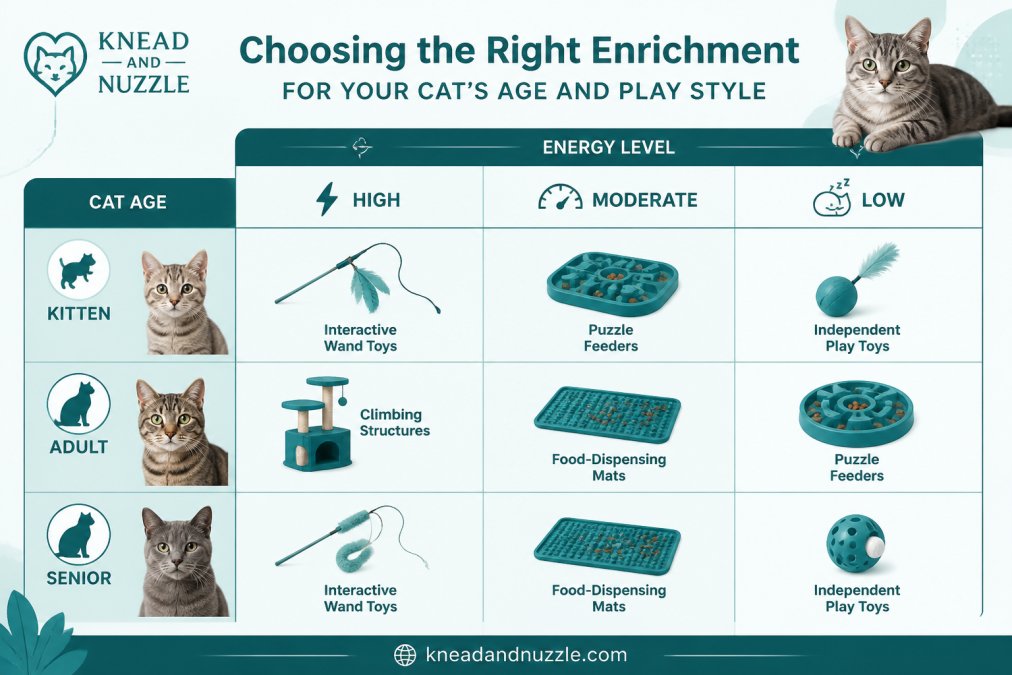
| Cat profile | Best first purchase | Add next | Avoid |
|---|---|---|---|
| Kitten, high energy | Wand toy with replaceable attachments | Low cat tree, chase balls | Long strings, small bells |
| Adult, moderate | Puzzle feeder | Wand toy, window perch | Overly complex puzzles at first |
| Senior, low mobility | Lick mat | Shallow puzzle feeder, floor wand play | Tall towers, fast automated toys |
| Anxious, low energy | Cardboard hideaway | Window perch, lick mat | Forced interactive play |
| Multi-cat household | Duplicate wand toys | Separate puzzle feeders, multi-perch tree | Single-resource toys |
Start with one product from the "best first purchase" column, observe for two weeks, then add from the "add next" column. This keeps the process affordable and lets you see what actually engages your cat.
Start Your Cat's Enrichment Plan Today
Building an enrichment plan takes observation and experimentation. Identify your cat's natural preferences: do they love to hunt, chase, climb, or solve problems?
Begin with one or two new products and observe engagement over two weeks. If your cat loves them, add more. If not, try something different.
Knead and Nuzzle makes it easy to find everything your cat needs in one place. Whether you're starting from scratch or upgrading your current setup, explore our full selection of cat enrichment products to find exactly what your cat needs.
Consistent enrichment creates a happier, healthier cat, paying off in reduced stress, better behavior, and a more engaged companion.
Frequently Asked Questions
What is the best cat enrichment product if my cat is mostly indoors?
Indoor cats benefit most from a mix of cat enrichment products that combine interactive play, independent play options, and mental stimulation. A combination of wand toys for active sessions, puzzle feeders for problem-solving, and climbing structures or tunnels for exercise works best. Rotate these products regularly to maintain engagement and prevent boredom.
How often should I rotate my cat's toys to keep them interested?
Cat toy rotation every 2-3 weeks keeps enrichment fresh and maintains novelty. Put away half your cat's toys and bring out the others. After 2-3 weeks, swap them. This approach prevents habituation while reducing the number of toys taking up space. Cats rediscover 'old' toys as if they're new, extending engagement without constant purchases.
Are puzzle feeders really effective enrichment for cats?
Yes. Cat puzzle feeders combine feeding with mental stimulation and slow consumption, which benefits digestion. They tap into a cat's natural hunting and problem-solving instincts. Start with easier puzzles and gradually increase difficulty. Not all cats take to them immediately, so introduce them during positive play sessions and pair them with favorite treats.
What enrichment products work best for senior or less active cats?
Senior cats and those with lower activity levels prefer low-impact enrichment: elevated perches for observation, window perches for bird-watching, soft tunnels they can move through at their pace, and treat-dispensing toys that don't require jumping. Puzzle feeders and snuffle mats also work well. Prioritize comfort and accessibility over high-energy toys.