 blog
Which Cat Furniture Designs Are Worth Buying?
Last Updated: October 28, 2026
Quick Summary
The best cat furniture for design depends on your room and your cat. Floor cat trees offer the most multi-level play in one footprint, wall shelves suit small apartments, and natural-material pieces in neutral tones blend into most decor. Check base width, frame sturdiness, and sisal wrapping before you buy.
- Floor cat trees give multi-level play in a medium to large footprint.
- Wall-mounted shelves save floor space and suit small apartments.
- Grey, cream, and natural wood tones blend into most interiors.
- Check base width and weight so the tree does not tip.
- Use the manufacturer's hardware and find wall studs before mounting shelves.
Table of Contents
- Why Design Matters When Choosing Cat Furniture
- Modern Cat Furniture Styles Compared
- Designer Cat Trees: Pros, Cons, and Materials
- Wall-Mounted Cat Shelves for Small Spaces
- Aesthetic Cat Scratchers That Still Work for Cats
- Materials and Build Quality to Check Before You Buy
- Choosing Your Cat Furniture and Shopping Knead and Nuzzle
- Frequently Asked Questions
Why Design Matters When Choosing Cat Furniture
Cat furniture is one of the few pet purchases that sits in plain view every day. A cat tree in the living room is part of the room, so its look matters as much as how well it works. Cat furniture is any piece made for a cat to climb, scratch, rest, or hide, and good design makes those pieces easy to live with.
Design affects more than appearance. A tall, sturdy tree with a wide base gives a cat a high perch and feels secure. A slim wall shelf frees up floor space but needs solid mounting. Many owners find they use a piece far more often when it fits the room, so the look of a tree or shelf can influence whether the cat uses it at all.
Modern Cat Furniture Styles Compared
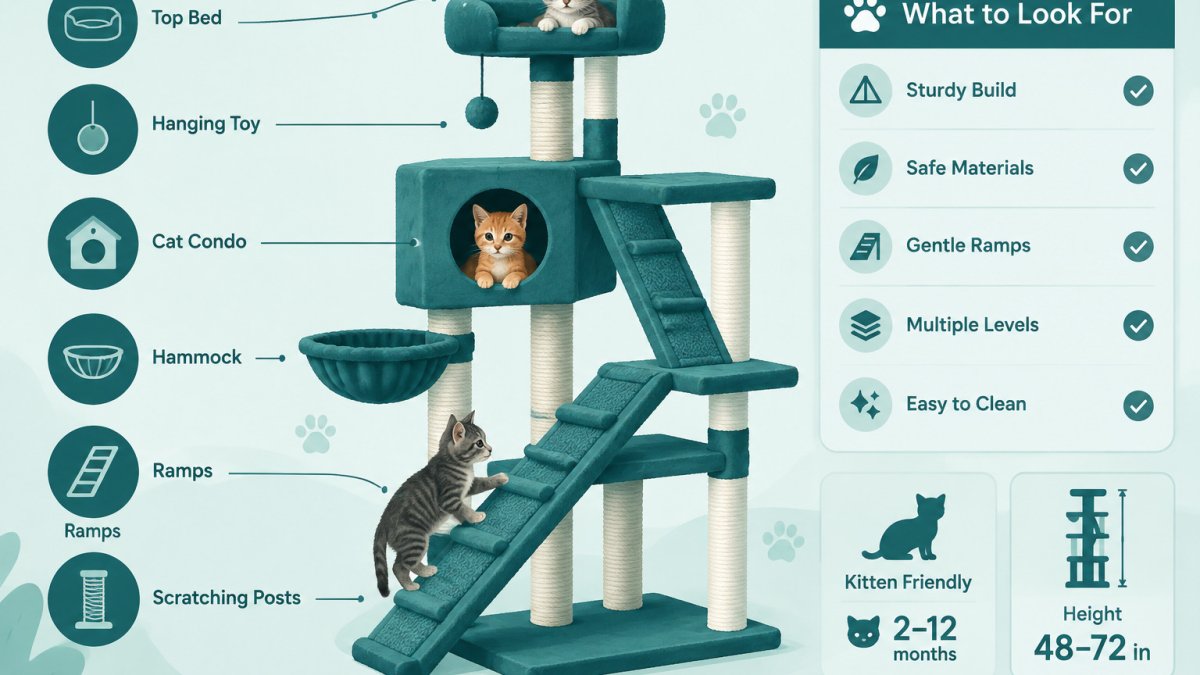
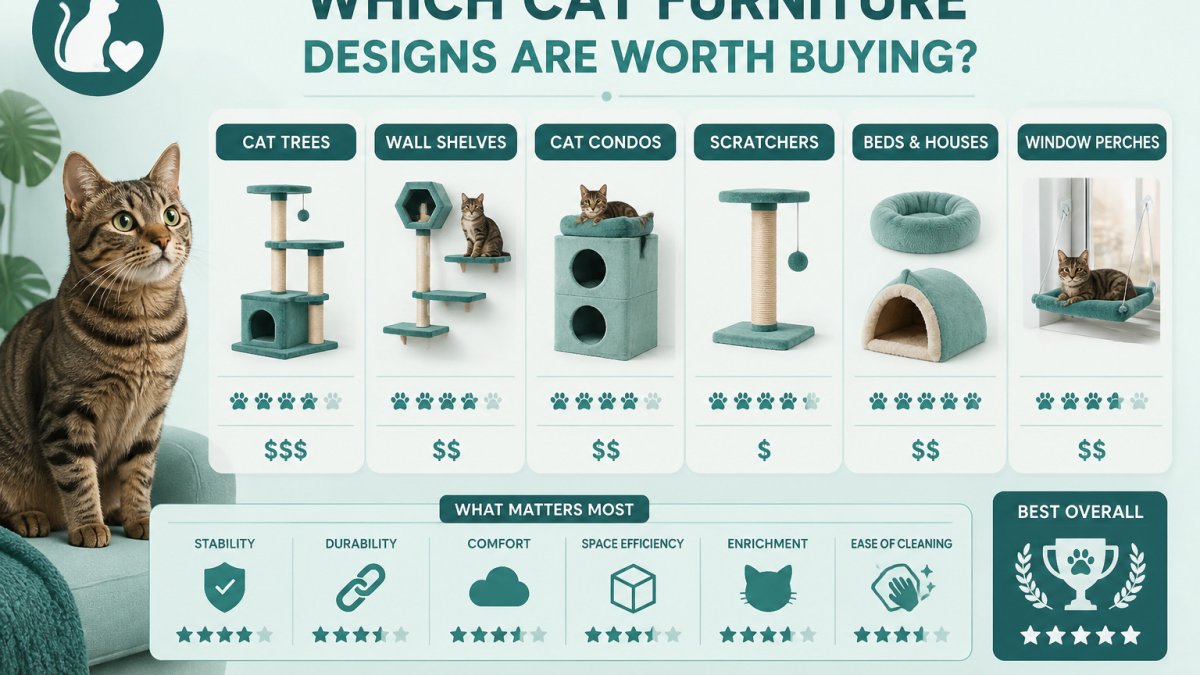
Modern cat furniture usually falls into four groups: floor-standing cat trees, wall-mounted shelves, enclosed beds, and scratchers. Each one solves a different problem. Floor trees offer the most vertical play in one footprint. Wall shelves save floor space. Beds and scratchers add rest and scratching options.
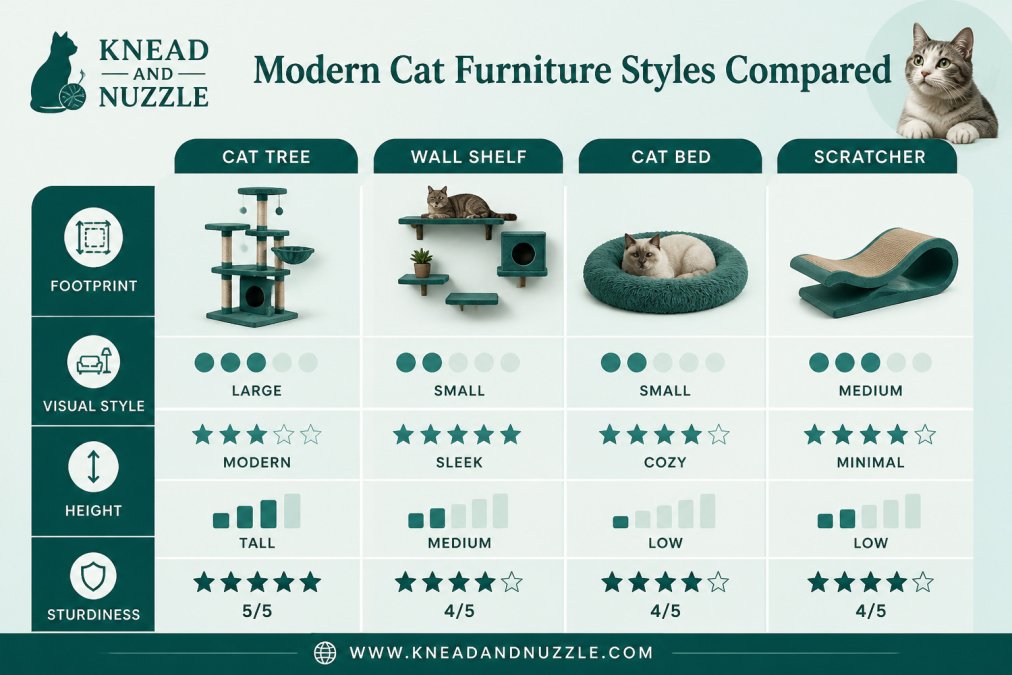
| Style | Footprint | Height | Best For |
|---|---|---|---|
| Floor cat tree | Medium to large | Tall | Multi-level play |
| Wall shelves | Minimal floor space | Varies | Small apartments |
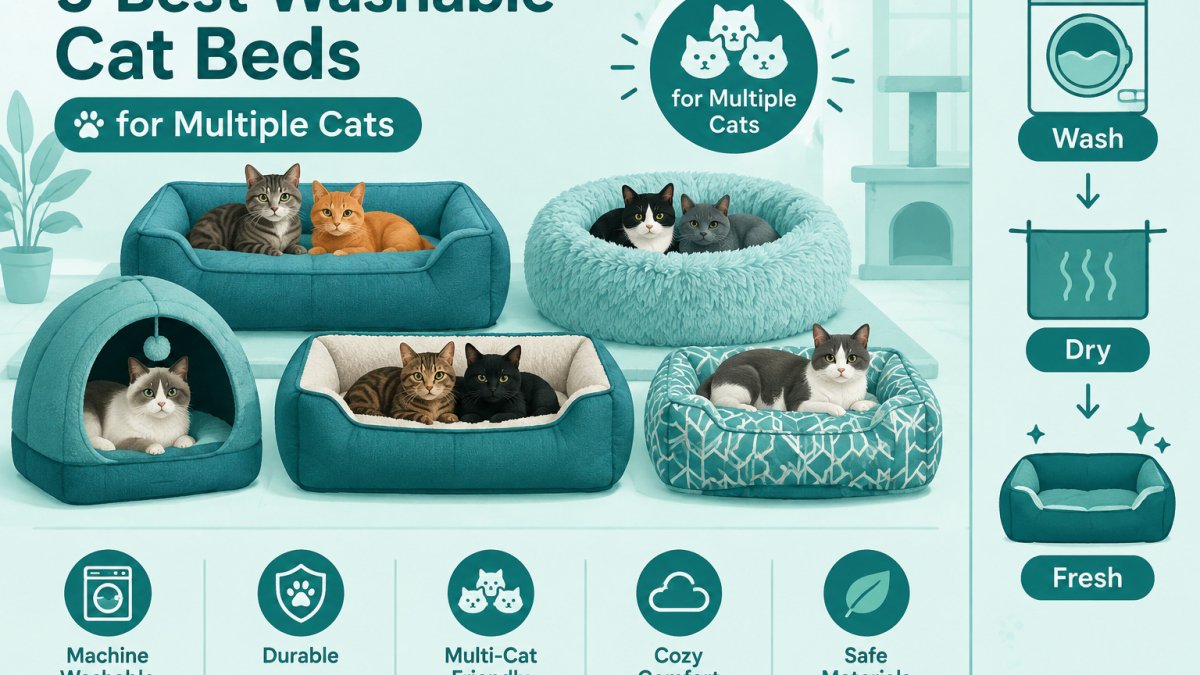
| Cat bed or condo | Small | Low to medium | Resting and hiding |
| Scratcher | Small | Low | Scratching only |
Clean lines, neutral colors, and natural materials are common in modern designs. Grey, cream, and natural wood tones blend into most decor. When comparing options, check whether the style suits your room as well as your cat.
Designer Cat Trees: Pros, Cons, and Materials
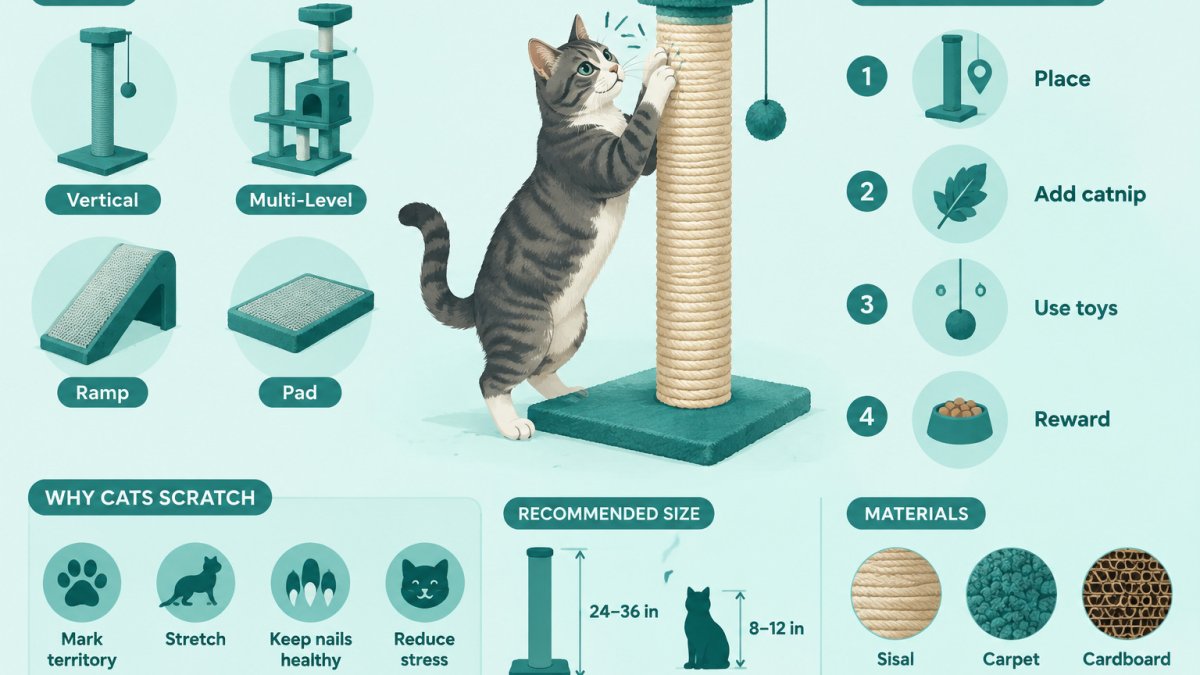
Designer cat trees usually stand out for their materials and layout. Wood frames, sisal wraps, and soft carpet are the most common choices. Sisal gives a cat a rough surface for scratching, while carpet offers a soft place to rest.
Pros:
- Multiple levels in a compact footprint
- Natural materials that suit modern interiors
- Sisal posts that support scratching
Cons:
- Heavier and harder to move than simple scratchers
- Carpet and sisal can wear down with heavy use
- Cheaper trees may wobble if the base is light
A corner design can fit a tight space while still giving height. Check the base width and weight before buying, especially for large or active cats.
Wall-Mounted Cat Shelves for Small Spaces
Wall-mounted shelves are a practical choice when floor space is limited. A set can include a few perches, a hammock, and a scratching grip, so one installation creates a full play route. Most sets are made from plywood with carpet or faux linen covers.
Mounting matters more than anything else with wall shelves. Use the hardware the manufacturer provides, find the wall studs, and test each shelf gently before letting your cat use it. A shelf that moves under a cat's weight will not get used.
Aesthetic Cat Scratchers That Still Work for Cats
Some cat owners want furniture that looks like a decor piece. Hand-woven designs, such as water hyacinth cat beds and towers, can match a living room while still giving a cat a safe place to rest or climb. The key question is whether the cat will use the piece, so choose a shape your cat already likes to sit or sleep in.
Scratching surfaces need to work too. Sisal and rough natural fibers are usually more appealing to cats than smooth finishes. If a decorative piece has no scratching surface, pair it with a separate scratcher.
Materials and Build Quality to Check Before You Buy
Before buying cat furniture, look at the materials and construction:
- Base width and weight, so the piece won't tip
- Sturdy frame, such as solid wood or thick plywood
- Tightly wrapped sisal posts with no loose fibers
- Secure joints and screws
- Washable or replaceable covers
- Clear assembly instructions and included hardware
Watch out: a tree that looks solid in photos can wobble once a large or active cat climbs it. Check the reviews for stability before buying.
Choosing Your Cat Furniture and Shopping Knead and Nuzzle
Start with your room, your space, and your cat's habits. A cat that loves high perches needs a tall, stable tree. A small apartment may suit wall shelves better. A cat that mostly naps may be happy with a stylish bed.
Knead and Nuzzle offers a curated selection of cat supplies, and we ship from the USA. Browse the collection and choose the piece that fits both your home and your cat. Shop now.
Frequently Asked Questions
What cat furniture looks best in a modern home?
Clean lines, neutral or natural finishes, and low profiles tend to suit modern interiors best. Wood, woven rope, and upholstery in solid colors blend with most decor, while bright plastics stand out. Furniture that looks like a deliberate part of the room, such as a slim cat tree in a corner or wall shelves at a consistent height, usually reads as intentional rather than pet clutter. Choose one or two materials and repeat them so the pieces feel like a set.
Are modern cat trees sturdy enough for large cats?
Sturdiness depends more on base size, weight, and construction than on style. Look for a wide, heavy base, sturdy posts wrapped in dense sisal, and platforms supported by solid wood rather than thin particleboard. Check the manufacturer's stated weight limit and whether the unit is anchored to the wall. Slimmer designs with narrow bases can wobble under a heavy cat jumping from height, so test stability before your cat uses it.
How do I choose cat furniture that matches my decor?
Start by measuring the space and noting the dominant colors and materials in the room. Match the furniture's finish to existing wood tones or metal accents, and pick fabrics that complement your upholstery. Consider how much floor space you can spare, since vertical designs free up room. Finally, observe your cat's habits, because a piece she will actually use is worth more than the perfect color match.
What materials are best for stylish, durable cat furniture?
Solid or engineered hardwood, dense sisal rope for scratching posts, and tightly woven fabrics hold up well to daily use. Avoid thin particleboard bases, loose staples on fabric, and low-grade carpet that tears easily. Matte finishes tend to hide wear better than glossy ones. Check that the materials are listed clearly on the product page so you know exactly what you are buying.