 blog
9 Best Cat Furniture Picks for Small Apartments
Last Updated: November 9, 2026
Quick Summary
The best cat furniture for a small apartment is a narrow, stacked cat tree that climbs vertically instead of spreading across the floor. Choose a footprint of about 20 to 24 inches per side, a height of 48 to 65 inches, and a weighted base so it resists tipping. Measure your space first and check that the perches fit your cat.
- Measure floor space, ceiling height, and walkway clearance before buying any cat furniture.
- A footprint of roughly 20 to 24 inches per side fits most apartment corners and resists tipping.
- Aim for a tower between about 48 and 65 inches tall to add vertical room without crowding the ceiling.
- Perches should be around 14 to 16 inches across for adult cats and closer to 18 inches for large cats.
- Test stability by pressing the top perch and pushing the trunk; the tree should not move more than an inch or two.
Table of Contents
- Why Small Apartments Need Smarter Cat Furniture
- Measuring Your Space Before You Buy a Cat Tree
- Narrow Cat Tree for Small Spaces: Compact Picks That Still Climb
- Small Cat Tree for Large Cats: Stability and Weight Limits
- Small Cat Tree with Scratching Post: Protecting Furniture and Walls
- Small Cat Tree with Hammock and Window Perch Options
- Placing and Maintaining Cat Furniture in a Rental Apartment
- Choosing Your First Piece of Cat Furniture at Knead and Nuzzle
- Frequently Asked Questions
Why Small Apartments Need Smarter Cat Furniture
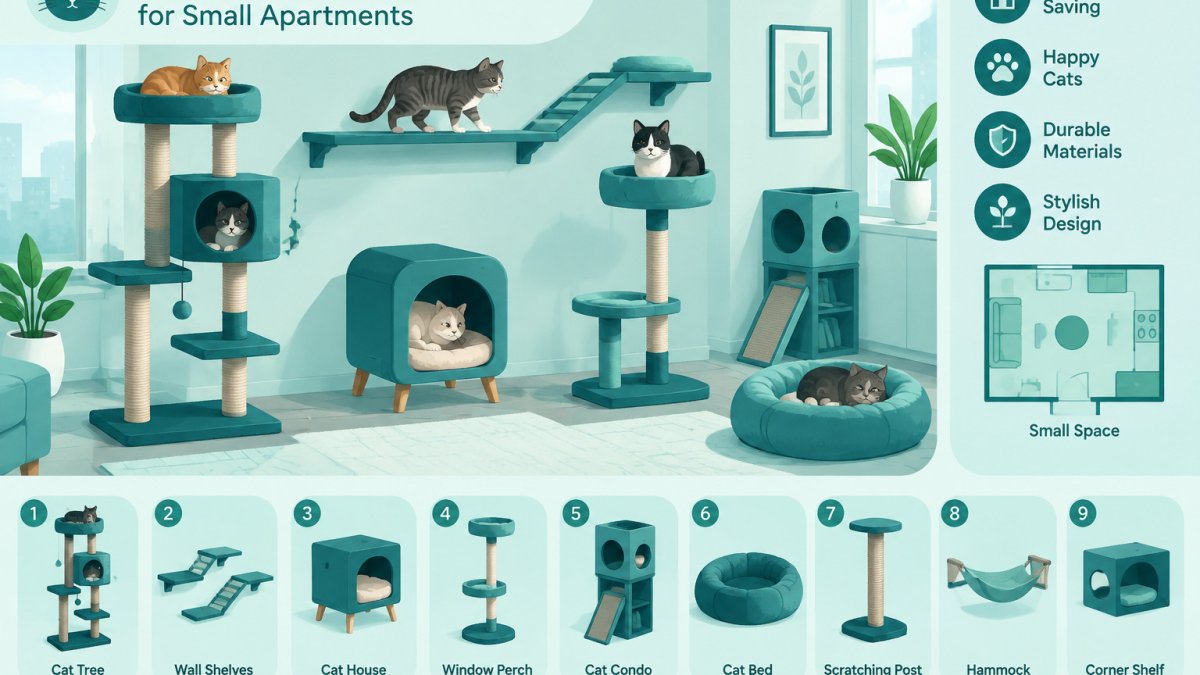
Small apartments make cat furniture harder to choose. A cat needs height, places to scratch, and a quiet spot to sleep, but you may have only a corner to spare. This guide is for shoppers in exactly that situation. It covers how to measure your space, which compact designs still give your cat room to climb, and how to protect your walls and furniture while you do it.
A good piece of cat furniture for a small home does three things well. It uses vertical space instead of floor space. It stays stable when your cat jumps on it. And it fits the way you actually live. Get one of those wrong and the piece ends up unused in a corner.
Measuring Your Space Before You Buy a Cat Tree
Measure before you shop. Record the footprint you can spare, the ceiling height, and the clearance you need around the piece for doors, windows, and walking paths. Write the numbers in both centimeters and inches, since product listings often use one or the other.
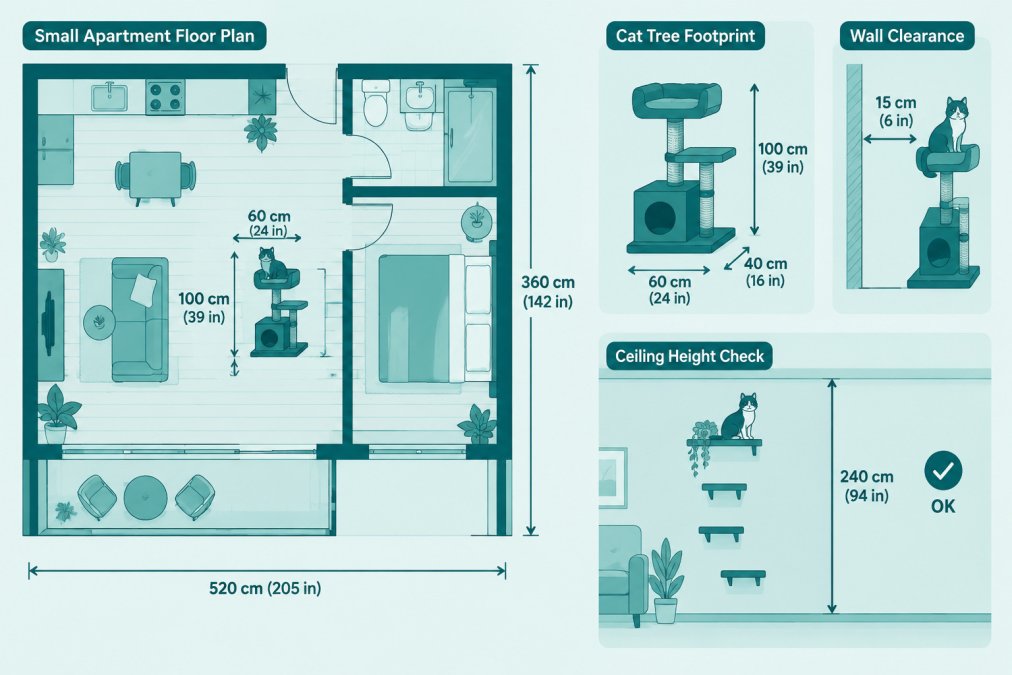
Leave at least a few inches between the tree and any wall or radiator so your cat can jump on and off safely. Check the height against your ceiling and any fixtures nearby. A tall tower that nearly touches the ceiling can be tricky to place and may feel crowded in a small room.
Narrow Cat Tree for Small Spaces: Compact Picks That Still Climb
A narrow cat tree gives your cat height without taking over the room. You can browse cat furniture that looks like furniture, including hammocks and perches to match your decor. The best compact designs share a few traits: a footprint under about 24 by 24 inches, a stacked rather than sprawling layout, and two or three perches at different levels so a cat can climb, rest, and watch without the piece eating your walkway.
What to look for in a narrow cat tree
- Footprint: Measure the floor area you can spare and compare it to the listed base dimensions. A base of roughly 20 to 24 inches per side fits most apartment corners and still resists tipping.
- Height: A tower between about 48 and 65 inches gives real vertical territory without crowding a standard 8- or 9-foot ceiling. Leave at least a few inches of clearance above the top perch.
- Perch size: Each perch should be large enough for your cat to turn around and settle. For most adult cats, a perch around 14 to 16 inches across works; large cats need closer to 18 inches.
- Base weight and material: A weighted or solid-wood base resists tipping far better than a hollow particleboard base on the same footprint.
- Assembly footprint: Check the assembled dimensions, not just the box dimensions, and confirm the piece fits through your door and stairwell during delivery.
Compact designs that still climb
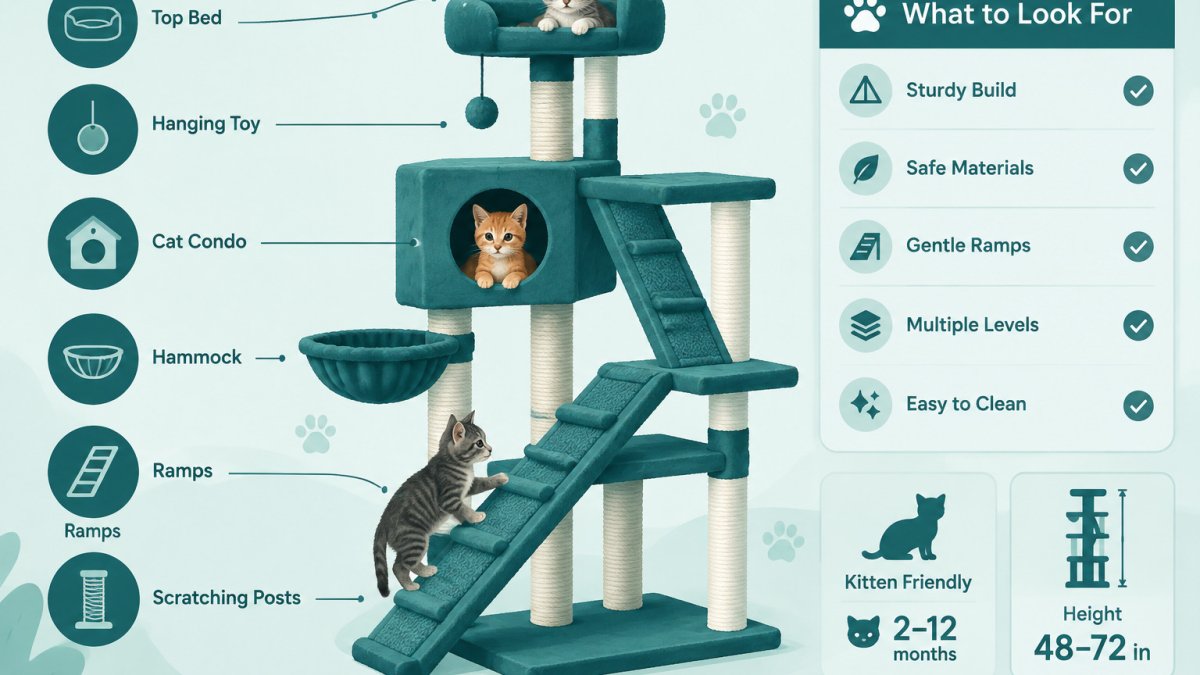
Look for stacked, vertical designs rather than wide, multi-platform condos. A slim tower with a cozy top perch, a mid-level resting shelf, and a scratching post built into the trunk gives a cat the vertical play it wants while leaving room for a couch, a desk, and a walkway. Some compact trees add a small cubby or hideaway at the base, which uses otherwise dead floor space.
Measure your walkways before you commit, and place the tree against a wall or in a corner so only two sides need clearance.
Watch out: a perch that is too small for your cat will go unused, so check the perch dimensions against your cat's length before you buy, not after.
If you want to compare specific compact models, browse the Knead and Nuzzle catalog and check the listed footprint, height, and perch dimensions on each product page. We ship from the USA.
The table below sums up the key measurements to check when comparing compact cat trees.
| Feature | Guideline | Why it matters |
|---|---|---|
| Footprint | About 20 to 24 inches per side | Fits most apartment corners and resists tipping |
| Height | About 48 to 65 inches | Adds vertical room without crowding the ceiling |
| Perch size (adult cat) | Around 14 to 16 inches across | Lets the cat turn around and settle |
| Perch size (large cat) | Closer to 18 inches across | Gives a big cat enough room |
| Clearance above top perch | At least a few inches | Allows safe jumping and room to stand |
Small Cat Tree for Large Cats: Stability and Weight Limits
Larger cats put more stress on a cat tree, and a compact tree for a big cat is a stability problem before it is a style problem. The piece has to resist tipping when a 15- to 20-pound cat launches onto the top perch, and it has to hold that cat without flexing or swaying.
Check the weight capacity and base dimensions
Before buying, check the stated weight capacity and the size of the base. A wide, weighted base resists tipping far better than a light one on a narrow footprint. A wide, stable base is a safer starting point for a large cat on a tall tower.
Signs of an unstable tree
Watch for these signs of an unstable tree: a base that rocks when you press on it, posts that sway under a light push, and perches that flex. Test the piece before your cat does: press down on the top perch and push sideways on the trunk. If it moves more than an inch or two, it will move more under a jumping cat.
Anchoring and wobble prevention
Freestanding trees with weighted bases avoid drilling into walls, which matters in a rental. If the tree still wobbles, a wall-anchor strap or an anti-tip bracket can secure the top to a stud. Check your lease before drilling, and use removable adhesive pads under the base to protect floors and reduce sliding.
Place the tree against a wall or in a corner so two sides are braced, and keep the heaviest perches low. A common pattern is to put the sturdiest platform at the bottom and the lightest perch at the top, which lowers the center of gravity.
Safety testing and materials
Look for solid-wood or thick engineered-wood posts rather than thin cardboard tubes, and check that screws and bolts are metal rather than plastic. If you have a heavy or energetic cat, choose a sturdier model even if it is slightly bigger. Stability matters more than saving a few inches.
Watch out: a tree rated for a small cat will not safely hold a large one, so match the stated weight capacity to your cat's weight with some margin to spare.
Knead and Nuzzle lists weight capacity and base dimensions on each product page, and we ship from the USA so you can inspect the piece on arrival and return it domestically if it does not meet your stability needs.
Small Cat Tree with Scratching Post: Protecting Furniture and Walls
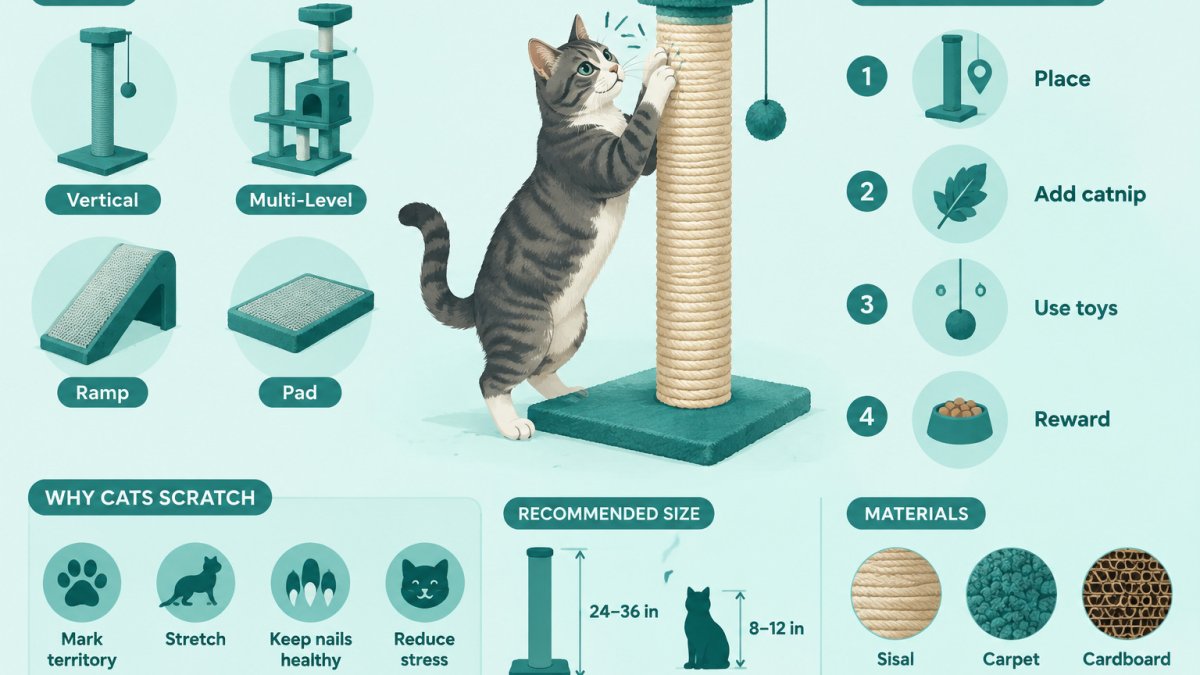
A scratching post keeps claws off your sofa and door frames. Choose one with a long, sturdy post covered in a material your cat likes, such as sisal rope or a tight, durable fabric. Make sure the post is tall enough for a full stretch, and that the base won't slide when your cat pulls on it.
Some compact designs combine a scratcher with a resting bed. You can explore a two-in-one cat scratcher and bed that saves space. You can see a stable indoor scratching house that pairs a sturdy frame with a resting bed. This is a practical choice for a studio or one-bedroom apartment, because one piece handles two jobs. Place the scratcher near the furniture your cat already targets so the post is an easy alternative.
Small Cat Tree with Hammock and Window Perch Options
Window perches and hammocks give a cat a view and a warm spot to rest, and they take up little floor space. A perch that suction-cups to glass is an easy add-on, but check the suction strength and your cat's weight before relying on it. Hammocks that hang from a frame or mount to a window are another space-saving option.
These add-ons work best alongside a small tree, not as a replacement. A cat that can climb, scratch, and watch the window will usually be more settled.
Placing and Maintaining Cat Furniture in a Rental Apartment
Renters need furniture that doesn't damage the unit. A boundary training mat that keeps cats off restricted furniture and countertops can help without any wall damage. Freestanding trees with weighted bases avoid drilling into walls. If you want wall-mounted shelves, check your lease first and ask your landlord before you install anything.
To keep the piece in good shape, vacuum the base and perches regularly, brush off loose fur, and check screws and fabric covers for wear. Covers that remove and wash make cleanup easier.
Choosing Your First Piece of Cat Furniture at Knead and Nuzzle
Start with your space, then your cat. Measure the room, note your cat's size and age, and decide whether a climbing tree, a scratching post, or a window perch will get the most use. A kitten and a senior cat need different heights and perch sizes, so match the piece to your cat, not just the room.
Browse the Knead and Nuzzle catalog to compare compact cat trees, scratching designs, and window options. For current prices and availability, check the product pages on our site. When you're ready, shop Knead and Nuzzle's cat furniture collection and find a piece that fits your apartment and your cat.
Frequently Asked Questions
What is the best cat furniture for a small apartment?
The best choice is usually a compact, vertical cat tree with a footprint of about two square feet or less, a stable base, and at least one perch or resting platform. Multi-level designs use vertical space instead of floor space, which keeps the living area clear. Wall-mounted shelves and window perches add height without taking up any floor area. Measure your floor and wall space first, then pick a piece that leaves a clear path to the litter box and the door.
Are narrow cat trees suitable for large cats?
Narrow cat trees can work for large cats if they have a wide, weighted base and a stated weight capacity that exceeds your cat's weight. Look for sturdy posts, wide platforms, and a base that stays flat when your cat jumps on it. Many compact trees are built for average-sized cats, so check the manufacturer's weight rating before buying. If your cat is over 15 pounds, a model with a heavier base or wall anchoring is safer.
What can I use instead of a cat tree in a small apartment?
Wall-mounted shelves, window perches, and cat hammocks that attach to a radiator or window frame all provide climbing and resting space without a floor footprint. A single tall scratching post can also satisfy scratching and stretching needs. Mix one or two of these options so your cat has both height and a comfortable place to sleep.
How do I choose a cat tree for a small space?
Start by measuring the floor footprint and the height from floor to ceiling. Then check the base dimensions, the total height, and whether the tree can be anchored to a wall. Choose a model with a stable base, sturdy posts wrapped in sisal or carpet, and at least one enclosed space or hammock for rest. Confirm that the product is easy to assemble.