 how-to
How to Pick Durable Cat Toys: A Buyer's Guide
Table of Contents
- Why Durable Cat Toys Matter
- Safe Materials for Cat Toys
- Best Interactive Toys for Indoor Cats
- Durable Cat Toys for Aggressive Chewers
- Inspecting Toys for Wear and Tear
- Supervised Play and Toy Rotation
- DIY and Household Alternatives
- Frequently Asked Questions
Last Updated: September 30, 2026
Why Durable Cat Toys Matter
Cats need toys that hold up. A toy that falls apart after a week wastes your money and creates safety risks.
The real cost of a flimsy toy isn't just the purchase price. It's the vet visit if your cat ingests loose materials. It's replacing toys constantly. It's the stress of wondering if your cat is safe while playing unsupervised.
Durable cat toys serve a purpose beyond entertainment. They support your cat's natural hunting instincts, reduce boredom, and give you peace of mind. A well-made toy lasts months, not days, and holds up to aggressive play without shedding or splintering.
Safe Materials for Cat Toys
Choosing the right material is the foundation of toy safety. Not all materials are created equal, and some popular options carry hidden risks.
Natural Fibers and Sisal Rope
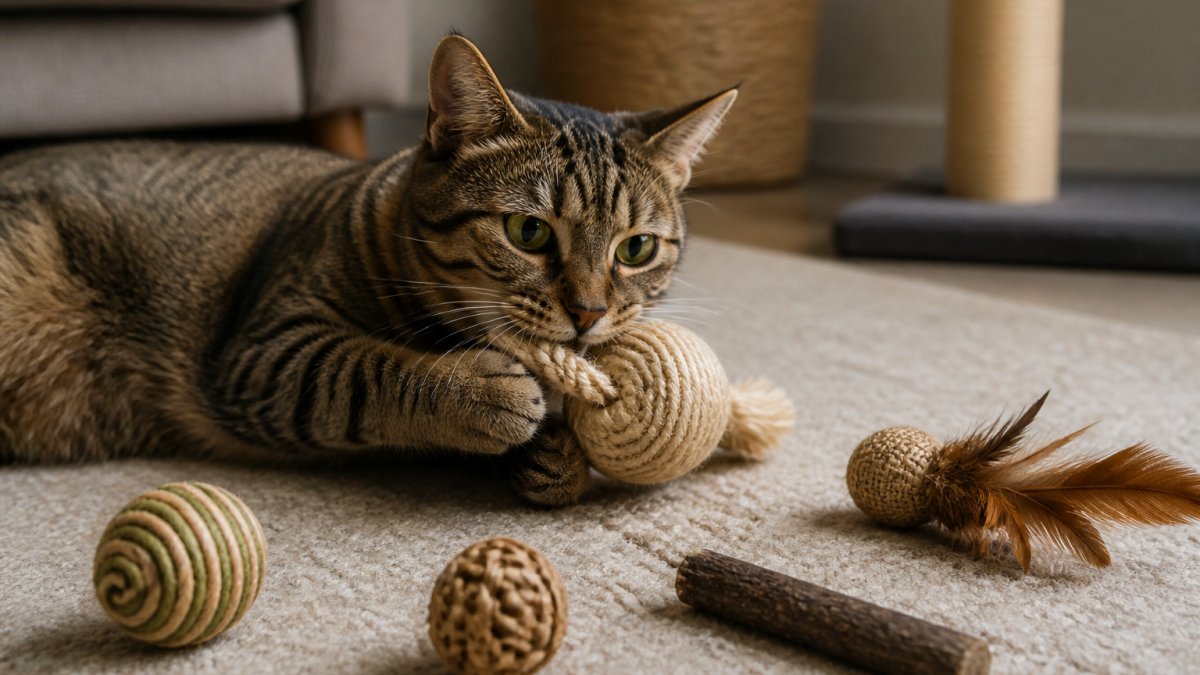
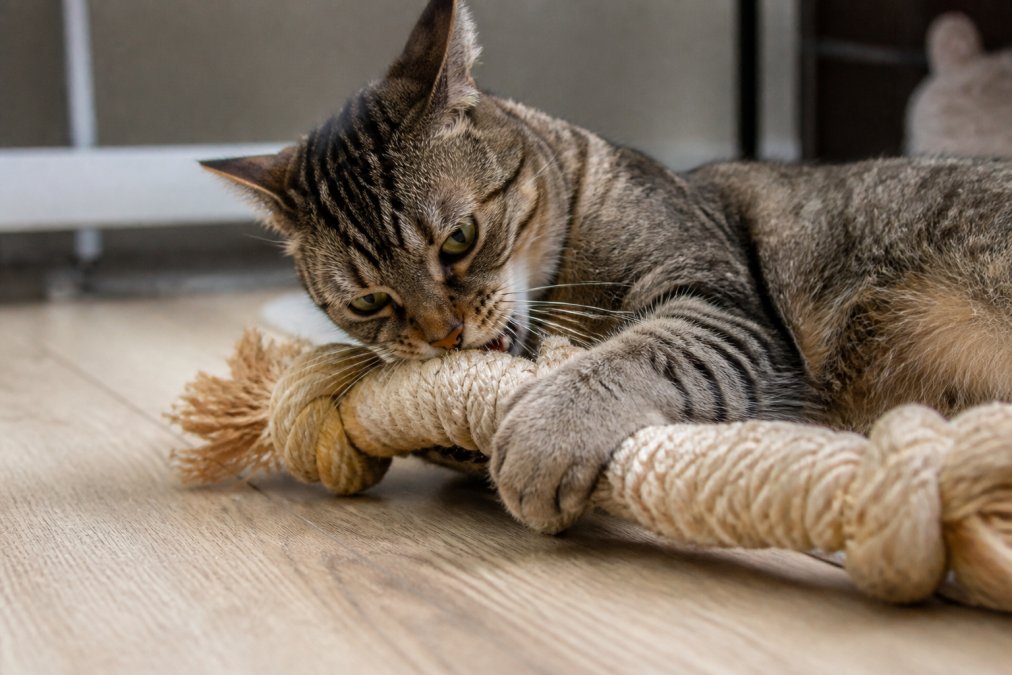
Natural fibers like sisal rope offer texture cats love. Sisal is rough enough to satisfy scratching instincts and durable enough to withstand aggressive play.
The key is quality. High-grade sisal rope has tight, consistent weaving. Loose fibers indicate poor construction. When you inspect a sisal toy, the rope should feel solid and hold together under tension.
Sisal works best for cats that like to scratch and chew. It's biodegradable, non-toxic, and won't harm your cat if small amounts are ingested. However, supervise play to prevent your cat from unraveling large sections.
Other natural fibers include jute and hemp. These materials share sisal's durability and safety profile. They're all excellent choices for interactive toys and scratching surfaces.
Reinforced Fabrics and Ballistic Nylon
Ballistic nylon is a heavy-duty synthetic fabric originally designed for military gear. It resists tears and punctures far better than standard polyester. Many premium durable cat toys use ballistic nylon for their outer shells.
The advantage is clear: ballistic nylon doesn't fray easily. Seams stay intact. Your cat can't pull the material apart to expose inner stuffing. This matters especially for aggressive chewers who destroy standard fabric toys within days.
Look for toys with reinforced stitching. Double-stitched or cross-stitched seams hold longer than single-line stitching. The thread should be thick and tight, with no loose ends visible.
Polyester fiber is common in toy stuffing. It's non-toxic and holds its shape well. However, lower-quality polyester can pill or shed. Premium toys use tightly-woven polyester that resists breakdown.
Non-Toxic Materials and Pet Safety Standards
Not all toy manufacturers follow safety standards. Your cat's safety depends on materials that have been tested for toxins.
Look for toys made without:
- Lead-based paints or dyes
- Phthalates (chemicals used in plastics)
- BPA (bisphenol A)
- Formaldehyde
Many premium toy makers voluntarily test their products against pet safety standards. Some follow guidelines similar to those used for children's toys, which are stricter than pet industry minimums.
The American Society for Testing and Materials (ASTM) sets standards for toy safety, though compliance is voluntary in the pet industry. Check product descriptions to see if the maker mentions safety testing or certifications.
When in doubt, choose toys from established manufacturers with transparent sourcing. This transparency matters.
Ask toy manufacturers directly about their safety testing. Reputable makers will provide detailed answers about material sourcing and toxin screening. Vague responses are a red flag.
Best Interactive Toys for Indoor Cats
Indoor cats need mental stimulation as much as outdoor cats need physical exercise. Interactive toys prevent boredom and destructive behavior.
Feeder Puzzles and Mental Stimulation
Feeder puzzles combine feeding with play. Your cat works to extract treats or kibble from hidden compartments. This mimics natural hunting behavior and keeps your cat engaged for longer periods.
Quality feeder puzzles have multiple difficulty levels. Some are simple sliding blocks. Others require rolling, spinning, or lifting mechanisms. The best ones adjust in difficulty so your cat stays challenged without getting frustrated.
Durable puzzle toys use thick plastic or heavy-duty rubber. The mechanisms should move smoothly without getting stuck. Seams should be reinforced so your cat can't crack the plastic or pry open hidden compartments.
Feeder puzzles work especially well for cats that eat too fast or seem bored by regular meals. They transform feeding time into playtime. Most cats will spend 10-15 minutes working through a puzzle toy.
Circuit Toys and Laser Pointers
Circuit toys are tracks with rolling balls that your cat can chase and bat. The ball moves inside the enclosed track, creating unpredictable motion that triggers hunting instincts.
The best circuit toys have sturdy construction. The track should be thick enough that your cat can't crack it. The ball should move smoothly without getting stuck. Multi-level designs provide more engagement than single-loop versions.
Laser pointers offer interactive play where you control the action. Your cat chases the red dot, getting exercise and mental stimulation. The advantage is that you're actively engaged, strengthening your bond.
However, laser pointers have a limitation. Some cats become frustrated because they can never catch the dot. End laser play sessions with a physical toy your cat can actually catch and hold.
Rechargeable electronic toys with motion sensors offer another option. These toys activate when your cat approaches, mimicking prey movement. They're useful for solo play when you're busy.
Feather Wands and Prey Drive Activation
Feather wands let you control a toy that mimics bird or insect movement. Your cat's prey drive takes over immediately. These toys provide the most intense interactive play.
Durability matters with feather wands because the feathers take abuse. Quality wands use real feathers attached with strong glue and reinforced stitching. Cheap versions shed feathers constantly, creating a mess and potential ingestion hazard.
The wand itself should be flexible but strong. A thin plastic rod will crack under aggressive play. Look for wands with padded handles and sturdy construction.
Feather wands work best for 10-15 minute sessions. Your cat gets intense exercise and mental stimulation. These toys strengthen your relationship because you're playing together.
Durable Cat Toys for Aggressive Chewers
Some cats are relentless chewers. They destroy toys quickly and seem to enjoy the challenge. These cats need toys built for serious punishment.
Identifying High-Quality Construction
High-quality construction starts with material choice. Aggressive chewers need ballistic nylon or heavy canvas, not thin polyester. The fabric should feel stiff and substantial when you handle it.
Seams are critical. Run your finger along every seam. They should be tight and straight. Cross-stitching is better than single-line stitching. Look for seams that go through both layers of fabric, not just the surface.
Check the edges. Are they finished smoothly or do they fray? Finished edges indicate quality manufacturing. Frayed edges mean loose fibers your cat can pull and ingest.
The stuffing matters too. Dense, tightly-woven polyester resists tearing better than loose fiberfill. Press on the toy. If you can easily compress it to nothing, the stuffing is too light. Quality toys feel firm and hold their shape.
Structural Integrity and Tear-Resistant Design
Structural integrity means the toy maintains its shape and function through intense play. A quality toy doesn't develop weak points or holes.
Tear-resistant design uses reinforced corners and stress points.
Inspecting Toys for Wear and Tear
Even quality toys wear out. Regular inspection prevents safety issues.
Signs of Damage and Ingestion Prevention
Check toys weekly. Look for holes, tears, or loose seams. If you find damage, remove the toy immediately. Don't wait for it to get worse.
Swallow Hazards and Choking Risks
Small parts are choking hazards. Bells, beads, or plastic pieces can lodge in your cat's throat. Check toys regularly to ensure nothing is loose or detachable.
Supervised Play and Toy Rotation
Smart toy management keeps your cat safe and entertained.
Supervised play means watching your cat while they play with new toys. This helps you identify any issues before they become problems. You'll also notice which toys your cat actually enjoys.
DIY and Household Alternatives
Not every cat toy needs to come from a store. Many household items make excellent toys.
Frequently Asked Questions
What materials are safest for durable cat toys?
The safest materials for durable cat toys include natural fibers like sisal rope, reinforced polyester, and ballistic nylon. Look for toys made from non-toxic materials that meet pet safety standards. Avoid toys with loose buttons, bells, or small parts that could become choking hazards. Check product labels to ensure the toy has been tested for toxicity and doesn't contain harmful dyes or chemicals. Toys with reinforced stitching and tear-resistant fabrics tend to hold up longer while remaining safe for your cat.
How can I tell if a cat toy is high-quality?
High-quality cat toys display sturdy construction with reinforced stitching, no loose threads, and secure seams. Examine the toy's structural integrity by gently pulling on different sections, it shouldn't tear easily. Quality toys use durable weave patterns and heavy-duty materials that resist wear and tear. Check for proper weight distribution and stability, especially for interactive toys.
How often should I inspect my cat's toys for wear and tear?
Inspect your cat's toys weekly, especially if you have aggressive chewers. Look for signs of damage such as fraying edges, loose stitching, small tears, or missing pieces. Remove any toy showing visible wear immediately to prevent ingestion of loose materials and reduce choking risks. For toys used during supervised play, inspect them after each session. Rotate toys regularly to distribute wear evenly and extend their lifespan. Replace toys that no longer maintain structural integrity, even if they still seem functional.
What's the difference between interactive and solo play toys for durability?
Interactive toys like feather wands and laser pointers experience wear primarily from your cat's paws and teeth during active play, while solo toys like circuit toys and feeder puzzles endure constant batting and chewing. Solo toys need heavier-duty construction with reinforced stitching and tear-resistant materials to withstand unsupervised play. Interactive toys benefit from regular inspection after each use since they're handled directly. Both types should feature durable fabrics and natural fibers, but solo toys require extra durability since they're subject to prolonged, repetitive stress without your oversight.