 blog
blog
Durable Cat Toys for Aggressive Chewers
Table of Contents
- Why Cats Chew and When to Be Concerned
- Safe Materials for Cat Chew Toys
- What Makes a Toy Truly Durable for Aggressive Chewers
- Signs of Pica in Cats
- How to Stop Cats From Chewing Furniture
- Dental Health Benefits of Chewing
- Choosing the Right Toy for Your Aggressive Chewer
- Frequently Asked Questions
Last Updated: September 23, 2026
Why Cats Chew and When to Be Concerned
Cats chew for exploration, play, stress relief, and dental stimulation. Aggressive chewing often signals boredom, anxiety, or an underlying health issue.
Aggressive chewing can stem from boredom, anxiety, or pica, a condition where cats compulsively chew non-food items. If your cat is destroying furniture, chewing cables, or consuming fabric, intervention is needed.
Durable cat toys for aggressive chewers can redirect this behavior safely. The right toys make all the difference.
Safe Materials for Cat Chew Toys
Some toy materials break apart easily or contain toxins. Understanding safe materials is essential when choosing durable cat toys for aggressive chewers.
Natural Materials That Hold Up
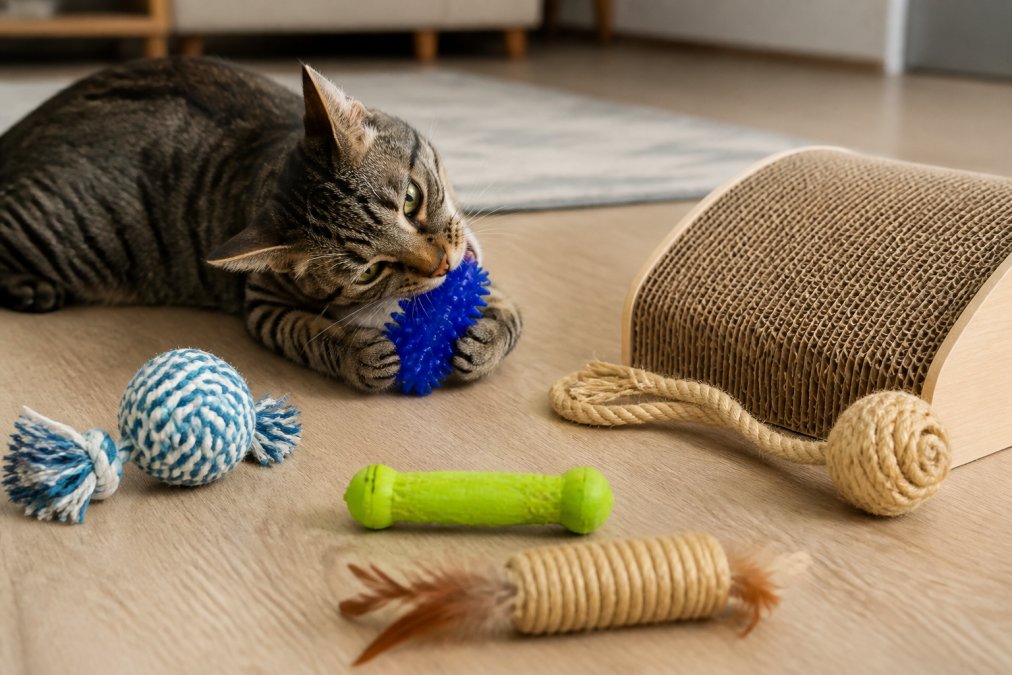
Sisal rope, untreated wood, and silvervine appeal to cats' hunting instincts. Sisal is particularly durable because it's woven tightly and resists shredding.
Silvervine works like catnip but lasts longer and often elicits stronger responses, making it excellent for aggressive chewers.
Apple wood or willow chews are naturally hard and splinter less than softer woods. Always use untreated wood; pressure-treated lumber contains arsenic and copper compounds toxic to cats. Replace if your cat reduces it to sawdust.
Natural materials are non-toxic and biodegradable but wear faster than synthetics under aggressive chewing.
Synthetic Rubber and Durable Alternatives
Synthetic rubber and reinforced nylon resist punctures and shredding better than natural materials. Catnip-infused rubber toys maintain scent longer.
Fabric mesh toys with tight weaving provide gum stimulation without unraveling under aggressive jaws.
Food-grade silicone and medical-grade rubber are non-toxic, won't leach chemicals, and withstand sustained chewing. They're also easier to clean than porous materials.
Synthetic toys may lack natural appeal; pair them with catnip or silvervine to maintain interest.
Materials to Avoid
Certain materials pose genuine health risks and should be avoided entirely:
PVC and Low-Quality Plastics: PVC and plastics marked with recycling codes 3, 6, or 7 leach phthalates and BPA, linked to endocrine disruption. Always check packaging for material composition.
Synthetic Dyes and Azo Dyes: Brightly colored toys often use azo dyes that break down into aromatic amines, causing allergic reactions. If color seems unnaturally vivid or rubs off, avoid it.
Glued or Painted Components: Adhesives and paint coatings may contain formaldehyde or VOCs. Toys should have no glued-on pieces; decorative elements should be sewn or molded into the toy.
Treated or Varnished Wood: Wood coated with varnish, lacquer, or stain contains toxic solvents and resins. Verify wood chews are labeled untreated and food-safe.
Foam and Compressed Materials: Foam toys break apart easily and cause blockages if swallowed. Cork and cork-composite toys fragment under aggressive chewing.
What Makes a Toy Truly Durable for Aggressive Chewers
Durability depends on both material and construction. Stress-test toys before giving them to your cat to identify weak points.
Bite-Safe Construction Standards
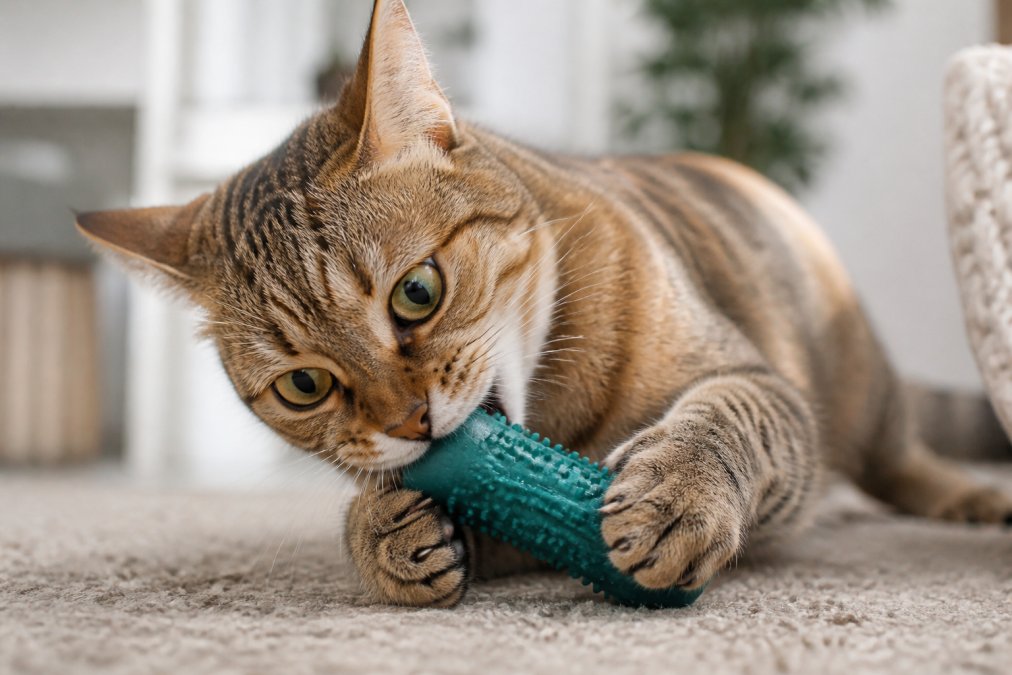
The best durable cat toys for aggressive chewers have:
- Double or triple-stitched seams
- No glued-on pieces
- Thick, consistent material throughout
- No sharp edges
- Reinforced stress points
Premium toys often feature internal reinforcement layers or denser core material to prevent punctures.
DIY Stress Test: How to Evaluate Toy Durability Before Your Cat Does
Perform a stress test before introducing new toys to identify weak points.
The Flex and Twist Test: Flex and twist the toy gently. It should return to original shape without creasing or material separation.
The Seam Inspection: Run your fingernail along seams. Feel for loose threads, gaps, or glue residue. Gently pull seams; they should not separate.
The Puncture Resistance Test: Press a ballpoint pen firmly against the toy for 10 seconds. Durable toys show no indentation or permanent deformation.
The Tear Test: Attempt to tear the toy material with moderate hand force. You should not succeed. If it tears easily, it will fragment under your cat's bite.
The Smell Test: Sniff the toy. A strong chemical or plastic odor indicates off-gassing from dyes, adhesives, or low-quality materials. Toys should smell neutral or faintly of their material (wood, rope, etc.). A strong smell is a sign the toy may contain volatile organic compounds or poor-quality synthetic materials.
The Weight and Density Test: A durable toy should feel substantial in your hand, not hollow or lightweight. Lightweight toys often use thin material or low-density foam, both of which fail quickly under aggressive chewing. Heavier toys typically indicate thicker material and better construction.
Recognizing Wear and Tear
Even the most durable toy eventually wears out. Inspect toys regularly for signs of damage:
- Visible tears, punctures, or holes in the material
- Loose threads, fraying edges, or unraveling seams
- Pieces missing or partially detached
- Discoloration, staining, or material breakdown that indicates degradation
- Loss of structural integrity (toy feels soft, spongy, or compressible instead of firm)
- Flattening or permanent deformation from repeated chewing
- Visible mold or mildew (especially on porous materials like rope or wood)
Replace toys at the first sign of significant wear.
Signs of Pica in Cats
Pica goes beyond normal chewing. It's a compulsive behavior where cats eat non-food items, fabric, plastic, string, cardboard, even litter. Some cats are predisposed to it genetically. Others develop it from stress, boredom, or nutritional deficiencies.
Common signs include:
- Chewing or eating fabric, especially wool or cotton
- Consuming non-food items regularly (not just exploring)
- Vomiting or retching after eating non-food items
- Weight loss or digestive issues
- Obsessive focus on certain materials
How to Stop Cats From Chewing Furniture
Redirecting aggressive chewing behavior requires a multi-pronged approach. Toys alone won't solve the problem if your cat is bored, anxious, or understimulated.
Redirecting Prey Drive and Hunting Instincts
Cats are hunters. Their prey drive needs an outlet. Interactive play with wand toys, laser pointers, and puzzle feeders satisfies hunting instincts in healthy ways.
Mental Enrichment and Boredom Alleviation
Boredom is the root cause of destructive chewing in many cats. Solo play toys like puzzle feeders, treat-dispensing balls, and interactive toys keep your cat mentally engaged when you're not available.
Dental Health Benefits of Chewing
Chewing isn't just mentally stimulating, it's beneficial for your cat's teeth and gums. The mechanical action of gnawing helps reduce plaque and tartar buildup.
Choosing the Right Toy for Your Aggressive Chewer
Not every durable cat toy works for every cat. Personality, size, and play style matter.
Interactive vs. Solo Play Options
Interactive toys require your participation. Wand toys, feather chasers, and laser toys keep your cat engaged and burn energy quickly. These are ideal for cats with high prey drive.
Size, Texture, and Personal Preference
Toy size matters. A toy too small can be swallowed whole. A toy too large might frustrate your cat. Match the toy to your cat's mouth size, your cat should be able to grab it comfortably but not fit the entire toy in their mouth.
| Feature | Interactive Toys | Solo Play Toys |
|---|---|---|
| Best for | High prey drive, bonding | Boredom alleviation, independent play |
| Time commitment | 10-15 min sessions | Passive (cat plays alone) |
| Mental enrichment | High | Medium to high |
| Durability needs | Medium (supervised play) | High (unsupervised chewing) |
| Examples | Wand toys, feather chasers | Puzzle feeders, textured chews |
Frequently Asked Questions
What makes a cat toy durable enough for aggressive chewers?
Durable cat toys for aggressive chewers feature reinforced stitching, non-toxic synthetic rubber or natural materials like sisal, and designs without small detachable parts. Look for toys made from thick, textured surfaces that resist shredding, and choose sizes appropriate for your cat's mouth. Toys should pass the tug test: if pieces come off easily, they're not suitable for aggressive chewers. Inspect regularly for wear and replace when fraying or damage appears.
What are the safest materials for cat chew toys?
Safe materials for cat chew toys include natural sisal rope, untreated wood, and food-grade synthetic rubber. Avoid toys with loose strings, feathers, or plastic beads that pose choking hazards. Check that materials don't contain BPA, phthalates, or heavy metals. Textured surfaces encourage healthy gum stimulation and plaque reduction without splintering. Avoid materials that shed fibers easily, as ingestion can cause intestinal blockages.
How can I tell if my cat has pica or compulsive chewing behavior?
Signs of pica in cats include obsessive chewing on non-food items like fabric, plastic, or wood, often accompanied by ingestion. Affected cats may show excessive drooling, vomiting, loss of appetite, or behavioral changes. Unlike normal prey drive play, pica appears compulsive and unrelated to interactive play. If your cat chews constantly regardless of toy availability or shows signs of gastrointestinal distress, consult a veterinarian to rule out medical issues or anxiety-related disorders. Early intervention prevents serious complications like intestinal blockages.
What's the difference between interactive and solo play chew toys?
Interactive chew toys engage your cat with you through wand toys, puzzle feeders, or catnip-infused options that trigger hunting instincts and mental enrichment. Solo play toys like rubber balls, textured chew sticks, and silvervine toys provide boredom alleviation when you're away. Aggressive chewers benefit from both types: interactive toys satisfy prey drive under supervision, while durable solo toys prevent destructive behavior by channeling chewing energy appropriately. Rotating toy types maintains interest and provides comprehensive enrichment.