 blog
blog
Cat Grooming Tools for Long Hair: Complete Guide
Table of Contents
- Essential Cat Grooming Tools for Long Hair
- Best Cat Grooming Brushes for Shedding
- How to Groom a Long Haired Cat at Home
- How Often to Brush a Long Haired Cat
- Building Your Complete Grooming Kit
- Common Grooming Mistakes and How to Avoid Them
- Frequently Asked Questions
Last Updated: September 27, 2026
Essential Cat Grooming Tools for Long Hair
Long-haired cats require specialized cat grooming tools for long hair to maintain a healthy, mat-free coat. The right equipment strengthens your bond with your cat and prevents stress and discomfort.
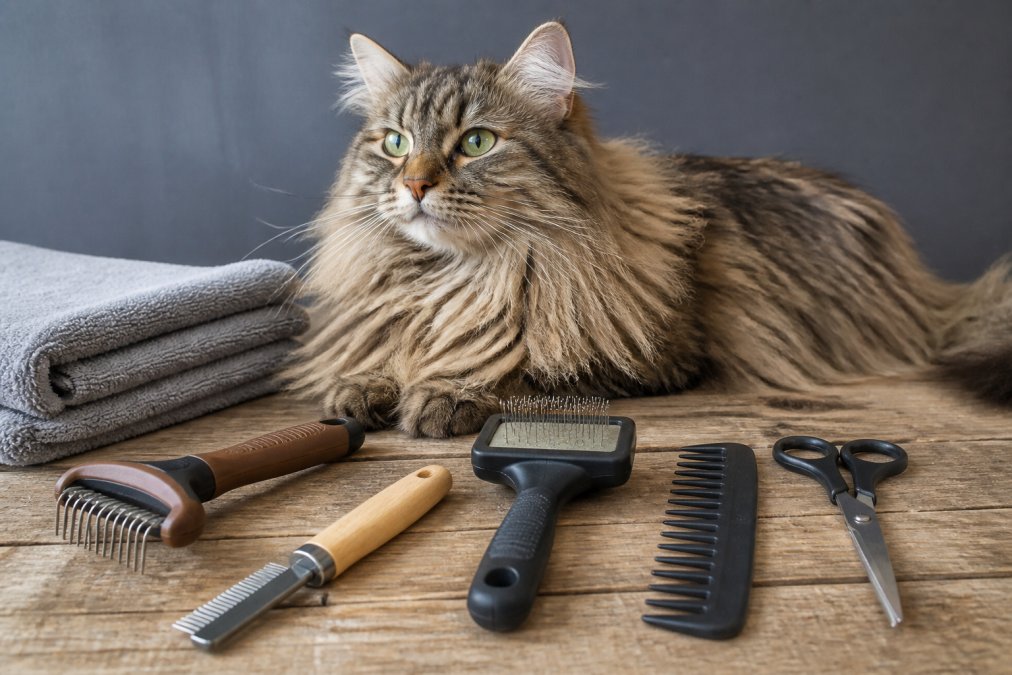
A slicker brush removes loose fur and prevents tangles before they become mats. A pin brush works through the topcoat while leaving the undercoat intact. An undercoat rake targets the dense inner layer where shedding happens. Most owners use one or two tools and wonder why their cat still gets matted, they're missing the complete picture.
Slicker Brushes and Pin Brushes
A slicker brush features short, fine wires on a flat surface with rounded tips that protect sensitive skin when brushing the face, belly, or legs.
Pin brushes have longer, widely spaced wires with rounded tips. They work best for fluffing the coat and maintaining the topcoat between deeper grooming sessions.
A slicker brush reaches deeper into the undercoat, while a pin brush works on the outer layer. Using only a pin brush leaves matted undercoat beneath a healthy topcoat, allowing mats to form undetected.
Undercoat Rakes and Deshedding Tools
An undercoat rake features widely spaced teeth that penetrate deep into the coat to remove loose undercoat without damaging the topcoat, preventing the tool from getting stuck in dense fur.
Deshedding tools work similarly with finer teeth and different handle design, particularly effective for cats with thick undercoats.
Removing loose undercoat before it falls out reduces dander and prevents matting caused by loose undercoat combining with topcoat oils.
Grooming Combs and Mat Removal Instruments
A grooming comb with both fine and wide teeth works through the coat after brushing and helps identify mats early when they're still small.
Mat removal instruments feature a specialized blade designed to cut through mats without cutting skin. Slide the blade under the mat and gently work it apart rather than pulling or cutting aggressively.
Having the right tool prevents the stress of struggling with a mat or needing professional shaving.
Best Cat Grooming Brushes for Shedding
For most long-haired cats, an undercoat rake handles the bulk of shedding work by removing loose undercoat that would otherwise shed around your home or mat into the coat.
Slicker brushes rank second for shedding management because they reach deep enough to pull out loose fur trapped in the undercoat.
Pin brushes are maintenance tools that keep the topcoat looking good but don't address the undercoat where most shedding originates.
Most owners choose one brush and expect it to handle everything. Your grooming kit should include at least a slicker brush, an undercoat rake, and a grooming comb.
| Tool Type | Primary Purpose | Best For | Frequency |
|---|---|---|---|
| Slicker Brush | Detangling & undercoat removal | Daily maintenance & mat prevention | 3-5 times weekly |
| Undercoat Rake | Deep shedding removal | Shedding seasons & dense coats | 2-3 times weekly |
| Pin Brush | Topcoat maintenance & fluffing | Between deeper grooming sessions | 2-3 times weekly |
| Grooming Comb | Checking for tangles & fine work | Daily inspection & problem areas | Daily |
| Mat Removal Tool | Cutting through existing mats | Emergency mat removal only | As needed |
How to Groom a Long Haired Cat at Home
Grooming a long-haired cat at home requires patience, the right tools, and brief sessions. A stressed cat teaches your cat to avoid the brush entirely.
Preparing Your Cat and Your Space
Choose a time when your cat is calm and relaxed. Early morning or late evening often works better than afternoon play sessions.
Set up a dedicated grooming space with good lighting where your cat feels secure. Poor lighting means you'll miss mats and tangles.
Have all your tools within reach before you start. Lay out your slicker brush, undercoat rake, grooming comb, and mat removal tool. Keep treats nearby for positive reinforcement.
Step-by-Step Grooming Process
Start by running your fingers through the coat to identify obvious mats or tangles and which areas need extra attention.
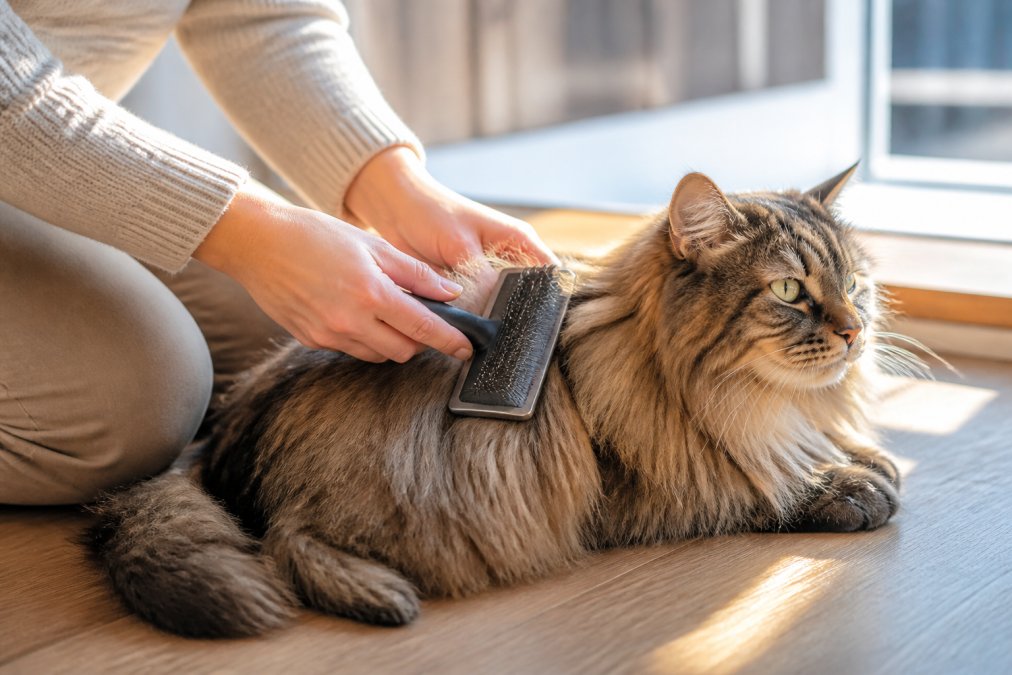
Begin with a pin brush, using gentle long strokes from head to tail. Work section by section to ensure complete coverage and prevent missing problem areas.
Switch to a slicker brush for deeper work. The slicker brush reaches the undercoat more effectively. Again, work in sections, using short strokes and letting the brush do the work rather than pulling hard. If you hit a tangle, pause and work it gently rather than forcing the brush through.
Use your grooming comb to check behind the ears, under the armpits, and around the rear end, the spots where mats form most easily. These areas have friction from movement and moisture from grooming, creating the perfect environment for matting. Comb through these zones carefully.
If you find a mat, use your mat removal tool to gently separate the fibers. Work from the outside of the mat inward, loosening it gradually. Never pull hard or cut close to the skin. If the mat is too tight, a professional groomer has better tools and experience for safe removal.
Finish with the undercoat rake to remove loose undercoat. This final step dramatically reduces shedding and prevents future matting. Work the rake through the entire coat, paying special attention to the dense areas along the back and sides.
Handling Mats, Tangles, and Sensitive Areas
Mats form when loose undercoat combines with topcoat oils and gets compressed by movement. The longer you wait to address a mat, the tighter it becomes. Early intervention prevents the need for professional shaving.
When you encounter a mat, assess its severity. A small tangle responds to gentle brushing. A tight mat requires the mat removal tool. An extremely tight mat that's close to the skin may need professional grooming to prevent injury.
Sensitive areas like the belly, inner legs, and around the genitals need extra care. Cats are ticklish in these spots, and the skin is thinner. Use a lighter touch and a gentler tool. Many owners skip these areas entirely, which is a mistake, mats form here too, and skipping them teaches your cat that sensitive areas are off-limits.
How Often to Brush a Long Haired Cat
How often to brush a long haired cat depends on your cat's coat type, the season, and your grooming goals. Most long-haired cats benefit from brushing 3-5 times per week during normal shedding periods. During heavy shedding seasons, daily brushing prevents matting and reduces loose fur around your home.
Cats with extremely dense coats or those prone to matting need more frequent grooming.
Building Your Complete Grooming Kit
A complete grooming kit for long-haired cats includes more than just brushes. You need grooming essentials that make the process easier and keep your cat comfortable throughout.
Tool Sanitation and Maintenance
Grooming tools accumulate loose fur, dander, and skin cells. Regular cleaning prevents the buildup that makes tools less effective and potentially spreads skin issues between grooming sessions.
Common Grooming Mistakes and How to Avoid Them
The biggest mistake is waiting too long between grooming sessions. By the time you notice matting, the problem is often severe. Consistent grooming prevents mats from forming in the first place.
Frequently Asked Questions
What is the best tool to groom a cat with long hair?
The best cat grooming tools for long hair depend on your cat's specific coat texture and your grooming goals. A slicker brush works well for daily maintenance and removing tangles, while an undercoat rake targets loose fur in the dense undercoat. For shedding seasons, a deshedding tool removes significant amounts of loose hair before it mats. Most long-haired cat owners benefit from having multiple tools: a slicker brush for daily use, an undercoat rake for deeper cleaning, and a grooming comb for final detangling. Start with these three.
How often should a long-haired cat be brushed?
Long-haired cats need daily or near-daily brushing to prevent mats and maintain coat health. During shedding seasons (spring and fall), daily grooming becomes essential as loose fur accumulates quickly in the dense undercoat. Even on non-shedding days, spending 5-10 minutes with a slicker brush helps prevent knot formation and reduces dander. Cats that resist grooming may tolerate every-other-day sessions, but consistency matters more than duration. Skipping brushing for more than two days often leads to tangles that require mat removal tools or professional grooming.
Do long-haired cats need special brushes?
Yes, long-haired cats require specialized brushes designed for their coat structure. Standard short-haired cat brushes won't penetrate the dense topcoat and undercoat effectively. Slicker brushes with fine, short wires close together work best for detangling, while pin brushes with longer, more spaced teeth suit grooming routines. Undercoat rakes specifically target the soft undercoat without damaging the protective topcoat. Choosing the right brush for your cat's coat texture prevents discomfort, reduces grooming resistance, and maintains better coat health and fur clumps prevention.
How do you remove mats from a long-haired cat?
Start by gently working loose mats with a grooming comb or mat splitter, working from the outer edge inward. For stubborn tangles, use a grooming comb. Never pull aggressively, as this causes pain and behavioral resistance to future grooming. If mats are severe or close to skin, professional help may be needed. Prevention through daily brushing is far easier than mat removal. For cats with behavioral sensitivity, desensitization during grooming sessions helps them tolerate the process better over time.