 blog
blog
Best Cat Grooming Brushes for Shedding: 2026 Guide
Table of Contents
- How to Choose the Best Cat Grooming Brushes for Shedding
- Deshedding Tool vs Slicker Brush: Which Removes More Loose Hair?
- How Often to Brush a Cat for Shedding Control
- How to Reduce Cat Shedding: Daily Habits That Work
- Grooming Anxiety and Desensitization: Helping a Nervous Cat
- Eco-Friendly Cat Grooming Brushes and Sustainable Choices
- Cleaning and Maintaining Your Cat Grooming Brushes
- Frequently Asked Questions
Last Updated: September 22, 2026
How to Choose the Best Cat Grooming Brushes for Shedding
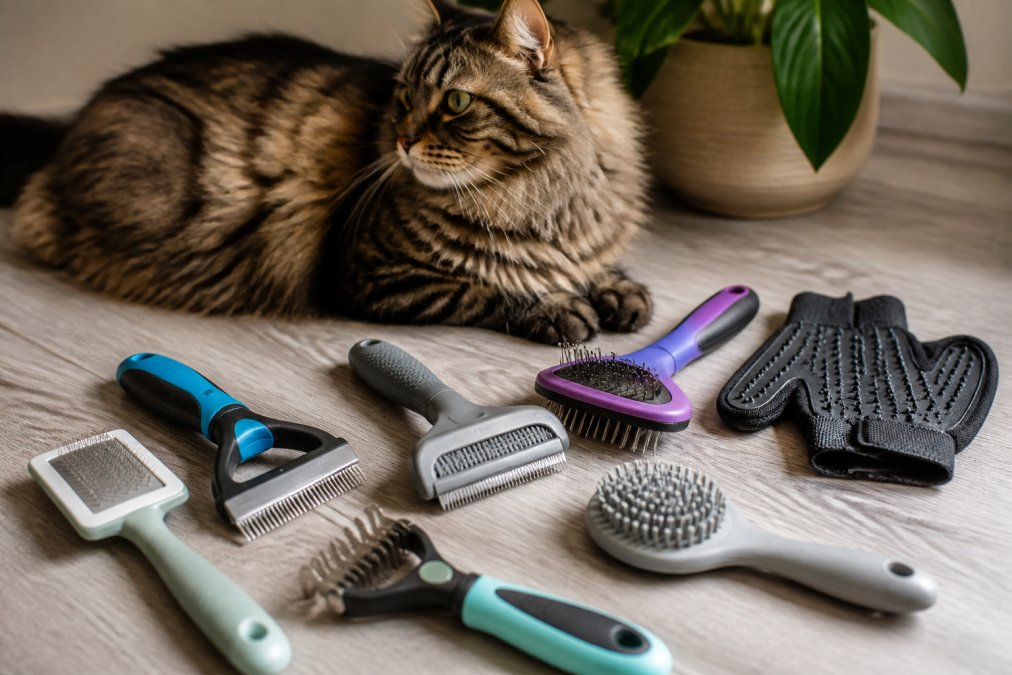
Finding the best cat grooming brushes for shedding starts with one question: what does your cat's coat actually need? A brush that works wonders on a short-haired tabby will barely touch a Persian's undercoat. Matching the tool to the coat type matters far more than brand names or price tags.
Match the Brush to Your Cat's Coat Type
Coat type determines everything. Long-haired cats need tools that reach through the topcoat to the undercoat without pulling. Short-haired cats benefit from brushes that lift loose hair and dander from the surface.
- Slicker brush: Best for medium to long coats. Fine wire pins catch tangles and loose undercoat.
- Bristle brush: Ideal for short coats. Soft bristles distribute natural oils and remove surface dander.
- Rubber curry brush: Works on all coat lengths. Great for massage and loosening dead hair during shedding season.
- Pin brush: Suited to long, silky coats. Wide-spaced pins glide through without snagging.
Handle, Grip, and Comfort Features That Matter
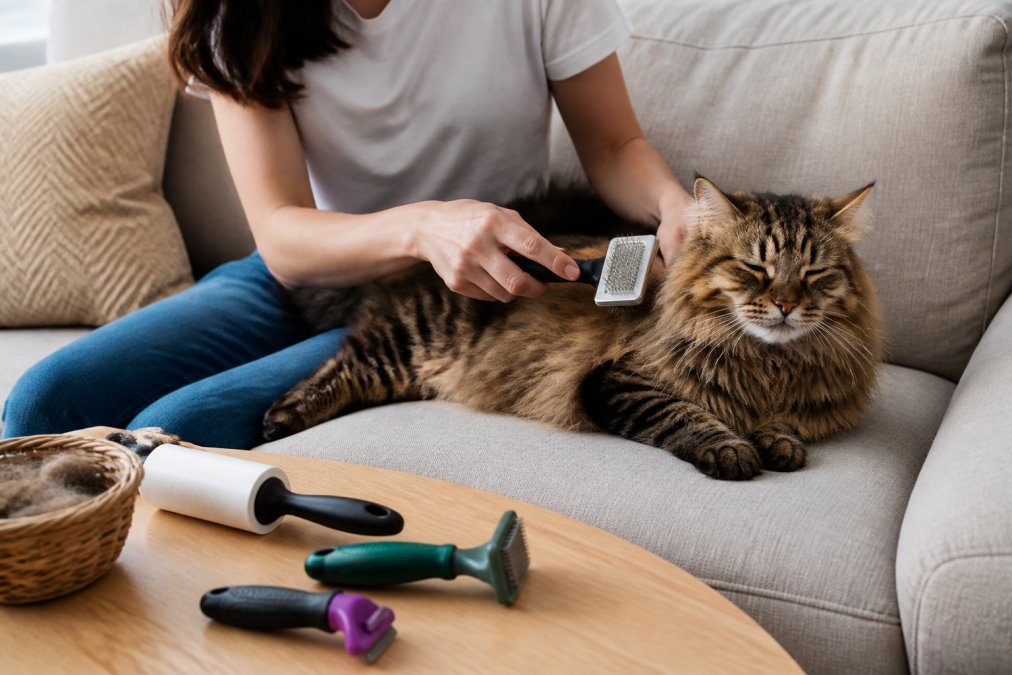
An ergonomic handle reduces hand fatigue during longer sessions, especially with a dense undercoat. Look for rubberized grips and lightweight construction. A self-cleaning mechanism saves time, but retractable pins can pinch sensitive skin, so test the retraction before committing.
American Veterinary Medical Association pet care resources
Deshedding Tool vs Slicker Brush: Which Removes More Loose Hair?
A deshedding tool removes more loose undercoat per session than a slicker brush, but it is not a replacement. Understanding why they behave differently is what separates a healthy coat from a patchy, irritated one.
How Each Tool Actually Works
A deshedding tool (sometimes called a rake or undercoat rake) has a single row of short metal teeth set close together. The teeth hook into the dense, woolly undercoat, the insulating layer beneath the longer guard hairs, and pull out hair that has loosened but hasn't shed on its own.
Which One Removes More Hair, and When
| Tool | Best For | Frequency | Risk |
|---|---|---|---|
| Deshedding tool | Dense double coats (Maine Coon, Norwegian Forest Cat, Ragdoll) | 1-2x weekly during shedding season | Overuse strips the undercoat and can cause bald patches or skin irritation |
| Slicker brush | Daily maintenance on medium and long coats | Daily | Wire pins can scratch sensitive skin if pressed too hard |
| Rubber curry | Short coats, massage, loosening dead hair | 2-3x weekly | Minimal, safe for cats who dislike wire |
| Bristle brush | Finishing pass, distributing natural oils | Daily | None |
| Pin brush | Long, silky single coats (e.g., a silky-furred domestic longhair) | 2-3x weekly | Wide pins can miss dense undercoat entirely |
A deshedding tool pulls more hair in a single pass than a slicker brush, often noticeably more during peak shedding. But that volume is only useful if the coat has a dense undercoat to release. On a short, single-coated cat, it mostly scrapes the skin and removes very little, making it the wrong first purchase for many owners.
The Safety Protocol Most Guides Skip
Deshedding tools are the most misused grooming tool on the market. Reaching for one every day strips too much hair, irritates the skin, and can leave visible thinning along the spine and flanks.
A safer routine:
- Start with a slicker brush to remove surface hair and check for tangles. Never run a deshedding tool through a mat, it will pull skin.
- Use the deshedding tool in short, overlapping strokes in the direction of hair growth, working one small area at a time. Stop after two or three passes over the same spot.
- Follow with a rubber curry or bristle brush to smooth the coat and redistribute oils.
- Cap deshedding sessions at 10-15 minutes and no more than twice a week for most cats. During heavy seasonal shedding, you can add a third session, but watch for pink skin or thinning.
- Skip the belly, armpits, and tail base unless your cat tolerates it well, those areas have thin skin and are easy to overwork.
The Short Version
Use a slicker brush daily for maintenance. Add a deshedding tool once or twice a week during shedding season if, and only if, your cat has a dense double coat. Rotate the two, and treat the deshedding tool as seasonal, not daily.
How Often to Brush a Cat for Shedding Control
Brush most cats daily during peak shedding season and two to three times a week otherwise. Short-haired cats can get away with less; long-haired cats need more.
Adjusting Your Routine for Shedding Season
Shedding season typically hits twice a year, in spring and fall, when daylight hours shift. During these weeks, increase sessions to daily and add a rubber curry brush to loosen the undercoat before it mats. Cats who hate long sessions often tolerate two short ones better than one marathon.
How to Reduce Cat Shedding: Daily Habits That Work
Reducing shedding starts with coat health, not just brushing. A cat on a balanced diet with adequate omega fatty acids sheds less. Regular grooming stimulates hair follicles and distributes natural oils across the topcoat.
- Keep sessions short and consistent
- Use the right tool for the coat type
- Provide fresh water and quality food
- Vacuum and use lint rollers to manage fur removal between sessions
When Shedding Is a Health Signal, Not Just Fur
Sudden increases in shedding, bald patches, or excessive scratching can point to allergies, parasites, or thyroid issues. A cat who normally sheds lightly but suddenly leaves fur everywhere needs a vet visit, this is where seasonal shedding and health-related hair loss diverge.
Cornell University College of Veterinary Medicine cat health topics
Grooming Anxiety and Desensitization: Helping a Nervous Cat
Most grooming guides assume your cat will sit still. Many won't, and forcing the issue teaches a cat to fear the brush, making every future session harder. The tool matters less than the cat's association with it. What follows is a structured desensitization plan you can run over two to four weeks.
Why Cats Resist Grooming
Cats resist grooming for reasons that have nothing to do with stubbornness. Common triggers include:
- Pain or sensitivity, arthritis, dental pain, or skin conditions make touch uncomfortable. A cat who suddenly hates being brushed may be hurting, not difficult.
- Past negative experience, a single pulled mat or a snagged pin can create a lasting association.
- Overstimulation, cats have a lower touch tolerance than dogs. A session that runs too long flips from pleasant to aversive in seconds.
- Novelty and scent, a new tool smells unfamiliar and moves unpredictably.
The Desensitization Ladder
Work through these stages at your cat's pace. If your cat disengages, hides, or flattens its ears, you moved too fast, drop back a stage for a few extra days.
Reading Your Cat's Signals
Stop the session immediately if you see:
- Ears flattening or rotating sideways
- Tail twitching or thumping
- Pupils dilating
- Skin rippling along the back
- A sudden freeze followed by a swat or bite
These are not signs your cat is being dramatic. They are the same signals a cat gives before a fight, and ignoring them turns a nervous cat into one who hides when the brush appears.
Tools That Help Nervous Cats
Some tools are simply easier to introduce than others:
- Rubber curry brushes feel like petting and are the easiest starting tool for most anxious cats.
- Bristle brushes with soft, short bristles are less likely to snag than wire slickers.
- Gloves with rubber nubs let you groom with your hand, which many cats accept faster than a handled tool.
- Slicker brushes with coated or rounded pins reduce the scratch risk that makes cats flinch.
Save the deshedding tool for last. It is the most intense tool in the kit and the one most likely to end a session badly.
When to Try a Different Approach
If your cat has not progressed after four to six weeks of consistent, gentle work, the issue may be medical, environmental, or simply a cat who prefers minimal handling:
- Ask your vet to check for pain, skin issues, or thyroid problems.
- Consider a professional groomer who works with anxious cats, some offer low-stress handling certifications.
- For cats who genuinely cannot tolerate brushing, a vet-recommended diet or supplement aimed at coat health can reduce shedding load, and a lint roller handles the rest.
Eco-Friendly Cat Grooming Brushes and Sustainable Choices
Sustainable grooming tools use bamboo handles, biodegradable bristles, or recycled materials. They perform as well as plastic options and reduce waste over a product's life, a practical swap for owners already mindful of household waste.
Cleaning and Maintaining Your Cat Grooming Brushes
Clean your brushes every one to two weeks. Remove trapped fur after each session, then wash pins or bristles with warm water and mild soap. Dry thoroughly before storing. A dirty brush spreads dander and oils back onto the coat, which defeats the purpose.
- Remove loose hair after every use
- Wash with mild soap every 1-2 weeks
- Check pins for bending or rust
- Replace tools when bristles splay or pins fall out
Frequently Asked Questions
Do cat deshedding brushes actually work?
Yes, when matched to your cat's coat. Deshedding tools reach the undercoat to pull loose hair before it lands on your furniture, while slicker brushes handle surface fur and light tangles. The key is using the right tool for your cat's coat type and brushing regularly. Overuse or too much pressure can irritate sensitive skin, so keep sessions short and gentle, and stop if you see redness or your cat pulls away.
What brush do veterinarians recommend for cats?
Vets commonly suggest a slicker brush for general coat maintenance and a deshedding tool for heavy shedding seasons. For short-haired cats, a rubber curry brush often works well because it massages the skin while collecting loose hair. Long-haired cats usually need a pin brush or wide-tooth comb to prevent matting. The best choice depends on your cat's coat texture, fur density, and comfort level during grooming.
How often should I brush a cat that sheds excessively?
For heavy shedders, daily brushing for 5 to 10 minutes is ideal during peak shedding season. Short-haired cats can often be brushed two to three times a week, while long-haired cats benefit from daily sessions to prevent tangles and matting. If you notice more fur than usual or bald patches, check with your vet, since sudden changes in shedding can signal a skin or health issue.
How can I tell if my cat's shedding is abnormal?
Normal shedding follows seasonal patterns and stays fairly even across the body. Abnormal shedding shows up as bald patches, red or irritated skin, excessive scratching, or fur loss that does not match the season. Stress, allergies, parasites, and thyroid problems can all increase shedding. If you spot these signs, stop grooming and talk to your veterinarian before trying new tools or routines.
Shedding season will test your patience no matter how prepared you are. The right tools and a steady routine make the difference between a manageable coat and fur on every surface. Knead and Nuzzle offers grooming products, health solutions, and everyday essentials for every stage of your cat's life, all in one easy-to-navigate shop. Get started with Knead and Nuzzle and build a grooming routine your cat actually tolerates.